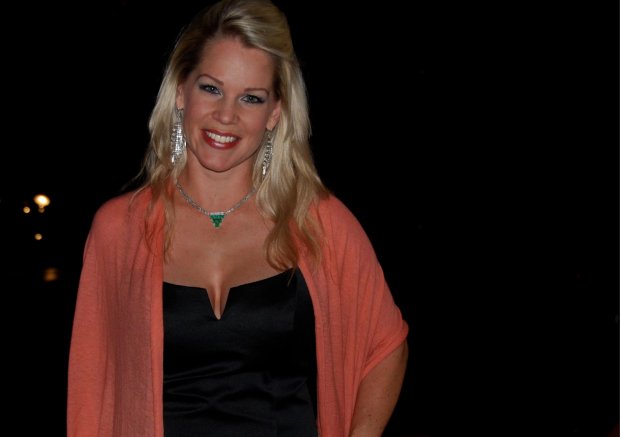
Gavin Mcclurg (USA2) and his support team of Ben Abruzzo and Bruce Marks celebrate at the final turnpoint in Monaco
I always thought the Red Bull X-Alps would be a one and done event. Not knowing at all what I was getting into for our 2015 campaign not only was I nervous as hell for the 9 months leading up to the race (was I a good enough pilot? Would I be strong enough? Could my knees handle the pounding?), but the training involved, compliments of my brother-in-arms Ben Abruzzo (visit the snowgoat.com for more) was so hellish (and yet strangely incredibly fun) that I never imagined signing up for another go. But as I have written about before, the race was so absurdly fun (in a twisted sort of “fun” way) that we as a team were talking about doing it again long before it was even over. The only moment of any doubt of doing it again was on the evening I got into Monaco and several of us who had made it shared some really terrifically scary stories of near-misses that could have easily not turned out so well. Bruce even vocalized that “this race isn’t worth it- it’s not worth killing yourself.” But by the next morning, even though I could barely walk on feet that looked like they’d been pulverized with a hammer, we were already making plans for 2017. On day three of the race in the midst of an incredible deluge of wind and rain that was blowing trees over the road that had become a river I dove into our race van looking for sympathy and some dinner and Ben and Bruce served me a can of cat food on a nice white plate. I was told to “stop being a pu*%! and get going!” We never stopped laughing for 10 days and we all agreed it would be hard to have that much fun doing anything else, so as long as I was up for another year devoted to training, we were in.

This post is about some of the random but critical things that go into the lead-up to the event. Obviously you fly as much as you can and when you aren’t flying you’re pounding your body. I’m not going to talk about that aspect as that should be pretty obvious, and the physical training I do would be five blog posts just to touch the surface and probably of very little use for 99.9% of pilots so we’ll leave that a mystery. And lets face it, you would have to be pretty twisted to want to do it! What I thought might be interesting is all the side stuff that is so critical when it comes to having a successful campaign.
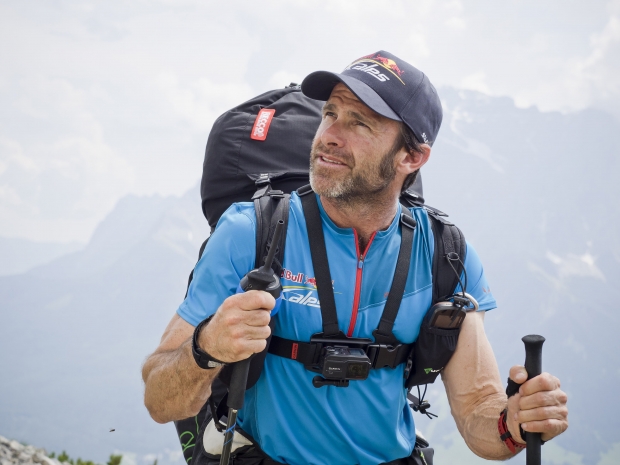
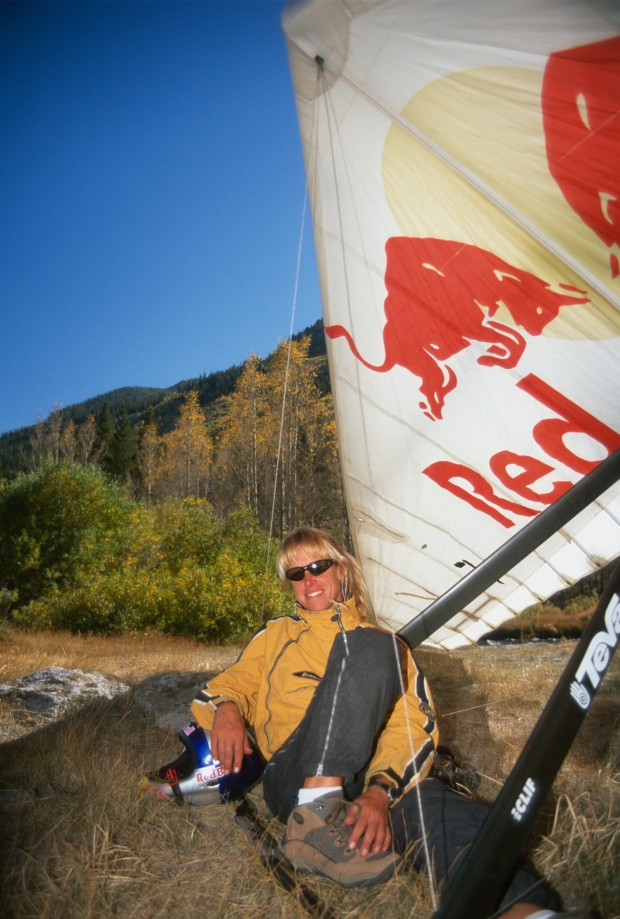
A little pre-race photo session
Wing. He (or she!) who flies the most in the Red Bull X-Alps wins. You can be the fastest and toughest on the ground but if you don’t kill it in the air, often times in terrible conditions, you don’t have a chance in the X-Alps. For the 2017 campaign I’ll be flying the brand new Niviuk Klimber P. At 3.36 kilos it’s the lightest certified EN D wing on the market. It’s the first 3 liner I’ve flown in over 5 years, which also makes it easier to launch and land than the competition wings I typically fly, which makes things a lot safer on the dicey days or when you’re really tired. I’m REALLY excited about this wing!
Feet. The Red Bull X-Alps has something like an 11% finish rate. A good many have to drop out because of foot issues every time. I bragged before the 2015 race that I had done so much walking on pavement (something like 2500 km) before the race that there was no WAY I was going to get blisters. By the end of day 2 my feet had gone to hell, and they got worse every day, to the point that I could barely walk every morning until they went numb. It was excruciating. There were multiple causes. At the start of the race Europe was experiencing I believe the hottest temperatures at that time of year in recorded history (I may be wrong on that, but that’s what I remember). Add to that very high humidity, and then getting lost with Aaron Durogati on day two which led to us scrambling up 1,000 meters of wet brush and our feet went to hell. The trick in the race is to keep your feet dry. The other trick is to anticipate that your body and feet are going to swell as the days go by due to the constant trauma and zero healing time. I had a dozen pairs of size 9 shoes, by day 3 they were all too small. Oops. This time around we’re taking a very close look at a lot of small things, but the most important is socks. The best I’ve found is Stance. They are the only socks Ben uses, and Ben is a pretty bad-ass runner.
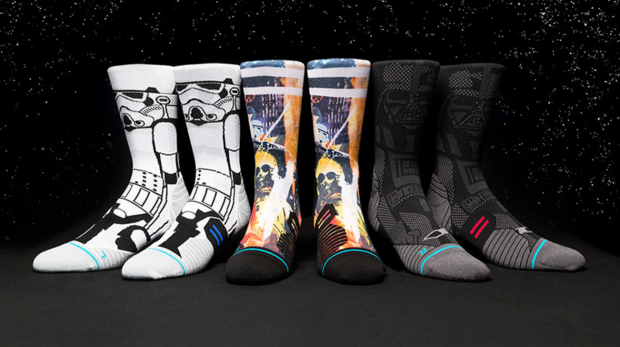
Stance Socks
Footwear. I’ll be using a combination of Salewa and Salomon shoes. Salewa makes an awesome trail running/ ascent shoe called the “lite train” which I’ve been loving. For the pavement pounding, Salomon has a great mix of very light running shoes and I’ve got pretty much every model they make.
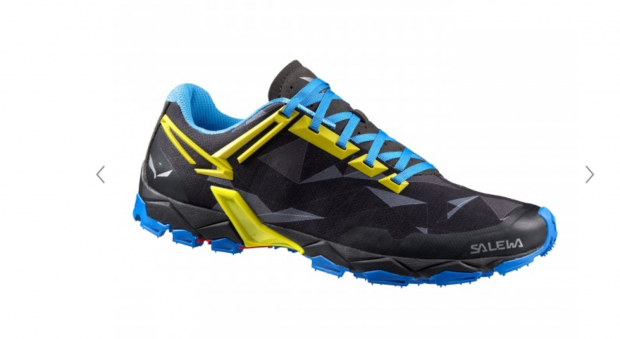
Salewa’s “Lite Train”
Navigation and Remote Communications. We really thought we had this nailed last time and invested a ton of time and energy into mapping (physical and electronic), apps, and communications. But once the race started even all our preparations fell short. You need a phone with a huge amount of storage so all the maps can be used offline because even in Europe there are a lot of places you end up with no data coverage. Then you need an awesome app that everyone on the team knows inside and out. So first up is using the tracking and texting features of the inReach for the entire team, and their Earthmate app, which has downloadable topo maps and shows your location without using the phone’s GPS (which saves battery). They can stay on exactly where I am using the MapShare feature, which is especially important when the Red Bull live tracking goes down when I’m not in cell coverage.
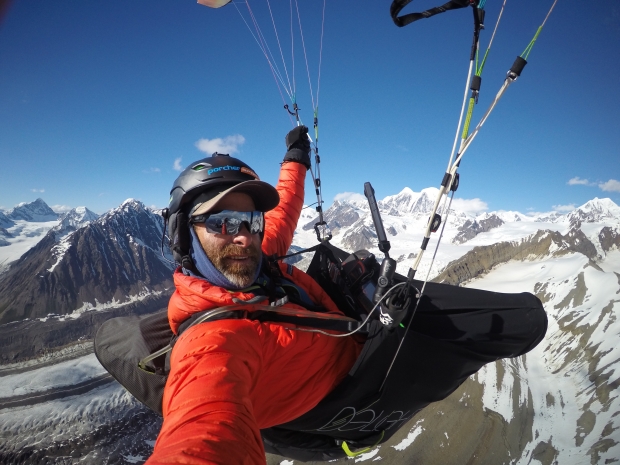
Flying over the Susitna Glacier on the last flight of the Alaska expedition- I was texting during the flight with the inReach, which connects via bluetooth!
This time around we’re also using Gaia GPS for our ground game, which I used on the Alaska Traverse and use every time I’m in the backcountry. Gaia’s excellent topographic maps now also include “snap to trail” features that come in really handy in Europe where there are trails everywhere. Immediately when I land Ben can identify the fastest way up to the closest launch, send me the route which I can enable in Gaia and I’m off, which saves precious brainpower and time.

Going deep? Get Gaia!
Tracking Training. I’ve got a new sponsor that I’m really, really psyched about. Garmin. I’ve been using their GPS devices on our boat for over a decade and have been a long-time fan and what has me really excited right now is their Fenix 3 HR watch. I’ve been a Suunto user and fan for a long time. But the Fenix 3 HR is a far-superior watch for tracking your training. This is a POWERFUL watch and activity tracker, and has a built in wrist heart rate monitor if you don’t want to use the chest monitor. It takes a bit to learn, but when paired with the Garmin Connect app and if you want to really get into the nitty-gritty of nutrition tracking you can add the My Fitness Pal app and presto- you’ve got a watch that tracks every step you take, every wink you sleep, and gives Ben a perfect way to track all of my progress and metrics.
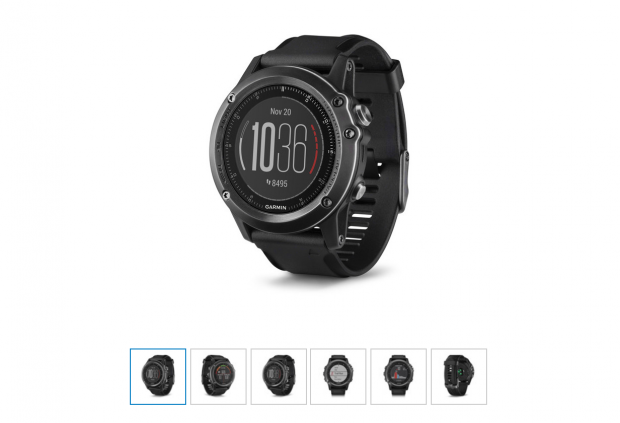
Fenix 3 HR
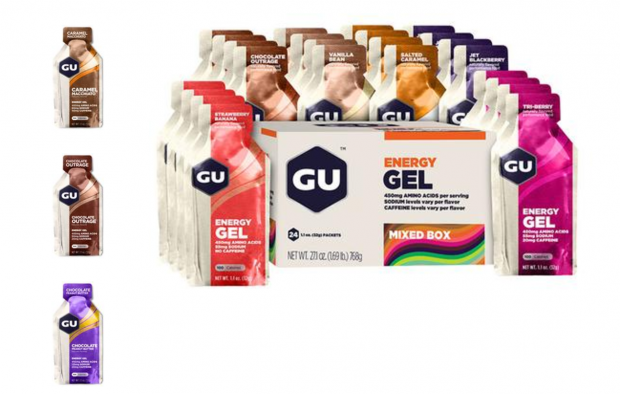
Nutrition. The athletes in the X-Alps are getting more and more professional (and fast) with every installment. The course gets longer and harder every time, but the teams are adapting and still going faster. You need every possible edge you can get. We’ve hired on the team at GetWell3, headed up by Dr. Warren Willy, an Olympic and endurance athlete coach and author of many books based on eating for performance and eating “hormonally responsibly.” For much of the race your heart rate is above 135 bpm and often you are burning at “threshold” or anaerobic levels (well over 160). At these rates it is very, very difficult to process any whole foods. Typically this is where simple carbohydrates come in (think GU Energy– or sugar). I lived on GU’s “energy gels” the last time around, and I will again this time. When you need a shot of energy GU is perfect.
But you also need whole food. It’s a long race, and sugar isn’t enough. Dr. Willy is creating very specific supplements designed around my stomach biome and a zillion blood tests to ensure when the going gets tough, I won’t bonk and I can keep the pace. For a small guy we proved the last time around that I’m pretty fast on the ground, but we hope to increase our speed and recovery by 5% using smart nutrition this time around.
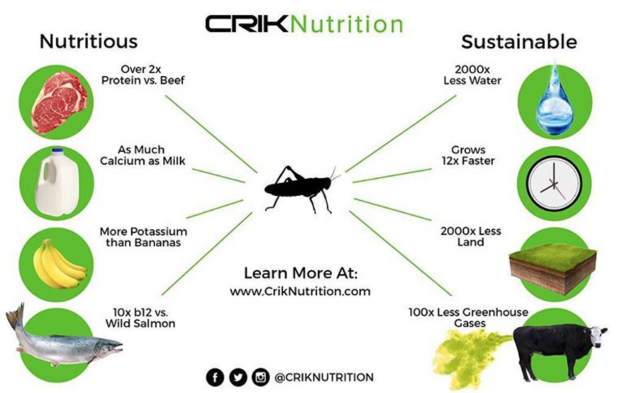
There are too many things that go into nutrition to include in this blog, but one thing I’m very excited about is a new protein supplement we are testing with that comes from crickets. That’s right- bugs! Hopefully many of you saw the film “Before the Flood“, the National Geographic film with Leonardo Dicaprio about climate change. If you haven’t, please check it out. It’s pretty scary stuff, and if there’s one major take-away it’s that we’ve got to get off our global beef addiction. Crickets have twice the protein as beef, are more easily processed by the human body, have as much calcium as milk, more potassium than bananas, are totally sustainable to grow (and 12 times as fast as cows!), and is just a far-superior protein source for many reasons. Crik Nutrition is not one of my sponsors, but if you want to try their products you can use the discount code “cloudbase” and receive 15% off.
If you found some of this valuable, whether or not you have the X-Alps in your sights or another adventure race, or just find it useful for general training please leave a comment and I’ll follow up with more in the future. Fly far, fly safe and have fun!