Episode 153- Burkhard Martens and Thermal Flying

Burkhard Martens new edition of Thermal Flying is out!


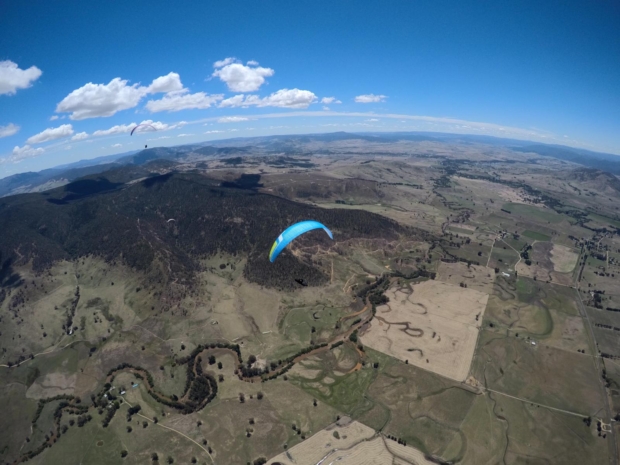
Burkhard Martens is one of the most-recognized names in the sport. His seminal work, “Thermal Flying”, first published in 2005 is the world’s best-selling guide to the art of thermalling and XC flying. Cross Country’s team has been hard at work thoroughly revising and updating the text, line by line, and the design and photography has been refreshed to bring it bang up to date. I sat down with Burki a few weeks ago to talk about his new edition, what’s changed since 2005, and the meat of the book- how to climb!

Learning to climb well is probably the most valuable skill of all in free flying, but it can be an incredibly frustrating experience. Burki Martens’ Thermal Flying has been written as a guidebook, and whether you have one hour or a thousand hours’ airtime, you’ll find it incredibly useful.

Hundreds of photos and illustrations make technical concepts come alive and easy to understand. Technical theory is kept to a minimum while real-world experience and practical advice help you grasp tricky concepts easily.

Get your new edition here. And enjoy the show!

Support the Podcast

A buck an episode, that's all we ask

If you like what you hear, please consider becoming a subscriber to ensure our high-quality content continues. You can also help contribute to a healthier, greener planet through our partnership with Our Forest. See our donation and subscription options here.

Listen to the Podcast

Listen to us on all the most popular podcast platforms:

Show Notes:

  • We get into Burki’s history and how he came to write the first edition of Thermal Flying.
  • The book takes shape- what gave Burki the knowledge to write the book
  • What’s the most important thing new pilots should learn?
  • Weather is stronger than you are!
  • The art of the climb, the art of the glide and how competitions help
  • The definition of a good pilot
  • How much risk is acceptable?

Thermal Flying Includes comprehensive instructions on:

  • How to predict and find thermals
  • How and where thermals form – sources and triggers
  • Different types of thermal models
  • Windward and lee-side thermals
  • The theory of temperature gradients
  • Vortex ring structure and lift distribution in thermals
  • How to read clouds and weather

Plus hundreds of helpful tips on:

  • Soaring, staying up and top-landing
  • Coastal flying and sea breezes
  • How to core thermals and get to cloudbase
  • Valley winds, mountain flying and magic air
  • Flying the flatlands
  • XC tactics from first flights to 100km

Thermal Flying has been published in 15 languages and has sold over 50,000 copies worldwide. This third edition brings the art of thermal flying to a whole new generation of pilots. Burki Martens is a multiple XC League champion and an excellent coach and communicator.

Mentioned in this show:

Til Gottbrath, XCMag, Mads Syndergaard, Chrigel Maurer, Skywalk

Episode 152- Torsten Siegel and Playing the Ultimate Game


Veteran Gin test pilot, designer, European champion, and multiple-time German team member Torsten Siegel has been racing paragliders for nearly 30 years. He designed for UP Paragliders and then Swing before moving to Gin over a decade ago and has left an indelible mark on the sport since the early 90’s. I spoke with Torsten immediately after this years Superfinal in Disentis, Switzerland to get his thoughts on the first superfinal that’s been held in the mountains and to get his thoughts on all things racing- the risk, the tactics, the equipment and how to be consistent in the ultimate game- racing fabric and string in the sky. We cover a lot of ground- what kind of pilot makes a good test pilot; how have the CCC regulations worked out from the design standpoint; how paragliding can improve our habits and attitudes; why pilots almost always move up to a hotter wing too soon; having doubts and making sure you maintain awareness in a game that sometimes bites hard, and a lot more. Enjoy!

Support the Podcast

A buck an episode, that's all we ask

If you like what you hear, please consider becoming a subscriber to ensure our high-quality content continues. You can also help contribute to a healthier, greener planet through our partnership with Our Forest. See our donation and subscription options here.

Listen to the Podcast

Listen to us on all the most popular podcast platforms:

Show Notes:
  • Working at UP and SWING and then over a decade at Gin
  • The Superfinal- it was beautiful, it was amazing, and it was scary!
  • What does a test pilot do? And how are wings designed?
  • Performance vs control for high end paragliders, and matching wings with the ability of the pilot
  • Torsten’s favorite wing
  • The outcome of the CCC class and where we’re headed
  • Making a living in this sport
  • Having doubts and maintaining awareness
  • How paragliding (can) improve your life
  • How to toss the mistakes and move on
  • Don’t get grumpy- laugh!
  • Pimping vs leading and consistency
  • How even the best often screw it up
  • What kind of head space to find for comp flying?
  • Be mentally prepared for the task before you fly- find the balance of relaxed vs serious
  • Weather during a comp- how important is it?
  • Identify certain people in comps?
  • What advice to new world cup pilots? #1- Don’t jump to a hot glider too early! #2- have fun!
  • FTV and strategy for a good result
  • Don’t move up on a wing until you’re pushing your wing to 110% with full confidence and without hesitation
  • Flying an entire task backwards!

Mentioned in this show:

Tim Bollinger, Michael Sigel, Superfinal, World Cup, Gin Paragliders, Charles Cazaux, Aaron Durogati, Stephen Morganthaler, Chrigel Maurer, Pierre Remy, Luc Armont, Martin Scheel, Yassen Savov, Josh Cohn, Manuel Quintanilla, Colin Rathbun, Play Gravity

Episode 151- Comps, instructing, learning, and sending with Wally Arcidiacono

Wally enjoying the new Niviuk X-One in Bright, Australia

I met Wally Arcidiacono on the comp circuit quite a few years back and have been trying to connect with him for awhile now for a show. Wally is a keen comp pilot, started a paragliding school in Bright, Australia back in 2010 and has turned a passion for flying into a way of life. What kind of headspace should we bring to competitions? How can we play this beautiful game with more aplomb? How should we approach the long game? What can we learn from the masters? Why does the local hero never take the trophy? We get into the beginners mind, why so many pilots are flung into the wild too early, what makes a great instructor, best (and worst!) gear, eliminating distractions, flying psychology and tactics and a lot more. Enjoy!

Support the Podcast

A buck an episode, that's all we ask

If you like what you hear, please consider becoming a subscriber to ensure our high-quality content continues. You can also help contribute to a healthier, greener planet through our partnership with Our Forest. See our donation and subscription options here.

Listen to the Podcast

Listen to us on all the most popular podcast platforms:

Show Notes:
  • All things comps- how to have more fun and get results
  • The mental game
  • Getting left behind can be a good thing
  • Stay positive!
  • Mantras and headspace
  • Play the game, don’t have original ideas
  • Upping the consistency
  • Come second!
  • When do we have this figured out?  Try never.
  • Nurturing others
  • The instructing method

Mentioned in this show:

Matt Beechinor, Nate Scales, Gareth Carter, Kari Ellis, Guy Anderson, Adel Honti


Episode 150- Critical Care for going Deep with Justin Grisham

If it happens, preparation and training is the key

Justin Grisham is an emergency medical physician, wilderness medical expert, and search and rescue volunteer who wants to get our flying community better prepared for dealing with emergencies in the field. In this fascinating and note-worthy episode we brush up on some of  Justin’s free-flight first aid curriculum: medical decision making, common paragliding injuries (what you can fix, what you can’t), the primary assessment, secondary assessment, heat and cold injuries, the use of narcotics and pain medications for victims, drowning and water risk, wound care, tourniquets and securing a scene. Justin has built awesome youtube courses for each of these subjects and offers courses for our community so we can be better prepared for when things go wrong, as they unfortunately often do. Please listen, share with your flying community and reach out to Justin if you want to have him help you design an incident plan for your club or to help your club members get hands-on wilderness medical practice.

Support the Podcast

A buck an episode, that's all we ask

If you like what you hear, please consider becoming a subscriber to ensure our high-quality content continues. You can also help contribute to a healthier, greener planet through our partnership with Our Forest. See our donation and subscription options here.

Listen to the Podcast

Listen to us on all the most popular podcast platforms:

Show Notes:

Justin’s website: https://www.paraglidingfirstaid.com/

First Aid Kit list we discuss in the show and what Justin carries:

  • CAT Tourniquet (be sure to get from a reputable manufacturer like North American Rescue. There are a lot of counterift ones on the market.
  • Nasopharyngeal Airway (NPA)
  • Chest Seal
  • Emergency Blanket
  • Pressure Bandage
  • 800mg Ibuprofen
  • 1000mg Tylenol
  • Link: https://www.paraglidingfirstaid.com/first-aid-supplies

Recommended courses:
Justin’s own: https://www.paraglidingfirstaid.com/s/shop
NOLS
Remote Medical Training
Wilderness Medicine of Utah

Clubs interested in either a course or help with designing an incident plan can contact Justin through the website. There’s a contact form on the bottom of the homepage.

Stuff we discuss in the show and associated courses Justin has made:


Pre-course Material (6hr) Topic Link
0.5hr Medical Decision Making https://youtu.be/U0GEH_9whuQ
0.5hr Common Paragliding Injuries https://youtu.be/K6Mr8Yb7yhg
0.5hr The Primary Assessment https://youtu.be/zcO7Z3vf7E0

https://youtu.be/QsC1AKLKKeA

0.5hr The Secondary Assessment https://youtu.be/sbuKwMceYv0
0.5hr Emergency Evacuation Planning https://youtu.be/zLCCVJedNSI
0.5hr Heat Injury https://youtu.be/1xy9Z4b67mM
0.5hr Cold Injury https://youtu.be/z5knXTb0x08
0.5hr Allergic Reaction https://youtu.be/Be91nEMw-B4

https://www.youtube.com/watch?v=EN83hen4D-Y

https://www.youtube.com/watch?v=sbpmYuixMAg

0.5hr Drowning https://youtu.be/IZy2tfdpM_k
0.5hr Wound Care https://youtu.be/Q1_51sqxlMU
0.5hr Altered Mental Status https://youtu.be/RZLfNzOTc9c


Episode 149- Dilan Benedeti and learning to deal with gravity

I did some acro training back in May this year in the lead-up to the X-Alps with SIV and acro maestro Dilan Benedeti who runs LetFlyParagliding.com. The training probably literally saved my life just two weeks later when things went sideways with less than 100′ of clearance on a solo bivvy mission in Sun Valley (I discuss this incident in the episode with Maxime Pinot). My training took place during one of his SIV clinics with a bunch of very new students so I got to watch his team and his methods in action and came away super, duper impressed. In this episode Dilan shares why we don’t have any kind of standardized training in the US and much of the world and why that needs to change; why so many pilots quit the sport too soon; why so many pilots choose the wrong wing during their progression; the dangers of “risk homeostasis”, especially in free flight; why having a school AND selling gear creates so much conflict of interest (and why this isn’t allowed in many countries); why the US instructor system is so flawed; and why having a basic understanding of psychology is so critical when you leave the ground.

Support the Podcast

A buck an episode, that's all we ask

If you like what you hear, please consider becoming a subscriber to ensure our high-quality content continues. You can also help contribute to a healthier, greener planet through our partnership with Our Forest. See our donation and subscription options here.

Listen to the Podcast

Listen to us on all the most popular podcast platforms:

Show Notes:

  • Dilan talks about why the US and many places don’t have standardized training like APPI and why that often leads to such poor instructors and instruction
  • Dilan theorizes why so many pilots leave the sport after a short period
  • Glider choice- and why we often get it wrong
  • What is “risk homeostasis” and why is it important?
  • Why there is so much conflict of interest when schools also sell gear, and why this ultimately hurts our students
  • Why having a basic understanding of how our brains work is important for progression and staying safe


2021 Red Bull X-Alps Highlight Film is LIVE!

The media magic maker Ben Horton just released our 2021 Red Bull X-Alps Highlight video! This year was an epic battle, mostly against the elements. Window-breaking hale, epic storms, mesmerizing lightning, torrential rain and endless strong wind (strong S and N Fohn wind) defined the race. In a word- it was scary. It was also an epic adventure and after a really rough start Team USA made some nice moves, avoided elimination and gave it everything we had. Here’s a short film produced and edited by Ben Horton, complete with some incredible drone footage of our 12 days across the Alps. 


Episode 148: Red Bull X-Alps 2021, Gavin answers your questions!

Typical weather in this year’s race. Photo Ben Horton

This year’s Red Bull X-Alps, if you could put it in a word- scary. We didn’t have a single “standard” day of flying with light wind, nice cumulus, and good base, unless you count the Prologue! We had incredible heat the first three days, low base, wind and stable conditions, then the thunderstorms started, strong Fohn from the South and North, window-breaking hail, severe lightning and really, really strong wind for the remainder of the race. Every athlete I spoke with at the awards at the end had a look of just going to battle. For the first time in my four races, the bad weather got everyone, regardless of where you were on the course, and it didn’t let up. There were times when all 12 pairs of my shoes were soaked. After a good showing in the Prologue and going into the race pretty beat up from a crash at the end of May, and carrying the remainder of a flu into the race, which later turned into some kind of pneumonia (we’re not sure, but it was ugly!) and having a terrifically bad start, Team USA 1 started clawing back. We narrowly escaped elimination twice, but stayed positive, had a blast, made some critical moves and battled to the very end. We stuck with the process, relied on the training, stayed optimistic, and trusted in our team. In the end Team USA 1 did 590 km on the ground, over 50,000 meters of vertical ascent (Everest 6 times!) and…didn’t die. As always, it was an insane adventure and in this podcast I take on the wonderful questions that came in from all of you who cheered us on. I hope you enjoy!

Support the Podcast

A buck an episode, that's all we ask

If you like what you hear, please consider becoming a subscriber to ensure our high-quality content continues. You can also help contribute to a healthier, greener planet through our partnership with Our Forest. See our donation and subscription options here.

Listen to the Podcast

Listen to us on all the most popular podcast platforms:


Show Notes (questions that came in):

  • Alain Plattner: This is a long one, i apologize:
    My question is about the race format. It looked as if a number of pilots got injured or had close calls because of bad flying conditions, but it seems like having “no fly days” makes no sense when the athletes are spread all over the alps. So i wanted to ask your opinion on changing the race format:
    For example, the route could be split into five 2-day segments. The start of each segment is the end of the previous segment. At the end of each of these 2-day periods, all athletes are taken to the start of the next segment. Athletes who don’t make it to the finish of a segment would get “negative miles”, athletes who go beyond the finish would get “positive miles”. At the beginning of the last (fifth) segment, athletes would start based on their “mile balance” (positive miles from the segments minus negative miles).
    The advantage would be: The athletes stay close together, so “no fly days” would make more sense. Also, it could be more exciting for the athletes and the fans to have everyone fly closer together.
  • Philipp Bethge:  What happened on the first two days?
  • Alejandro: So many thing to comment on! Could you talk about airspace and all the mess that went on with pilots infringing it (or not)? and also about the issues with some pilots and turn points on the prologue. How did you keep motivation on the first days with the bad weather, the wrong decisions and finding yourself so much back? Could you also comment on gear? Has the super light been taken too far with pilots having issues with flying with a wet glider? Should there be a minimum parachute reserve size? Having a parachute for 90 kg max for a pilot’s AWU of 87 thrown at 3000 m is probably no a good idea. Also in all the photos from you it seems your backpack is too big to be comfortable(too far away from your back), was this an issue? Planning on doing the Vercofly this year?
  • Nadine Wyss: I would be interested in how you perceive the risks of these events.
    It seems as if more and more pilots are inspired to challenge the « no flying » conditions and think that anything is possible. But it seems that most of the athletes take a very calculated risk – where and what is the difference to a recreational pilot?
    How did you decide on whats flyable and what is not and could you give any advice how « normal » pilots can decide?
    Especially with more and more people participating in hike and fly races it would be interesting to get more perspective. Because in races like the eigertour there is real carnage going on. And secondly, what did you do nutrition wise in this race? Mainly fat and proteins again?
  • Jim Fuhrman and Chris Brent: What were some of the “fear” injuries that were encountered? I heard Lauri Genovese had some sort of incident and I know Theo did but I missed the breakdown. We’re you disappointed that Cody withdrew when it looked like you might be eliminated, when he could of just waited out the clock?
  • Livia Gilstrap: I would like to hear more of a break down of the incidents: the reserve throw, the power lines, etc.
  • Davis Straub: It seemed like the race commentary was a bunch of happy talk, but then Chirgel just mentioned a bit about how dangerous things were (rotor and collapses). Please link to where the real reporting was going on. Red Bull X-Alps Addicts? What about the training that Chrigel does to prepare for this race (flies in high winds)? Does anyone else do that? Any thoughts on official wind speed limits? Landing on roads? Really, this is okay, sort of taken as normal? Other than Chrigel it seemed like a lot of the race was running, which is okay I guess, but not that great. What about the great dividing point when as I vaguely recall (I don’t seem to be able to use a way back machine to go to a previous day on Live Tracking) Maurer, Pinot, Kanel, and Outers were all very close in front, and then Maurer just blew them all away by taking a different route to the north. I realize they were all looking at the predicted weather and made choices, but go into more detail about what happened.
  • Terje Hansen: What do the athletes think of not ending in Monaco and do you think future Race will also not end here?
  • Andy Read: One thing I’d like to know is why RB reporting consistently ignores the support teams. Every competitor will tell you how important their team is and yet year after year the support teams are totally overlooked. They all have incredible stories to tell but RB just want films of the pilots. Are they not interested in the human interest side of it?
  • Thomas: Would you consider being a supporter for another pilot? Your knowledge and experience is surely invaluable. What did you think about the new format, and how could it be improved for 2023?
  • Ben Netterfield: Did you find it hard to switch on and off at the end of the day and actually get rest or were some things playing around in your head especially once fatigue set in? Having had the crash not long prior to the race when coupled with some brain fog did you notice any moments or days of decision making were a bit haphazard? What was the funniest moment you and the team had together?
  • Stanislav: Is it still fun, or did it went to the stage where only professional team with huge number people behind can compete? I like to follow it, but it seems even more ridiculously hard and impossible than before.
  • Trey Hackney: I’d like to hear some stories about your top highlights, and the flip side: top scariest moments or most challenging situations (flying outside of standard “reasonable” conditions), and what that was like, and the physical reality of managing the glider when conditions are pushing all the limits. How common were collapses? Any situations you thought you might not get out of or that you might need to throw? Would be cool to hear more and learn (second hand!) about the reality of flying in fully extreme conditions like this year presented with such high wind. Any valuable lessons or insight you learned this time around about flying in strong rotor?
  • Gunnar Friese: What’s the biggest takeaway from the race? What did you learn?
  • Will Gadd: Really enjoy your emphasis on battling well rather than the just the results Gavin! Question: Almost every pilot in the top ten is a full-time competition/test/sponsored pilot. Is it necessary to have test-pilot, three hundred plus hours a year, level skills to hit the podium in the X Alps? From what I saw of the launches, landings and lines flown it sure looked like pilots better be very comfortable operating way, way outside “normal” flying conditions. I’m OK with that, but I think this year’s tough conditions really emphasized very specialized and high-level skills, or maybe not? What do you think?


Episode 147- Special Red Bull X-Alps Podcast with the Salewa athletes

Red Bull X-Alps Prologue, 2021. Photo Ben Horton.

I sat down for a special edition of the Cloudbase Mayhem directly after the Red Bull X-Alps Prologue yesterday with my Salewa teammates Paul Guschlbauer, Aaron Durogati, Markus Anders, Chrigel Maurer, Simon Oberrauner, and Tommy Friedrich to find out how they are feeling going into the race, what they are most concerned about with the course, how they take care of their body for 12 days of pounding, how they train, what they changed coming into this race, funny stories from previous editions, critical gear choices and a lot more. We all had a blast with this and we hope you enjoy. The race kicks off Sunday, we hope you’ll follow along and cheer us on!

Support the Podcast

A buck an episode, that's all we ask

If you like what you hear, please consider becoming a subscriber to ensure our high-quality content continues. You can also help contribute to a healthier, greener planet through our partnership with Our Forest. See our donation and subscription options here.

Listen to the Podcast

Listen to us on all the most popular podcast platforms:

Show Notes: 

  • Paul talks about his broken leg this spring and how he feels going into the 2021 race
  • Paul talks about how he’s changed his approach this year
  • Paul talks about how things have changed since having his son George and starting a family
  • Paul talks about critical gear for the race
  • Aaron recounts some funny exhaustion stories in the air and on the ground
  • Aaron talks about how he takes care of his feet
  • Aaron talks about how he trains and how he’s gotten so fast at going uphill
  • Markus discusses his injury at the end of the 2019 race
  • Markus talks about his approach this year and how to stay in Flow
  • Chrigel gives us his take on the course and what areas he’s worried about
  • Chrigel talks about what physical aspects of the race need the most training
  • Chrigel talks about his approach and getting back together with Thomas Theirillat
  • Simon speaks about what he’s changing going into his 3rd race
  • Simon talks about the importance of attitude, especially when you make mistakes
  • Simon discusses his most important pieces of kit
  • Tommy discusses his podium in the Prologue
  • Tommy discusses the loss of his father and what he’d say to him now going into the race


The 2021 Red Bull X-Alps is ON!

We had a terrific Prologue yesterday and after months of not knowing if it was actually going to happen the Red Bull X-Alps is ON! The Live Tracking this year promises to be the best yet, so tuck in and follow along as Team USA 1 tackles the toughest adventure race on Earth! The race starts June 20th! Click the image to go to Live Tracking centered on Team USA 1:


Episode 146- Maxime Pinot and turning up the Volume

Maxime approaches the Titlis Turnpoint, Red Bull X-Alps 2019

Maxime Pinot is a very accomplished world cup competition pilot and French team pilot who came up through the French Juniors team. Maxime has been making big waves in the last few years in the world of serious hike and fly racing. He was second in the 2018 X-Pyr, and second in his first Red Bull X-Alps in 2019, when he gave Chrigel probably his toughest run to date. He just jousted Chrigel for 1st place in this year’s Bornes to Fly in Annecy and he’s already laid down two 300+ flights this season, including an FAI world record for speed over course. In this episode we discuss how Maxime approaches training (physical and mental), his thoughts on just making better decisions instead of doing SIV for pilots who don’t have the money or time, how to manage your emotions, how to thermal and glide better, dealing with the “mental pain” that sometimes comes with flying, finding the opportunities from mistakes, the importance of visualization, and we look back at a couple key moves that made all the difference for Chrigel in the 2019 race. Please enjoy this information-packed episode, there’s a lot here!

Support the Podcast

A buck an episode, that's all we ask

If you like what you hear, please consider becoming a subscriber to ensure our high-quality content continues. You can also help contribute to a healthier, greener planet through our partnership with Our Forest. See our donation and subscription options here.

Listen to the Podcast

Listen to us on all the most popular podcast platforms:

Show Notes: 

  • Gavin recounts a low reserve and hard pound this weekend
  • Maxime and Gavin discuss the difficulties of preparing for this year’s race due to the Covid situation
  • The new Red Bull X-Alps route
  • Maxime discusses how he’s changed his training going into this race and specifics for physical training
  • To scout or not to scout?
  • Dealing with irrational fear
  • Thermalling, planning and gliding- get the volume
  • Have a plan before you get to cloudbase- ie on the way up
  • How to approach speed to fly in a race like the X-Alps
  • Learning from the best
  • Identifying the big days and weather forecasting
  • The art of finding a thermal low
  • Dealing with the “mental pain” of flying
  • Dealing with the emotions of flying
  • Active dreaming and the importance of visualization
  • The importance of rest and recovery
  • Review of a couple of important moves in the 2019 race

Mentioned in the Show:

Malin Lobb, Annecy, Dilan Benedeti, InReach, Garmin, Nate Scales, Willi Canell, Matt Beechinor, Thomas Theirillat, Chrigel Maurer, Robbie Whittall, Nick Greece, Laurent Valbert, Tom Payne, Jon Chambers, Maxime Bellemin, Ayvri