Living it up- MtnMeisters podcast goes live

“There will be an end. And we all share that end, and I’m ok with that.  I figure sometimes you’ve got to push it.” — Gavin McClurg.

Screenshot 2015-10-22 21.01.46

It was a great pleasure to sit down with the MTNmeister’s Ben Schenck recently to discuss adventure, risk, mountains, rivers, sailing around the world a couple times, the Red Bull X-Alps and a lot more. The MTNmeister podcast is dedicated to “exploring the minds of those who explore” and I guess that’s what I’ve been doing most of my life. Have a listen, we had a lot of fun with this one.

Traversing the Rockies Podcast with Judith Mole

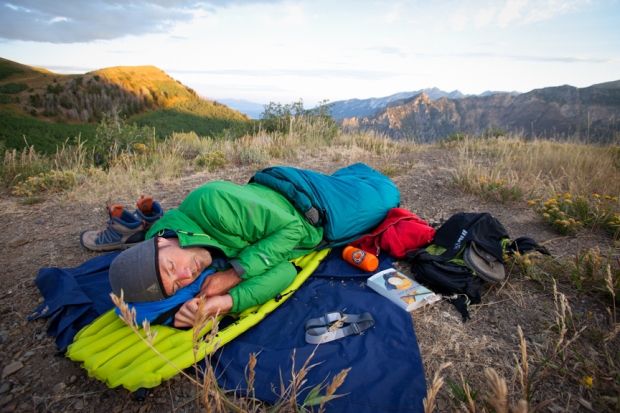
Top land, camp, take off the next day. It doesn't get much better than this.

Top land, camp, take off the next day. It doesn’t get much better than this.

Last winter I “sat down” with Judith Mole and the Paraglider.com via skype to discuss the Rockies Traverse, the expedition I completed with Will Gadd in August/September of 2014. The expedition was filmed by ReelWaterProductions and produced by Red Bull Media House for their “Explorers Series”. Judith has held onto the podcast until the film was released, and with the upcoming premiere at the Banff Mountain Film Festival in November, 2015 the time has finally come.

Many people don’t know that Will and I met the day before the expedition began. In the podcast I discuss the group dynamic that evolved, the stress of completing such a dangerous mission combined with making a great film, crashing for the first time, and sending it through the most awesome terrain that has maybe ever been flown. We completed the line from McBride, BC to the US Border, a straight line distance of 702 kilometers by flight only- ie all forward progress was done in the air. This style of vol-biv was a new precedent, but we also discovered it was the only way we could have done it. The terrain for the first 1/3rd of the expedition was ridiculously deep, and getting out by foot would have hellishly difficult.  Will and I were awarded the National Geographic “Adventurers of the Year” for the feat, which made it very special indeed.

To date, the Rockies Traverse pretty much tops the list on the Rad factor for me, I still can’t believe we pulled it off. It was often intense, but we had some pretty awesome laughs too:

Time for a break on Kinebasket lake, day 4.

Time for a break on Kinebasket lake, day 4. Will Gadd catches up on some serious reading.

Listen to the podcast here.

Screenshot 2015-10-22 20.52.41

Episode 7- Mads Syndergaard and the Art of Winning

Mads Syndergaard, Author of "Flying Rags to Glory"

Mads Syndergaard, Author of “Flying Rags to Glory”

Mads Syndergaard started paragliding in 1987 and it quickly became his life. He began competing in 1994 and hasn’t looked back since. From learning how to soar in Denmark to becoming one of the leading wing designers in the world with UP gliders, Mads has been a vocal figure in the competition scene for twenty years. In this episode Mads discusses the mental attitude necessary to win; his thoughts on the dissolution of the Open Class and how we got to the CCC class; the debacle last year with Ozone’s Enzo 2; what he calls “priming” your head to fly to win and a lot more. This is an awesome talk with a living legend and we go DEEP on topics like safety, risk, making good decisions, anarchy and a lot more.  Enjoy!


A buck an episode, that’s all we ask.


Support me via Patreon

Subscribe to the Cloudbase Mayhem Podcast on Stitcher Radio, Google Play, Tune In, or ITunes!

Stitcher_SubscribeButtonitunesbutton


Show Notes:

  • Mads shares his history in paragliding and how it became his life
  • We discuss the accidents in the Owens during US Nationals and possibly what contributed
  • Mads discusses how the comp scene is being dominated by one manufacturer and how it’s hurting the sport and keeping young pilots out of the game
  • Mads discusses the loss of the Open class and how it’s hurting glider advances
  • Why he’s a proponent for anarchy, but how the Ozone debacle last year was so upsetting
  • The three rules of winning
  • What “priming” your mind to win is all about
  • The value of having a coach, and the value of staying positive


Episode 6, Ben Abruzzo and training for the 2015 X-Alps

Gavin Mcclurg (USA2) and his support team of Ben Abruzzo and Bruce Marks celebrate at the final turnpoint in Monaco

Gavin Mcclurg (USA2) and his support team of Ben Abruzzo and Bruce Marks celebrate at the final turnpoint in Monaco

Ben Abruzzo was the guy who turned me into a machine for the 2015 Red Bull X-Alps. My knees are a cartilage wasteland and I’d never done any endurance training or racing in my life. But when I approached Ben about doing the X-Alps he was all-in and had zero hesitation that he could get me there. This episode is kind of an “inbetween-cast” of the usual Cloudbase Mayhem in response to all the myriad of questions we’ve been receiving about how I prepared for what is billed as the hardest adventure race on Earth.  In this episode we go deep on Ben’s approach and methodology and what came down to handling not only how to get me ready physically, but how he supported me in the actual race and helped keep my head together. My team, Ben Abruzzo and Bruce Marks laughed their way across the Alps and what should have been a total sufferfest was actually a total blast and was one of the greatest things all of us have ever participated in. Find out what we did right, where things went wrong, and how I became pain-free in my knees for the first time in twenty five years. Follow Ben’s work and find out about his training programs on his website thesnowgoat.com.


A buck an episode, that’s all we ask.


Support me via Patreon

Subscribe to the Cloudbase Mayhem Podcast on Stitcher Radio, Google Play, Tune In, or ITunes!

Stitcher_SubscribeButtonitunesbutton


Show Notes:

  • Ben talks about his history in the Army and how he became interested in physical training
  • Why Ben knew he could make my knees handle the task of the race
  • Ben discusses his long-view approach to the training and the various stages we had to tick off on the way
  • How most people train incorrectly
  • How Ben trains people in the special forces, elite marathoners, and elite athletes
  • Learning from mistakes and failure
  • The value of having a coach, and why you can’t do it on your own
  • The methodology and difference between training for “normal” hard-core adventure races vs the X-Alps
  • The value of rest and recovery, and how we approached the taper
  • The important of “having a frame”
  • Some of the specific exercises we repeated and why
  • The value of programming specific exercises for psychological gain

Episode 5 Nate Scales and Staying in the Game

A big day in the Grand Tetons while shooting 500 Miles to Nowhere

A big day in the Grand Tetons while shooting 500 Miles to Nowhere, Photo @Jody MacDonald

Nate “Papa” Scales got his first flight in 1991 on a glider that had 11 cells in Sun Valley, Idaho.  The next day he moved to Utah to learn how to fly and hasn’t looked back since. I’ve never met anyone as passionate as Nate is about flying nylon and string and he’s even more psyched today to go big than ever. We cover a LOT of ground in this hysterical episode. Nate discusses the value of competitions; his only (and very wild) reserve toss; risk and safety; his recent decision to step down to an ENC glider after flying comp gliders for more than 15 years; his “dream” line; learning from failure; and we go way back in time and talk about the days of taking pictures of waypoints before there was GPS; his 2007 X-Alps campaign; all the mentors he’s had along the way, including Robbie Whittall, Honza Rejmanik, Bill Belcourt, Josh Cohn and many others. But we call Nate “Papa” because he’s been a mentor to all of us here in the Wood River Valley and way beyond. There’s a ton to digest in this podcast and Nate’s unique style and delivery will keep you giggling.  Enjoy!

A buck an episode, that’s all we ask.


Support me via Patreon

Subscribe to the Cloudbase Mayhem Podcast on Stitcher Radio, Google Play, Tune In, or ITunes!

Stitcher_SubscribeButtonitunesbutton


Show Notes:

  • Nate takes us back to the beginning.  How he learned, flying in his first comps in Telluride, Aspen and around the world
  • Can paragliding be safer?  We dive into the incoherent risk and the rewards. Is it worth it?
  • Nate talks about his recent decision to step down to an ENC glider, but that he’s still hungrier than ever to go BIG
  • Nate’s 2007 X-Alps campaign and nearly getting in a fistfight in the Swiss Alps
  • Advice for a 50 hour pilots
  • Learning from mistakes and failure
  • Comp gliders vs certified gliders. Making the right choice.

Episode 4- Cedar Wright “Nothing Great Happens Without Risk”

Photo- Jimmy Chin

Photo- Jimmy Chin


The Cloudbase Mayhem is dedicated to dissecting excellence in flight. We interview the best pilots in the world and find out what makes them great. But in this episode we delve into the opposite end of the spectrum with world class climber, self-described goofball, North Face athlete, film director and producer Cedar Wright, who has recently caught the paragliding bug BADLY. His climbing partners include Alex Honnold, the late Dean Potter and Sean Leary, Tommy Caldwell, Will Gadd and a ton of the Yosemite Camp 4 Original Gangsters of the incredible “Valley Uprising” documentary like Peter Croft and Tommy Caldwell. Cedar and I met at last years Banff Mountain Film Festival where he happened across a paragliding film in Greenland called “Resounding Silence“.  The movie inspired Cedar to find out what paragliding was all about and five months ago he dove in feet first and hasn’t looked back. His stoke and passion for flying is infectious and his unique perspective on what makes human flight so special made for a stellar interview that was incredibly fun. Cedar came to Sun Valley last week to get a taste for big mountain air and find out how to fly cross country. It’s been incredibly fun to take him under my wing a little bit and he’s reminded me of how special the learning phase is…and more importantly how that arc never really stops. You’ll enjoy this show, Cedar is an awesome character, his energy and passion for what he calls “sky crack” is truly inspiring.

Cedar-Wright-fs8

A buck an episode, that’s all we ask.


Support me via Patreon

Subscribe to the Cloudbase Mayhem Podcast on Stitcher Radio, Google Play, Tune In, or ITunes!

Stitcher_SubscribeButtonitunesbutton


Show Notes:

  • Cedar discusses his climbing career, films and growing up in a town of 86 people
  • We discuss how he got into paragliding this last year. Learning in Santa Barbara with Eagle Paragliding and Matt Henzi.
  • Cedar talks about risk, and the difference in risk between climbing and paragliding, and the importance of taking risk in life.
  • We talk about the level of adventure that exists in paragliding.  Is it possible to have a bigger adventure, is it the ultimate in freedom when it comes to adventure?
  • What it’s like to be a beginner again
  • The value of being audacious
  • Being a sponsored athlete and some of Cedar’s mentors in the sport like Bill Belcourt.

The Redefined Life- Podcast with Gavin McClurg

I sat down with Aaron Mead recently, who runs the Redefined Life podcast, a show dedicated to “listening to your gut, blazing a trail, and finding fulfillment along the way.” Aaron and I discuss my business, Offshore Odysseys and sailing around the world for 13 years and how it all got started; the National Geographic Adventurer of the year honor with Will Gadd for our groundbreaking flying traverse of the Canadian Rockies; and the recent Red Bull X-Alps Campaign, where I became the first American in the race’s history to reach goal in Monaco, among many other things. It’s a really fun talk and I hope you enjoy it.

Gavin-McClurgredefinedlifeListen here.

Episode 3 – Jeff Shapiro and the Dark Arts

hanglidingsmoke

Jeff Shapiro is a world class sponsored athlete and a world class human being. He’s flown and competed on hangliders since he was 17 all over the world, he sends 5.14 big wall routes in climbing, he flies wingsuits, rides sport bikes, is a gifted Falconer, and is also a Dad and family man.  But don’t call him extreme and don’t call him an adrenaline junky. Jeff is grounded, thoughtful, eternally grateful to be able to pursue his passions and his approach to risk and danger is something we all need to ponder. In this amazing episode we discuss the incredible numbers of losses in the wingsuiting community the last three years, including his close friends Sean Leary, Dean Potter, and Graham Hunt; an amazing close call flying at King Mountain Idaho a few years back on his Hanglider; how he has flown for more than twenty years without an accident; his own brush with death this year; and if it’s possible to justify participating in a sport with such terrible odds, among many other things. Grab a cup of tea or coffee and prepare to be whisked away into a realm that very, very few people inhabit.  It’s a special place.


A buck an episode, that’s all we ask.


Support me via Patreon

Subscribe to the Cloudbase Mayhem Podcast on Stitcher Radio, Google Play, Tune In, or ITunes!

Stitcher_SubscribeButtonitunesbutton


Show Notes:

  • Jeff discusses growing up in the Pacific Northwest and watching birds soar the ferries, and becoming fascinated with flight
  • Jeff talks about his history of hang gliding and learning the hard way
  • How important gratitude and passion are in life, and how adventure sport and risk tie into every aspect of life.
  • Jeff recounts a really scary flight at King Mountain, Idaho and the lessons that came out it.
  • We talk about progression, the numbers game, and if it’s possible to pursue very dangerous activities and be safe.  Is it possible to get the same reward from less dangerous activities?
  • GRATITUDE
  • We talk about losing his close friends Dean Potter, Graham Hunt and Sean Leary and others in wingsuit basejumping accident, and his own close call with death. Where to go from here? Where to draw the line? How is possible to justify something with such horrible odds?


The Red Bull X-Alps in Sidetracked Magazine

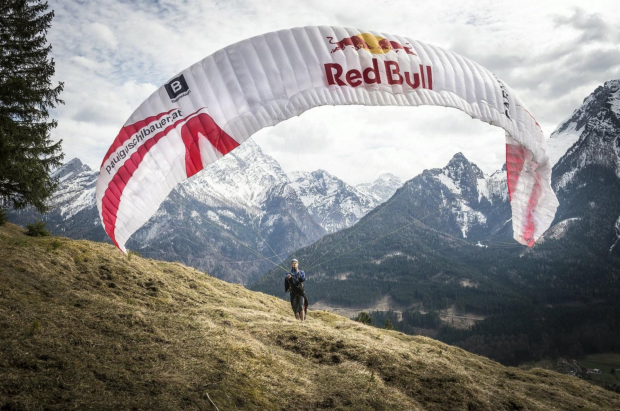
Gavin McClurg (USA2) performs during the Red Bull X-Alps in St.Moritz, Switzerland on July 11th 2015

Gavin McClurg (USA2) launches during the Red Bull X-Alps in St.Moritz, Switzerland on July 11th 2015.  Photo Vitek Ludvik.

A great article by Squash Falconer hit Sidetracked Magazine just hours after the race finished.  Here’s an excerpt, click on the link to view the full article.

‘It’s cool I can still walk,’ a bright-eyed and beaming Gavin McClurg said as he strolled up to me just two days after finishing the Red Bull X-Alps 2015 in a very impressive 8th place. Seeing him like this you would struggle to comprehend what he, alongside 31 other athletes and their teams, had just endured and achieved.

The Red Bull X-Alps is known as the toughest adventure race in the world, and for good reason. Athletes and their supporters race from Salzburg to Monaco, a straight-line distance of over 1000 km, by foot or by paraglider, tagging 10 turn points as they travel along the spine of the Alps. The race takes them through deep valleys and over the highest mountains, including iconic peaks such as the Matterhorn and Mont Blanc.

McClurg is one of four American athletes in the race line-up this year. He’s no stranger to big events. At 17 he was selected for the USA ski team, in his twenties he became a very accomplished climber and kayaker, and then he spent 13 years sailing around the world, during which time – to the surprise of many – he learnt to paraglide.

The Red Bull X-Alps came onto his radar back in 2007. His good friend Bruce Marks planted the seed that this was the race for him – and although he knew he wasn’t good enough at the time, he was transfixed by the event. ‘I watched the last edition at home, in my living room, while hanging from my paragliding harness and I just loved it,’ he told me.

Click here to read the rest of the feature.

Gavin Mcclurg (USA2) and his support team of Ben Abruzzo and Bruce Marks celebrate at the final turnpoint in Monaco

Gavin Mcclurg (USA2) and his support team of Ben Abruzzo and Bruce Marks celebrate at the final turnpoint in Monaco

Garmin InReach vs Spot – When your life depends on it

spotvsdelorme

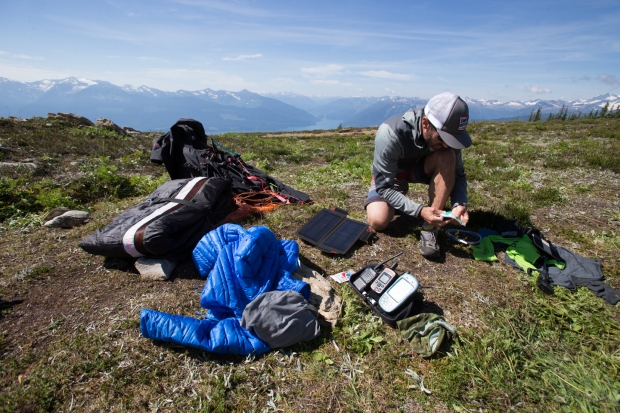
I get asked by a lot of pilots about which tracker, SPOT or Delorme is better. This post is an attempt at a comprehensive answer to that question. I’ve used both extensively, all over the world.  I would never fly without a tracker. We all got to see the value of using one first hand at the Sun Valley PWC in 2012 when expert pilot British pilot Guy Anderson disappeared for two days after a crash in a very remote part of Idaho. The local community pulled together immediately and launched a major search, which involved 4X4 ATV’s, Dirtbikes, Black Hawk Helicopters, and thousands of man hours.  The search was successful and Guy is fine.  But if he’d had a tracking device on that day, the rescue would have been a much simpler affair and saved thousands of dollars (not to mention a mountain of stress). So, the moral here is that if you are doing something remote and slightly dangerous like flying, you NEED to use a tracking device, endstop.  If you don’t, you’re an idiot.

That being said, which one to use?

nice to let people know where you are in places like this

nice to let people know where you are in places like this

Firstly a caveat, just in the interest of transparency. Delorme Canada sponsored our X-Rockies expedition me and Will Gadd did in 2014.  They gave us two Explorer models, and we purchased two SE units- one for the ground crew, one for the filming crew, and the Explorer for each us.  We were given their highest subscription option, which allowed for unlimited texts. Until that time I had only used a SPOT. BUT- I promise this is a totally unbiased review, even though I have a great ongoing relationship with Delorme (now Garmin).


Here are the things that to me are the key elements of these devices, and which unit, in my opinion wins.  I’ll then discuss why:

  • Customer Support:  Delorme
  • Ease of use:  Delorme
  • Flexibility:  Delorme
  • Two-Way Communication:  Delorme
  • Associated APP (Earthmate vs SPOT Connect):  Delorme
  • Safety:  Delorme
  • Cost:  SPOT* (HUGE asterisk here, read on)
  • Size:  SPOT*
  • Battery life:  Delorme

Ok, one at a time.  First Customer Support.  I used a SPOT for over 3 years.  In that time I tried to contact tech support over 30 times, by phone and by email.  I was not responded to once. I contacted a lot of my tech friends to try to get answers to my questions, and they had the same gripe- that SPOT’s customer service is absolutely infuriatingly awful. Get on any of the forums and put a gripe on about SPOT and you will find a lot of angry people.  The only time I was actually able to get a person on the phone was when I wanted to cancel my subscription as I couldn’t figure out how to do it online (because their website is atrocious).  Cancelling took over 20 minutes, a further testament to how poor their tech is.  Delorme has fantastic customer service. I was tasked with setting up all four devices for the X-Rockies expedition and some things were not immediately clear, or easy to do (this has become much simpler now). Their tech support team was quick to respond and very helpful.  Winner:  Delorme.

Ease of Use.  If you own a SPOT and you travel, and if you are unfortunate enough to live in the US or Canada you have no doubt run into the infuriating and blood vessel exploding problem of setting up your contacts, so when you press “OK” or “CUSTOM” or “HELP” or “EMERGENCY” the device sends a text or an email to the people you have listed. One, this is painfully slow- you have do manually enter each person for each message. Takes forever and is the last thing you want to do after you get off a plane- spend hours setting up your new profile. But much, much, MUCH more infuriating than this is that if you are outside of the US and need the text to go to a foreign number say in Switzerland you cannot put a + or a 00 then the number.  You have to know what the carrier is that that person is using, then use that carriers email address. This of course is not provided by SPOT, is very difficult to find (if you need the list go here), and most of the time doesn’t work anyway. You then have a tracking device that you can’t effectively use.  Tracking still works, but god forbid you need to message someone.  At the far other end of the spectrum is Delorme.  Simply pair your Earthmate app to your device via bluetooth, use their very simple interface to send to ANY contact in your phone, to ANY address they have (ie phone or email), ANY message you want.  Not a generic message that you had to set up in advance that may actually have no relevance to what you need, but ANY message. No cell service?  No problem, you can reach out to anyone, anywhere in the world.  During the X-Rockies expedition we had no cell service for most of the trip. We could reach out to anyone to get weather updates, we could do social media updates, we could tell mom that everything was ok.  Winner:  Delorme, hands down.


Not a good place to get stranded

Not a good place to get stranded

Flexibility. This doesn’t really need a discussion.  With a Delorme you can two-way text to anyone.  SPOT doesn’t.  SPOT and Delorme provide bread-crumb tracking in much the same way so no huge winner their, but the Delorme Earthmate App you can see downloadable (free) topographic maps, and you can see your partners position right on the screen (and they can see yours). The Earthmate App has all of this in a much more user-friendly Apple-like interface (on both Android and Iphones).  Winner: Delorme.

Two-way communication. Only Delorme has two-way communication. The SPOT Connect allows you to do this as well, but I haven’t yet run into someone who has a good thing to say about the SPOT Connect so until I hear otherwise Delorme is the clear winner here. One thing that does warrant discussion is just how valuable messaging is. You may think, as I did that having tracking is really the most important thing and as long as you have tracking you don’t really need messaging. This is simply wrong.  Tracking is awesome, and a MAJOR safety plus.  For cross country pilots, it’s more important than a reserve in most cases. It’s the cheapest and easiest way to radically increase your personal safety in the backcountry. But now add messaging and you’ve basically got a cell phone that works anywhere. I can’t even count the number of times having messaging has saved either myself or the people who are tracking me down hours and peace of mind.  Winner: Delorme.


Can you make sure we've got cold beer when we get back?

Can you make sure we’ve got cold beer when we get back?

Safety:  Delorme has two-way communication that works seamlessly with the Earthmate App, and in a bind works fine with the unit itself.  The typepad is slow and cumbersome (UPDATE- this has been improved with the new Garmin InReach), but without making the unit much larger there isn’t really a way around this.  But if your phone is dead it does work fine, it just takes longer. Clearly having messaging is major safety plus so Delorme is the clear winner hear. Both trackers provide bread-crumb tracking, and emergency SOS and both use satellites, so there isn’t much difference there.

Cost:  I’ve put an asterisk on this because the base cost of SPOT is cheaper. But it depends on how you use your device.  SPOT Gen 3 retails for $150, and if you sign up with a subscription you can get it for $75.  A subscription is $149.99 a year.  This covers unlimited tracking. You can then get message bundles for $24.99 for 100 or $49.99 for 500.  For a full list of prices and services click here.  The Delorme Explorer is $379.95, and you can currently get $75 off.  Subscription services start at $11.95/mo and up to $99.95 per month depending on if you go with an annual or monthly contract and how much messaging you need, all of them cover unlimited tracking and SOS services.  For a full list of prices and plans click here.  Delorme is more expensive, BUT, if you go with a monthly plan you can activate or deactivate whenever you want, and most of us only need to use our trackers at certain times of the year so the cost really depends on how you use it. Given everything I’ve mentioned above and given it’s your life on the line, to me cost shouldn’t really be a factor. It’s like going backcountry skiing these days without an avalanche airbag. Isn’t your life worth more than a few hundred bucks?

Battery:  The two companies have gone very different routes with batteries.  SPOT uses exclusively lithium batteries, typically 3 AAA. The nice thing about this is they last a long time- I would typically get a half a season of flying out of my batteries. The downside is you don’t know when they will go bad. Once that light goes red you’re on very borrowed time, and if you’re on a long flight you might lose it. The other downside is the cost of lithium batteries and that you’re throwing them away. Delorme has gone with rechargeables, simply plug into a USB port or in my case as I fly with an external battery so I can keep my phone charged, if I’ve forgotten to charge my Explorer I can use the external battery. It uses the same cable as an Android. A full charge on a Delorme will last me 4-5 days of very long flights, and long walks on the ground. For me the winner here is the Delorme, but it just depends on what you prefer.

Size:  The SPOT is slightly less heavy and slightly smaller. Which is to be expected as it doesn’t have a screen or a typepad. No real winner here, just depends on if you want messaging.

Feel free to ping me with any questions and of course opinions.  Fly far!


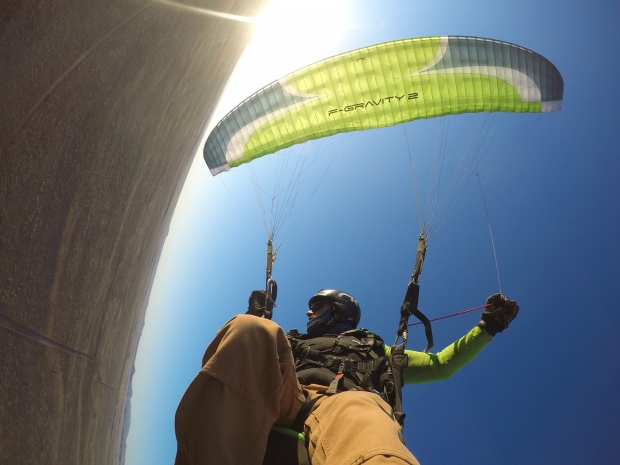
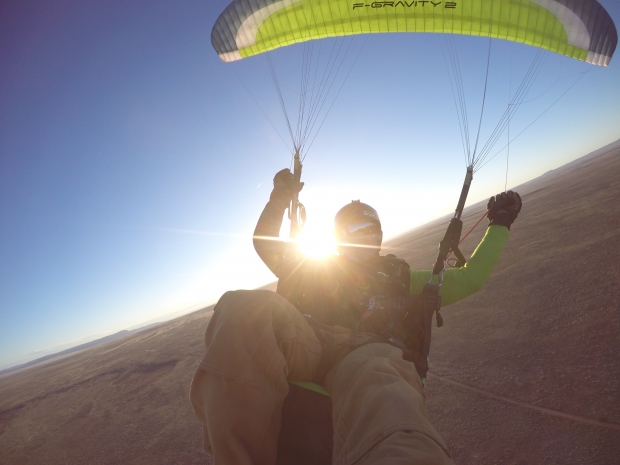
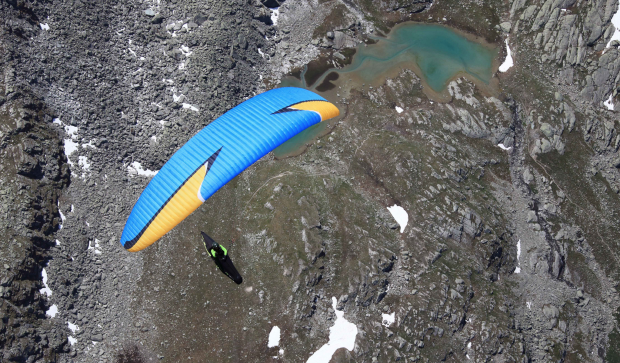
Gavin on glide towards Mt Robson during the Rockies Traverse this August

Gavin on glide towards Mt Robson during the Rockies Traverse this August