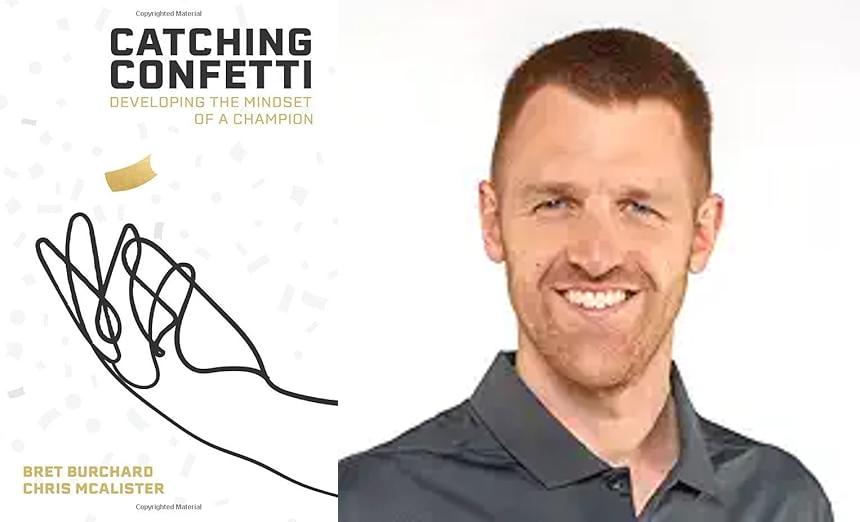
Explore the psychology of elite performance, flow states, and mindset with Bret Burchard, former NBA coach and author of Catching Confetti, Developing the Mindset of a Champion. Discover how mental training can transform sports, your flying, and everyday life. In this episode we step away from interviewing pilots and dig into mental performance. What is the underlying psychology of fear? How do we differentiate between irrational fear and wisdom? How can we enter Flow quicker, more efficiently and how can we get it back once we’ve lost it? How can we make better decisions under pressure? How does our ego help or hurt our performance? What is the process of rebuilding confidence after a setback? Is there ever too much confidence? Bret has coached some of the best NBA athletes on Earth, but what separates the very good from the great is often just what’s between the ears. And it’s exactly the same with flying.
Support the Podcast
A buck an episode, that's all we ask
If you like what you hear, please consider becoming a subscriber to ensure our high-quality content continues. You can also help contribute to a healthier, greener planet through our partnership with Our Forest.
See our donation and subscription options here.
Listen to the Podcast
Listen to us on all the most popular podcast platforms:
Flow state and how to access it The role of mindset and identity in performance Managing fear and stress under pressure
Sound Bites:
“Flow is a relaxed intensity of focus.” “You’re not defined by what you do.” “Relaxed intensity is the essence of flow.”
Chapters:
00:00 Introduction to Mindset and Flow States 01:42 Bret Burchard’s Journey in Basketball and Coaching 06:45 The Importance of Mental Training in Sports 10:26 Understanding Flow State and Performance Under Pressure 18:06 The Seven Mindsets for Elite Performance 23:06 Identity and Performance: The Core Connection 29:07 Embracing Fear for Performance 32:12 Preparing for Flow: Mindfulness and Identity 35:09 Mindfulness vs. Mindset: A Critical Distinction 36:49 Understanding Fear: Rational vs. Irrational 41:39 The Emotional Component of Fear 45:51 Visualization Techniques in Performance 54:41 Re-centering After Losing Flow 59:03 Building Mental Triggers for Relaxation 01:00:13 Understanding EMDR and Trauma Recovery 01:02:08 Rewiring Identity Fears and Insecurities 01:03:50 The Role of Ego in High-Performance Sports 01:10:43 Navigating Recovery from Physical and Mental Injuries 01:23:57 Applying Flow State to Everyday Life
Gavin McClurg (00:00.046)
Brett, thanks for coming on the show. I've just finished up your book, Catching Confetti, and I'm really psyched that Kevin Booker, a mutual friend of ours,
Connected us, you he's a sailplane pilot. He's been on the show I don't have many non pilots on the show, you know, your your journey has been in coaching and in the NBA and Writing great books about flow and mindset. So we're gonna get into all that but welcome to the show I really appreciate your time. I enjoyed having a conversation with you last week We were kind of getting ready for all of this, but I think this is gonna be a lot of fun
Bret Burchard (01:01.156)
Yeah, cool. Thanks for having me. Jumping into uncharted waters here a little bit, but excited to learn from you and have an interesting conversation on mindset and flow states and elite performance and how all those things come together and draw out the best of us. So thanks for having me on.
Gavin McClurg (01:22.966)
Yeah, I'm really excited for it. Let's spend just a few minutes here on how the world got us together. What has been your journey? You've spent, I think, most of your career in the NBA, in coaching, and then bring us to how you ended up writing this book with your co-author. It wasn't just you, but take us through that journey a little bit.
Bret Burchard (01:48.366)
Yeah, so my background is primarily in basketball. I'm a son of a coach who had a very successful career, Hall of Fame's, championships, name on the floor, all that stuff. And so I was born into the profession, raised in the gym, been around basketball my whole life. And that's really started on that journey early on.
got into the coaching profession, following dad's footsteps a little bit and found my way into the NBA. So I've coached professionally for over 16 years, NBA, minor leagues, college, so various levels. And it was really during my time in the NBA that I started getting interested in the mental side of the game.
and watching these guys, just being around elite performers, like best in the world at what they were doing and seeing like, all right, these guys are different, different than me, different than other people I've been around before. And so I started learning from them and just seeing what made them tick and what they were working on and focusing in. then at the time I was in the NBA, there was really a gap in...
the mental side of the game as far as development goes. It's getting more commonplace now. But at the time, mean, our staffs, had, of course, skills coaches and strategy coaches and...
had athletic trainers and strength coaches working on their bodies, working on their skills, working on the strategy. But there was really nobody giving them focus on the mental side of the game. And I started thinking this is a real opportunity here because I was noticing it as a separator. know, the guys I was working with weren't necessarily the starters or the stars of the team. I was working with some of the role players, the rookies, the sophomores, the guys trying to break into the league, the guys that are trying to stick, you
Bret Burchard (03:53.532)
the guys that might only get four to six minutes a game and they had to make that moment count. It's just like, how can I help these guys aside from making them better shooters or improving their ball handling? How can I help these guys take the next jump in their career? Because the reality in a place like the NBA, there's so many talented players.
Gavin McClurg (03:58.84)
Mmm.
Bret Burchard (04:18.256)
They choose what 12, 15 all-stars a year, 20 all-stars a year, but there's probably a couple of hundred all-star talented level players in the NBA. But there's a difference in mindset and that was separating like the really great ones from the guys who were hanging on. So, and then
Gavin McClurg (04:38.807)
So you're saying the technique and the ability and the athleticism and all the things that you think about in an athletic sport like the NBA, they're more or less equals. It's this little, it's this mental part that was the separator.
Bret Burchard (04:55.856)
For sure, here's a guy on our team that's like the best shooter in the gym on any given day. But when the lights come on and you're in the moment and you've got one shot to decide your fate, do you make it or miss it? And could he perform in that moment? Like, here's a guy that could jump out of the gym. He was more athletic than anybody in the league, but he couldn't apply that to what was going on in the game. Here's a guy who was great.
until failure hit and he couldn't recover under failure and it would knock him off balance. He was too easily knocked off balance. He couldn't recover quickly. And so that hurt his ceiling and his potential. So in my role, I was a development coach and I just naturally like my own mindset is like, okay, I can teach. How can I teach this? How can I help people learn this? I wasn't going to settle for one guy's got it and the other guy doesn't.
Gavin McClurg (05:27.65)
No.
Bret Burchard (05:54.424)
It's just your DNA, you know. So I started digging in, how can I help these guys improve the mindset? Even if they can't get to the elite level, can they get to their best level? And so I started studying it, got deep into FlowState's mindset. And then, and they got connected with a guy in Ohio who's now a business partner of mine. And we wrote the book together where we started really deciphering, okay, what's
Gavin McClurg (05:54.828)
Yeah.
Bret Burchard (06:23.108)
What's the operating system happening beneath the surface, like our subconscious mind, that's really driving us under pressure and under stress? And so we started diving deep into that, applying it to athletes and high performance. And that's what produced the book Catching Confetti, where we're just trying to offer a template and a guide for how to develop your own mindset to the best it can be.
Gavin McClurg (06:51.96)
You know, help me convince my listeners, because they're probably going, OK, how does the NBA connect to flying? And you just said something, know, flow state is something that's a really common theme on the show. So I think they're getting it. you know, in an NBA players in a game or something, you miss a shot that could you could you could blow the game. you're not going to. But the risk is different.
It's a massive amount of risk, especially for these guys that you're saying that are, they've got this four to six minutes to, to make something, to make the team to stay on, to make a mark, you know, not just be a fleeting glimpse through their career, you know, that it's not ending, it's just starting. But help me connect the dots. You know, I know you're not a pilot, but I'm seeing, I'm seeing a lot of synergy between, you know, taking that shot under enormous pressure.
Bret Burchard (07:42.554)
Yeah.
Gavin McClurg (07:50.199)
and stepping off, stepping off a mountain into enormously strong conditions. For example, mean, it just, lack of focus for a brief second can be literally fatal.
Bret Burchard (08:03.172)
That's the separator, right? And in your world, it's physical fatal, like it's life or death, literally. There is a physical danger to it. And in a basketball world, not as much a physical danger as much as an insecurity or an emotional risk. These guys I was working with in the NBA are putting themselves out there on display.
vulnerable, exposed, facing the most intense competition under the most scrutiny that they're ever going to experience. So every time they put themselves out, like every time they show up to a game and step on the court, there's this like vulnerability that they're exposing themselves to, to be judged by others, to be criticized. You know, we have a saying in basketball, like the competition always tells you the truth.
Like when you step out on the court, you're going to learn real quick. Are you good enough? Are you bad enough? Where's your weakness? Where's your strengths? Like, and at the NBA level, it's ruthless. It's relentless. You know, if you have a weakness, they're going to expose you yet to the whole world. And then it's going to be on Twitter afterwards and it's going to be on sports center and ESPN. So there's this, an emotional risk that, that plays into it. but so, so not the, not the physical risk, but you're still like,
Bret Burchard (09:29.814)
in these moments of pressure, whether it's a physical pressure, know, physical danger, or there's an emotional risk, you're looking at how can I be at my best when the moment matters the most. And both of those things can distract you, can take you out of the moment, can cause you to be less than your best, whether it's a physical fear or it's a
You know, it's a intangible emotional fear. so these guys, know, whether you're flying, whether you're playing basketball, if you're, if you're trying to get to the best of your abilities, whether you're just trying to be a good husband or a good father, like you're trying to get to the best of your abilities. It's like, how do I quiet my mind and tone down the, that subconscious mind that's, that may be distracting me from my best self.
So I can be at my best in the most important moments.
Gavin McClurg (10:34.734)
Is this your template you talk about? You talk about the seven mindsets in your book. How do you start? You've got this guy first day, insanely talented. You can tell he's just, just, he's just smidgen away from being a Kobe Bryant or something, but he needs that. Where do you start him on that template? Where do you start? How do you, how do you help him focus or unfocus?
Bret Burchard (10:57.998)
Yeah.
Gavin McClurg (11:03.662)
from what he needs to be doing.
Bret Burchard (11:05.507)
Yeah, the place we start is kind of a diagnostic. It can be self-diagnostic. We have a measurement tool we use, but it's trying to figure out like, what is the real fear underneath? Like we can say, I've lost my confidence or, you know, I just, I don't have confidence. I lose focus, whatever. There's an underlying fear or insecurity that drives
our actions, our reactions, our decisions under stress and under pressure. And so we try to really quickly drill down to what is that underlying insecurity or fear that is kind of ruminating beneath the surface. And this happening at a subconscious level. So we have to really peel back some layers to get down to the core of that. But that's what we're looking for. Yeah.
Gavin McClurg (11:59.055)
Is the opposite of that confidence? mean, is that the Steve Currys and the Kobe? Do they not have that fear or how would you compare?
Bret Burchard (12:10.99)
Yeah, so they those guys have learned how to, you know, I wouldn't say they don't have that fear, they do have that fear. They've learned how to reframe every moment to quiet that insecurity that may be there. know, Steph Curry was like the poster child for me when I first got into this because he was at the peak of his career at the time and just doing things that are like
Gavin McClurg (12:26.7)
Okay.
Bret Burchard (12:40.14)
unheard of. Like, how is he making that shot? How is he pulling this off and looking so relaxed and poised? you know, it just he embodied that flow state mindset. And so he was a poster child for me is like, how do I get other people to adopt that, like to figure out how to develop that mindset? And here's the thing about these guys.
The guys who perform well under pressure, it's not they don't have a special DNA, you know, they got it, you don't. The guys who can perform well under pressure don't feel the pressure.
Gavin McClurg (13:23.854)
Really?
Bret Burchard (13:23.908)
which is a wild thing to think, right? And this can be a learned state, but I'll tell you a quick story. So LeBron James was, had joined the Miami Heat. You know, this is when they joined the big three, him, Dwayne Wade, Chris Bosh. And you may remember like the opening press conference, he was like, you know, this big promise, like not one, not two, not three, we're going to win four or five, six championships. Like these big, it was this big thing, right? And then it didn't start well, you know, that.
dynasty so to speak. They actually went to the finals and they lost. And then the next year, they're back in the Eastern Conference finals, so the semi-finals of the playoffs, and they're playing against Boston Celtics at home and they lose. And now they've got to go to Boston on the road for an elimination game. If they lose in Boston, they're eliminated from the playoffs.
Gavin McClurg (14:20.653)
done
Bret Burchard (14:23.402)
years in a row they haven't won a championship, it'll likely destroy the dynasty, probably kill Lebron's legacy. There's a lot riding on this thing. And he's going into Boston, which Boston is a basketball town. The Celtics have so much history. They love them. So they are ruthless. They are ruthless. Lebron would say, anytime I got to Boston, as soon as I landed, I could just feel it in my bones. It's just a brutal environment to go into.
Gavin McClurg (14:48.729)
feel that you're a pressure cooker.
Bret Burchard (14:53.732)
Well, he said this particular time when he landed in Boston, he said, I felt nothing. I felt nothing. He went on to have like one of the greatest playoff performances of his life. They won that game. They end up winning the series. They go on to win the championship that year. The rest is history. But these guys who can perform well under pressure, they just they don't feel the pressure. They're so in the moment.
that subconscious mind is quieted down, insecurity is not driving them in the moment. They're just, fully present, fully engaged with what
Gavin McClurg (15:32.205)
And would you say that LeBron, when he landed, he was already in a flow state? You said something that I hadn't heard before. Maybe this was in Rise of Superman, but you can't achieve flow state. You relax into it. Talk about that.
Bret Burchard (15:46.66)
Yeah.
Yeah, 100%. You know, and this is the mistake I think a lot of guys, a lot of high performers and athletes make is they're trying to obtain it. I got to get it. They're striving to it. They're, they're struggling to get there. and it's not, that's not how flow works. Like you receive it. And so the work we do with athletes is not about
Gavin McClurg (16:02.275)
Mm-hmm.
Bret Burchard (16:17.424)
hacking into flow as much as it's positioning yourself to receive it. And part of that is quieting the mind. Part of that is your processes and your routines leading up to it. And so it's a receive state. It's a relax state. For basketball players, I have a lot of them come up to me like, I've lost my confidence.
They're trying so hard to get their confidence back and they're putting so much pressure on every shot and every shot becomes an indictment on, am I confident now or am I not? They've put all of their identity, all of their belief on the result and that's giving them feedback on, am I allowed to be confident today or not? it's this striving that keeps them stuck.
And so what we really try to do is help them relax their mind, relax into a state, position yourself to receive that flow.
Gavin McClurg (17:22.263)
And is it, how do you teach a lack of striving in people with egos the size of the moon, I would imagine, right? I mean, I'm just picturing myself in the body of somebody who would just, how do you not go, but what if I miss? What if I don't make, I mean, that's hard. That's some serious mental training.
Bret Burchard (17:38.65)
Yeah. Yeah. It's hard. A lot of mental training because it is our natural state, especially with high achievers where you think if I work hard enough, I'll get there. And that's the, that's the mindset that I've been, that's been like drilled into our psyche from a young age. Just work harder, just work harder, just strive more, just give more effort, do more reps and you'll get there.
Gavin McClurg (17:51.151)
Hmm
Gavin McClurg (17:57.91)
Sure, work hard, you'll get there.
Bret Burchard (18:06.672)
So it's very counterintuitive and it's hard to break that default mindset. But once they figure it out, it's a game changer for sure.
Gavin McClurg (18:13.209)
cycle. Yeah.
Gavin McClurg (18:20.249)
Tell me about, I mean, I think it might be too much to go through all seven mindsets, but what, there must be three or four that are, these are the ones, these are, or is it pretty equal? I mean, do you give 20 % to each one? mean, when you're taking this fictional player that we're talking about, that he's in the B squad, you need to get him as a starter and he's got all the tools, it's just here, it's just up in his head.
Bret Burchard (18:35.493)
Yeah.
Gavin McClurg (18:48.823)
What are the three that you find in your co-author found that, okay, these are the ones?
Bret Burchard (18:55.662)
Yeah, really the foundational concept is this, is a focus on where are you placing your identity? And that's the core of a lot of our work. And so what we find in most of the people we work with that are struggling in those moments, it's they have placed their full identity on the outcome and the results. Either it's a
the results become an indictment on who I am. Either I'm a failure in my mission or I don't belong in the community anymore. And so our brains are just, like biologically evolved to, we're constantly obsessed around two questions. Am I doing a good job and do they like?
Gavin McClurg (19:44.783)
Mm-hmm.
Bret Burchard (19:45.698)
And everything we're experiencing, we're filtering it through this lens. Am I doing a good job? Do they like me? Do they approve of me? Was I good enough? Did I meet the scorecard? And that's driving this insecurity. like, we don't know this is happening. It's happening in little tiny ways. It's happening in big ways. But we're constantly like posturing and positioning ourselves to prove that we're doing a good job and we belong in the community.
Or we're hiding, we're withdrawing, so we can't be invalidated. No one can say that I wasn't good enough. No one can say that I didn't belong. I worked with a first round draft pick rookie. He projected to be a great player. He really struggled with shooting. And that was the piece that I was supposed to help him with. We come into the gym early before anybody else got there and we were doing elementary drills.
like just rewiring and reformatting his form. And it's a little bit humiliating. It's a little embarrassing. Like here's a professional athlete, first round draft pick, supposed to be a star and he's doing foundational stuff. Gavin is crazy. Every time we would be in the gym by ourselves working on this, as soon as someone else walked in the gym, I'm sorry, I got to go to the bathroom.
Bret Burchard (21:15.636)
man, I'm like, I'm not really like my arms a little sore today. I'm not really feeling it. He'd shut it down because the insecurity that's driving his mindset right now is if I'm seen doing these elementary drills, that means I don't belong. That means I'm not good enough. I'm not validated for my draft status or the potential that people have, have.
Gavin McClurg (21:19.907)
No way... Wow... Huh...
Bret Burchard (21:45.05)
placed on me. And so he'd hide, he'd withdraw, he'd bail from the situation. And he never got good enough at shooting to stay in the league. He ended up going overseas and he had it. He had the chance. He had the talent. He didn't have the mindset to be able to address the skills that he needed to, because he was so worried about protecting his identity, protecting this false narrative or this false perception about who he was.
Gavin McClurg (21:56.977)
No way, but he had it.
Gavin McClurg (22:01.519)
Yeah.
Bret Burchard (22:15.568)
rather than having the humility to say, I need to work on this skill. Yeah, I need to work on this skill. It's not an indictment on who I am. It's just about me improving my skills. And so, you know, the false mindset there that shows up all the time that leads to this insecurity is the results of my performance, my belonging in the community are an indictment on who we are.
Gavin McClurg (22:15.6)
Hmm.
cares? Yeah. Huh.
Bret Burchard (22:44.1)
And so the mindset we have to reframe is you're not defined by what you do. You're not defined by what, who you're in relationship with. If you can find a secure identity, now we've developed the resilience to learn from failure, from mistakes, process through what's happening in mission. Now we have the resilience to process through relationships that may be struggling.
or we need to have harder conversations, relationships that may be changing or broken. But with that secure identity, we have the resilience to withstand all of that.
Gavin McClurg (23:26.448)
Is there a mindset in your list of sevens? Is there one that's dangerous to have too much of? Is there an overachievement in mindset?
Bret Burchard (23:42.64)
Yeah, that's a great question. I wouldn't say that. think it's all based on that start. You have a secure identity. I have nothing to prove. I have nothing to hide. I know who I am. And from there, we can build the structure or the rest of the mindsets around that.
Bret Burchard (24:10.062)
Yeah, it starts, it all starts with that foundation. And I think what happens is if you're trying to build the other mindsets around, around an insecure identity without that foundation, I would answer your questions. Yes, you could, you could go astray, but if you're built on that foundation, now we're just layering in processes and systems to help you sustain that and, and, and grow your resilience, grow your ability to, to relax under those.
pressure moments.
Gavin McClurg (24:42.5)
The psychology this really lands with me in that having your identity attached to what you're doing rather than who you are. I think in paragliding, we've all seen some very elite pilots kind of have meltdowns. This race I told you about, I've actually got the hat on right here that I've competed in.
four times. One of our best in the sport in this, in the last edition, there was a really quite, quite a nasty day where, you know, the everybody flew, but it was really dicey and, and he just pulled out of the race, decided it was, it was too much because he had had a pretty scary incident in the race before. And he really didn't need, he,
He's incredibly fit guy. He could have just walked that day and still been in the race, but he was just mentally, it was too much. And I haven't interviewed him about this, but I'm imagining one of the mental things that was too much was not just the risk side, but this is who I am. This is how the community defines me as an elite Red Bull X-Alps athlete. And I imagine
you know, the demons he was struggling with when he pulled out of the race was along those lines was not just, hey, this isn't worth risking my life, which is everybody totally understands, but this is who I am and how's my community gonna see me now?
Bret Burchard (26:27.716)
Yeah. And if I can't live up to the standard that they perceive me at, how does that define me? The physical risk, physical danger is real and legitimate in your world and it has to be taken into account. The other side of that is like, what we do with athletes is called a scenario switching exercise.
Gavin McClurg (26:31.354)
Yeah.
Bret Burchard (26:56.528)
It's like, okay, if you can walk up to the, to the precipice, to the starting gate, to wherever it is, and, and imagine how this race goes. This is so counterintuitive to, to typical mindset training. Cause most people tell you to like, imagine the perfect race, right? Everything going smoothly, like the perfect outcomes. And we actually do an exercise where we're going to imagine it going poorly. What is the worst possible outcome here? What could happen?
aside from death, okay, let's take that one off the table, but let's say you don't perform your best. Let's say you crash and survive, but you don't finish well. Now look in the mirror. Who are you?
Who are you? What's your identity? What does this moment say about you? And then we'll do what we call scenario switching. Do the opposite. Okay, go into the race and see it go perfectly. Now stand in front of mirror and who are you? And if those two scenarios are like drastically different how you see yourself, that's a clue that, okay, our identity is misplaced here. We are putting our identity on the results.
And that's where it's starting place for us to work on. We had a player, if I told you his name, you'd know it, but he came through Phoenix on a pre-draft workout. And there had been stories written about him, just profile pieces that he was like really big into meditation and mindfulness and all this. We came into our workout and he was billed as a great shooter and he missed every shot in the workout.
You started feeling bad for me. Like, I know you can make shots. know, you're a better shooter than this. And he missed every single one. And it's like a tryout, you know, are we going to draft this kid or not? And so you start feeling bad for him. And, and the coach stopped him and he's like, he's like, you've imagined this workout before, haven't you? He's like, yeah, done a lot of mental work on it. He said, you didn't imagine it going like this, did you? He said, no, he couldn't recover.
Bret Burchard (29:06.49)
He had only seen it going perfect. He only seen it going well. And now it wasn't going like he imagined it. And there was no, there's no way for him to recover. He had put his identity on his performance in this workout. And, and now it didn't go like he thought. And now it becomes an indictment on who he is. He can't get out of the rut. You know, old samurai warriors, you know, they go into battle and
Gavin McClurg (29:10.33)
Mmm.
Bret Burchard (29:36.042)
first, what they're doing before the inter-battle is imagining their death. It's like, if I can be at peace with this going poorly, then I can fight with no fear. I'll be okay. And so yeah, that's what they would do before battle. Let me imagine my death. I come at peace with that and then I can fight with no fear.
Gavin McClurg (29:40.752)
Imagine it going as bad as it can.
Gavin McClurg (29:50.596)
Mmm.
Bret Burchard (30:05.412)
I, one more story to illustrate it. you know, the, the bulls Chicago bulls dynasty in the nineties with Michael Jordan, Scottie Pippen. they were going for the three Pete three championships in a row. And they were actually down. They were, I think they lost maybe going into game seven against the Indiana Pacers to make it to the finals. So again, dynasty's on the line. Phil Jackson. He's like the Zen master of basketball coaches. was super into.
mindfulness, meditation, all that kind of practice on the basketball side. And he goes into the team and he said this, you have to be be okay with losing this game.
It's like, why would you on earth would you tell someone that? It's like, you have to be okay. Like what are you saying is you have to go into this being okay with the outcome, however it goes, so that you can be fully present, fully engaged. You can fight with no fear. You can fight with no fear. A caveat, I would never tell a golfer that standing over the putt, you know, on the 18th green of the Masters to imagine this lipping out.
Gavin McClurg (31:06.417)
Mmm. Mmm.
Bret Burchard (31:18.928)
You want to see success, you want to imagine the grid swing, but as a preparation to position ourselves to receive flow in those biggest moments, we have to make sure our identity is not on the line.
Gavin McClurg (31:34.578)
We're jumping ahead. I want to come back to fear, but I wanted that you just brought up something. Is there a pre-event meditation mindfulness? Is there something we can be doing to help us relax into flow beforehand like LeBron when he's on the airplane? This is something that pilots struggle with. You're often just in flow. Whoa, I'm there. But then something can happen whether it's
Bret Burchard (31:52.592)
Yeah.
Gavin McClurg (32:04.473)
nasty weather or suddenly gusty wind or you find yourself in the lee where you're bumped out of it. Sometimes it just intensifies the flow and it's great, but other times it's not. Like you said, you can often be un-relaxed out of it. know, stressor will kick you out of it, but I'm wondering if there's something pilots can do on launch or the drive up the hill or the hike up to launch where they can
prepare to try to enter into flow before the flight, before they're actually just suddenly the subconscious takes over.
Bret Burchard (32:41.071)
Yeah.
Bret Burchard (32:45.84)
100%. And this is part of the skill work we do with our training, but our meditation practice, we call it identity space. And it's creating this space where you can go to feel that secure identity. And so the Scenario Switching Exercise is a great preparation practice. I do it all the time. I do it before a podcast with you. Okay, imagine this going terrible. How would it be?
Imagine it's going great, how would it be? So I can show up, nothing to prove, nothing to hide. My identity is not on the line here, I'm showing up to serve. So that's a great practice. Our identity space meditation is about creating a space where you can go to, to feel the security of your identity, to know I have everything I need. I don't need anything from this performance. So now I can show up and engage with however the circumstances.
show up, whatever variables happen, I'm ready to react to, to respond to and engage. Nothing here is going to be an indictment on who I am. And then we build triggers on top of that. And so how can you access that space, you know, on a moment's notice? And so we activate all the senses around that so we can build in triggers. But the key here, and this is where I differ a little bit from the typical
you know, mental skills training is there's such an emphasis on mindfulness, right? Let's just breathe and calm and let emotions pass over you and all this. And that's good. It's a starting place. But, you know, I don't know if any monks have become like world-class pilots. I just don't know if that's happened. You may know of some. But if you're really trying to like achieve like
make something happen, accomplish amazing things, lead somewhere, change something. It's not just a mindfulness, a detachment from reality. It's how can I get to a secure identity so I can engage with reality from my best self? So it's a mindfulness to start, okay, let's become aware of the sensations that are happening, the emotions that are happening, the fears, whatever might be there.
Bret Burchard (35:10.296)
And now it's, can we flip that into a mindset upgrade? Okay. How can I come out of this meditation, this mindfulness, and now engage with the moment that's in front of me? That's how you're going to make the most gains and most change.
Gavin McClurg (35:23.44)
You do-
You do a really good job of this in the book and you just explained it pretty well there, but just give us a difference between mindfulness and mindset because it's important. the talk is all mindfulness these days. It's all mindfulness, but there's a...
Bret Burchard (35:36.452)
Yeah. Yeah. I think that's.
Bret Burchard (35:42.102)
It's the buzzword. It's the big thing, right? And again, it's a starting place. Okay? I'm not against mindfulness. Yes, be aware. Pay attention to the sensations. We want to detach from maybe the feelings or emotions that could drive us unconsciously. Okay? Put a little separation between feeling and action so we're not responding impulsively. But it's not just a removal.
Gavin McClurg (35:49.713)
Sure.
Bret Burchard (36:11.728)
from the world. It's not an escape from the world. The leaders I work with, the ones who have done the most yoga retreats and mindfulness sessions, tend to be the most insecure and stressed out in the biggest moments. I worked with a coach that came into the practice one day. were in a tough stretch and he came in so angry and so mad. He said it, this is so funny, he goes,
Gavin McClurg (36:28.964)
Interesting.
Bret Burchard (36:41.818)
Man, I did yoga three times yesterday on our off day and I'm still pissed off. It's like, cause mindfulness isn't the end point, right? Okay. Let's pay attention to that. And now let's rewire it. Let's flip it. Okay. Let's, let's re-engage. Can we re-engage with a secure mind, a secure identity? And if you're not, if you're not activating that part, then you know, Hey, that's fine. You can go, you know, sit on the couch and be enlightened in peace, you know, with your life, but.
Gavin McClurg (37:00.347)
gives you somewhere to go with it.
Bret Burchard (37:11.148)
I usually work with like super ambitious high achievers who are trying to do big things and push the envelope. And so there has to be that mindset upgrade so you can reengage.
Gavin McClurg (37:23.793)
Let's dive into fear. I think you'd be a perfect person to talk about and explain to my audience kind of the psychological architecture of fear. You've mentioned it a bunch of times. Every pilot, no matter what they're trying to achieve, if they're a weekend warrior or they're a World Cup pilot and world class, has an intimate, not even, they're intimately aware of fear. And we always talk about it as that,
Fear is good. It keeps you alive. You don't want no fear. If you have no fear, it's really really really sketchy. It's the difference what what can be very hard to understand consciously is is this a rational or an irrational fear? You know, is this just the barking between the ears that you should just ignore or is this wisdom? You know, is this because we all we talked about the little guy on your shoulder, you know that you know, wait a minute. This might not be the day
Okay, is that just noise or is this maybe not the day? You know, it can be very hard to decipher. Is this irrational or irrational on this day at this time? Are these conditions that I've got the skills for this? Talk about that. mean, fear is different, but I imagine there's a ton of fear with your athletes and who you've coached. And again, it's just on that. It's what if I miss?
Bret Burchard (38:29.092)
Yeah, yeah.
Bret Burchard (38:42.148)
Yeah.
Bret Burchard (38:53.112)
Yeah, this is such an important topic, and especially in your world where that discernment is so much more important because of the physical danger that's present. And so you categorized it perfectly, I think, rational fear versus irrational fear. There is a rational fear. There's a real danger that exists, especially in your world. Hey, I could get hurt. I could die. This is a real...
Gavin McClurg (38:53.328)
What if I, what?
Bret Burchard (39:20.89)
thing. And what you said is right on. That's good. It drives your focus. And this is where I admire your world so much. And I wish I had the courage to get into it more because that fear is driving focus. It brings so much of your attention to the present, to the here and now. And that's a good thing, right? That's drawing out the best of you. And I think that's
We jammed on this a little bit the other day, but my first introduction to Flow States and all this was the book, The Rise of Superman. And they did a lot of study on Mihaly Csikszentmihalyi and all that. But their studies were around these action adventure athletes. like, how are they breaking records and advancing the sports and stuff so much faster than everyone else? And part of that was because of the fear component.
required you to be so focused, so present, that amazing things were possible. On the flip side of that, there is an irrational fear there, where it's the insecurity, it's my identities on the line, not just my life, but my identities on the line. And how this goes is gonna be indictment on who I am. And so it is parsing out the difference between...
rational fear versus irrational fear. And I think, you know, the rational fear, the risk, the dangers that are present, it's so valuable because it's going to force you to do your preparation, to improve your skills, to not cut corners, right? To be diligent in your work. All that is super important and valuable. And so that's driving your focus.
Now what could take you out of the moment is that irrational fear. I have to prove something with my performance. I have to prove something through this race, through this flight, or I'm going to hide from being invalidated and I'm not going to take that jump in. I know I'm such an amateur, I feel ashamed even sharing my action adventure stories with you, but like...
Bret Burchard (41:46.042)
You know, in my experience, downhill skiing, like you have to have a little bit of speed to make it work. And if you're so cautious and hiding and I'm afraid and I'm hesitant, you're going to be even worse, right? And so like, if I'm showing up to protect myself, I'm not going to be fully engaged, fully present. Like I'm not going to give everything I have to it. And so...
Gavin McClurg (41:59.697)
then you're putting yourself in real risk. Yeah, I'm blowing me.
Bret Burchard (42:15.502)
Yeah, in your world, especially that deciphering. In my world, it's more of the emotional fears, not the physical danger, but the emotional and most of those irrational fears that are taking them out of the present moment.
Gavin McClurg (42:32.08)
neurologically, what's happening there? And what do you tell your athletes when they're experiencing irrational emotional fear? think it's the same, even though there is a real physical component of the risk to flying, it's still emotional. And most of it, a lot of it is really irrational. You're thousands of feet off the ground. If something happens right now, you've got plenty of time to deal with it. What do you...
Bret Burchard (42:57.647)
Yeah.
Gavin McClurg (43:01.266)
when someone's just bitten by too much fear that they got, you you talked about putting a master's on the 18th green.
Holy cow, after four days, I mean, my dad was a golfer. I grew up golfing, and so did my sister. And he talked about it being the hardest sport in the world, because it's so much time. It's just five hours for four days. You've got to hold your shit together. And if you get the yips one time, you're done. How do you control that neurologically on the 18th green at the Masters?
Bret Burchard (43:28.078)
Yeah.
Bret Burchard (43:33.488)
It's like, it's like golfers and tennis players are like just incredible. Like the physical toll that the games require, um, the, the, the skill diversity that's required in both of them, like the amount of shots you have to hit just all the different skills you got to have. Um, you know, and then maybe the worst, like the hardest part of it is like you're out there by yourself. know, golfers have caddies and a great caddy can help.
Gavin McClurg (44:00.762)
about vulnerability.
Bret Burchard (44:03.044)
Tennis is now allowing coaching a little bit, but for the most part, you're like, you have no teammates to protect you or cover up for you. Like it's you on the course exposed to everybody. it's such, wow, physically, mentally, emotionally taxing both of those, both of those moments. And so you are looking for ways to, to reset and it's the mindfulness piece.
Knowing, all right, I'm off center here. I've gotten knocked off balance. How do I recover? How do I re-center? And so a lot of the prep work we do is helping people understand quickly, what is the most likely cause that got me knocked off balance so I can recover quickly under pressure? And then it's practicing the identity space, building the triggers on top of that so that we can re-access those flow moments or...
position ourselves at least for those flow moments as quickly as we can. It's a lot of your preparation and processes that go into place. When I do workshops with basketball teams, the first thing I ask them is like, many of you know you're going to hit adversity during this season? Every hand goes up. How many of you know that overcoming adversity is going to make you stronger? Every hand goes up. What are you doing to
to overcome the adversity. Silence. It's like, you're preparing your game plan, you're practicing your shooting, you're rehearsing your plays. Why have you not rehearsed or preparing for when this thing goes bad? How to overcome adversity. And that needs to be, and this is where I differ from a lot of mental skills training is that
Gavin McClurg (45:50.066)
Inversity, huh?
Bret Burchard (45:59.16)
You know, we're not just going to imagine the perfect Olympic gold medal routine. Like we got to prepare for what happens when this thing doesn't go like I expect it to. And am I secure enough in who I am that I can adapt and engage with it? And then do I have the skills to be able to adjust on the fly and reengage? So.
That's got to be part of your preparation as much as the skills and strategy piece.
Gavin McClurg (46:30.835)
We've been talking about, there's a lot of science now behind visualization. And I would imagine that's a huge thing for NBA players is just imagine, know, just seeing over and over and over again, that jump shot going in, going in, going in, going in, that just the technique and the coming off the end of your tips, your hands, and all that goes, all that foundational stuff that goes in. I imagine that's a big part of training. mean, it's something like you can get 90 % done of the actual
Bret Burchard (46:46.693)
Yeah.
Gavin McClurg (47:00.275)
of doing it just if you do it in your mind. But it sounds like you're talking about, and feel free to come in if that's not the case, it also sounds like you're talking about it's just as important to visualize it not going well. Is it visualization or is it?
Bret Burchard (47:13.252)
Yeah. And that's where the, yeah, for sure. and, and, what you're talking about is true. think there's more and more studies coming out now of how like, you know, injured athletes can do visual visualization techniques, that kind of stuff and come back quicker. Yeah. Yeah. Catch right back up. when I was with the, when I was coaching with the, in the NBA, you know, the, the
Gavin McClurg (47:31.631)
when they're laid out, they can still get, yeah, right, right.
Bret Burchard (47:42.96)
virtual reality was just starting to like seep into professional sports and we were using that to like how can we train athletes that aren't injured or that are injured and can't be on the court? You've probably experienced that in in simulators and things like that where you can practice and get those reps But yet there's also the other side of the visualization from an identity perspective. How can I untangle my
identity, my self-perception, who I am from the actual results and the outcomes of my performance. And so that's a lot of the work I'm doing with, again, I wouldn't go to a basketball player and say, hey, fourth quarter, you got two free throws. Every time you walk up to the line, just make sure, you know, do one rep of it missing and one rep of it, like,
No, in that moment, like I want to see that thing go through. want to track it and yeah, you know, but in a preparation for that moment, I want to, you know, we have to, you're not going to be able to drop into the flow state if your identity is all on the line for this moment. I have to make this shot or I, or else I'll tell you a great story. This is a great illustration. I saw it real time. I was watching my buddy, my buddy's 10 year old son.
Gavin McClurg (48:42.439)
Yeah, yeah, see you going in, yeah.
Bret Burchard (49:10.168)
youth basketball game Saturday morning, went to the game, sat with his family. We were all sitting underneath one of the baskets and the bleachers. So it was his dad, his mom, grandmother, grandfather, and two sisters. We're all sitting on the basket. The kid gets fouled. He's going to the free throw line. He's standing at the free throw line, waiting for it all to get set up and organized before the ref passes in the ball. You see him like,
Shuffling his feet back and forth like there's a little anxious energy in him And I'm looking at his eyes He looks up at the rim and then he looks down at us He looks at the rim looks down at us shuffling back and forth. His eyes are going back and forth between the rim and between us Say what do you think's happening in his brain right now? He doesn't understand this but here's what he's saying. He looks at the rim if I miss this shot
Gavin McClurg (50:00.871)
out.
Bret Burchard (50:07.236)
He looks at us. Will they still love me? If I miss this shot, will they still approve of me? If I miss this shot, they? That's his identity is on the line in this moment, right? This was was shown up in a 10 year old kid. OK. But this is happening to us every day all the time. Do they like me?
Gavin McClurg (50:29.221)
Ugh.
Bret Burchard (50:37.004)
Am I doing a good job? He gets the ball, he ends up missing the free throw. He crashes in there to get the rebound and put it back up. Everyone goes crazy. But like what is wired in his brain right now? Like I have to work harder to win their approval. I have to perform better so they'll love me. And that's, that's the, when you talk about what's the irrational fear driving us in these moments. That's it. That's the core of it right there.
Gavin McClurg (50:38.981)
Right.
Gavin McClurg (50:53.307)
Wow.
Gavin McClurg (51:07.699)
What do you think about athletes who claim, and I've got a few examples of this. I don't know Alex Honnold really well, but I don't know if you saw Free Solo. It's the scariest movie you've ever seen, if you haven't seen it. The only thing that saves you is you know that he lived. It's insane, right? I mean, just Free Soloing El Cap. But they talk about it in that movie that he's got a different, they studied his brain and he's got a different amygdala than the rest of us have. So he's got a different relationship.
Bret Burchard (51:21.52)
Wow.
Gavin McClurg (51:37.032)
with fear than most people have. I have a buddy that I used to, I used to do a lot of hair boating, a lot of white water, really seriously dangerous white water kayaking. And one of the guys I did it with was a Red Bull athlete or became a Red Bull athlete after he and I paddled together for years. And he claimed he didn't experience fear. So for him, it was all moves. Everything was just moves. It was just a series of making moves. And I saw him huck off stuff down in Mexico that there's no way you couldn't be.
scared to death, but he claimed he just didn't, his heart rate wouldn't go up. It would just stay down at kind of 70, 80, almost resting heart rate. And I have a pilot friend who said he had to learn how to assess risk with paragliding because he didn't have fear. And he knew that that was dangerous. Logically that he knew, because I don't have fear, I have to approach this differently than someone would.
would with fear because that's guiding their decisions. What do you think about that? that possible or is that something we should want to achieve? Is it even achievable and is it good?
Bret Burchard (52:50.682)
Yeah, I would say, yeah, I've watched the documentary and read the studies about him and his relationship to fear. And I think that's 100 % true. And look, there are guys like, I'm not saying that I can develop myself to become Steph Curry. Like he has a genetic makeup that I will never have and helps him access a place that I'll never be able to get to.
I can develop myself further to get to the best that I could get to. And my relationship to fear has a lot to do with that, rational fear and irrational fear. And so for sure, there's DNA constraints there, there's genetic factors at play, and each of us has our own unique wiring and all that.
It's about how can we access our best self? So can I improve my relationship to fear? What does that look like? I need to be more cognizant of the actual fear that's at place or I need to be more okay with the risks that are happening so I can calm that fear. But we know either direction, like when fear is gripping us, rational fear or irrational fear.
We're not going to perform at our best. So we have to find ways to relax in those moments.
Gavin McClurg (54:27.124)
Back to flow state, everybody who's listening, we've all experienced it. And you say, you can do it playing music, you can do it with your kid at the soccer field. It comes sometimes in odd places and it's almost transcendent. mean, it is the feeling of it. In Rise of Superman, he describes it very well, as you do in your book.
I was just thinking about the last dance with Michael Jordan and Pippen and the three Pete, the runs that some of these guys would go on and Jordan would just take over. mean, the mindset that would be the euphoria that he must have been in during those times. But what about when you lose it? You talked about you can do these things in preparation to get into it before the game or the whistle blows and you're in it.
What if you fall out of it? What do you train them then?
Bret Burchard (55:28.186)
Yeah, this is an important thing because I do believe this, like, maturity is not that you never get knocked off balance, but it's how quickly can you re-center after you've get knocked off balance. And so, you know, these guys who have these incredible runs over long periods of time, it may look on the outside like, man, they were in flow for like six straight years. How is that possible?
What's more likely is they were able to re-center and reposition themselves, you know, on the fly in the moments. And a lot of times, you mentioned this earlier, where like a change in circumstances will jolt your attention back into the present. Like maybe you start wandering. Maybe your mind goes on autopilot a little bit and you come back.
Gavin McClurg (56:16.99)
Yeah.
Bret Burchard (56:27.312)
One of the cool stories with Steph Curry, it's like his breakout game in the NBA, I he dropped like 55 points in Madison Square Garden or something, a national televised game. Like it was the moment where he like landed on the scene and came into public consciousness of how great he was. had a friend who was on the coaching staff for the Warriors. He told me that Steph actually missed the bus to the game that night.
Gavin McClurg (56:57.939)
Whoa.
Bret Burchard (56:58.296)
It's like, so you mean the perfect routine, the perfect process, all that didn't line up. And he had the best game of his career to that point. Like it's not how, not that you never get knocked off balance that I did my routine perfectly all the time. It's how quickly can we recenter? How quickly can we get back to, to the present to now and refocus? And, and so.
Gavin McClurg (57:11.444)
Wow.
Bret Burchard (57:28.046)
What you're calling out is exactly right. And there are routines, triggers we can build in place that can help us get back in the moment. You mentioned this, and I think this is a great, easy, practical way for people to start building routines and triggers is take an activity that you just enjoy for the sake of
the activity. Nothing to prove, nothing to hide, your identity's not on the line, like you just love it. It could be like swimming in the pool, it's playing in the backyard with your kids, you know, it's grilling out on a Saturday. Like what is that activity? And then start building triggers around that activity.
Triggers should activate all the senses. Play a song on repeat before, during, or after that activity. Have the same drink during the... Attach a smell or a scent to that activity. It takes some time, you know, 25, 30 times. Do this over and over and over, but what you're doing is you're attaching...
an extra sense to that physical activity, your brain is making connection between the two. Quick story of application. I live in Phoenix, Arizona. It's warm and sunny all the time. We can be out by the pool all year. So I had an afternoon routine where I would sit by the pool. I would drink a smoothie in the sun. It was like perfect relaxation.
moment for me. Nothing to prove, nothing to hide, no ambition, nothing on the line. I did that every day for like a month. Well now when we were in Milwaukee, second night of a back-to-back, things weren't going like I wanted them to. I was starting to get frustrated. I was knocked off balance. Well I can't go sit by the pool in Milwaukee in January. How do I re-center? Well
Bret Burchard (59:55.0)
I just get a smoothie, have my smoothie on the way to the game. My brain felt like I was sitting by the pool again. It helped me relax. I attached a trigger to that moment. And so a practice we do is helping people develop these triggers. So now in the moment, hey, I'm in the cockpit and I got to access, maybe there's a token in my pocket that makes me feel like, or reminds me of...
Gavin McClurg (01:00:03.049)
What?
Bret Burchard (01:00:22.938)
throwing the ball in the backyard with my son. And that's a moment I feel really relaxed. And so we're trying to the senses and build triggers around these moments that put our mindset in the best possible state.
Gavin McClurg (01:00:26.206)
Huh.
Gavin McClurg (01:00:40.048)
Mm, I like that. That sounds a lot like EMDR. Are you familiar at all with EMDR therapy? Well, it's, and I can never say it right. I, mental, it's basically, the trigger thing is exactly the same. Mine does the pond right down the street here where.
Bret Burchard (01:00:46.574)
Not as much, tell me.
Gavin McClurg (01:01:05.748)
I got involved with this after a death of a really good friend of mine in an avalanche, my kind of main back country partner. And it's retraining your brain, especially it's especially useful with PTSD or any kind of trauma where you're trying to get your brain to map to something good and working through something bad. often our brains just go to the horrible and
And so it's kind of mapping to the sitting by the pool having a smoothie. And you're just visualizing it and then adding the trauma and visual, add, know.
but you're at the pond and surrounded by flowers and the ducks. Mine's the pond down the street where there's ducks and it's beautiful and all these kids play and the dogs run on the water. And it's just, it's the most peaceful place to be in the world. And nothing can hurt me there and nothing could be bad. so, and then eventually that the death or whatever the trauma is, whatever the PTSD that you're experiencing it is, is light. It's still there. It's never going to go away, but it's...
your brain is remapped to trigger it as life.
Bret Burchard (01:02:20.42)
Yeah, yeah, that's great. You're trying to rewrite that narrative that your brain is circling around.
Gavin McClurg (01:02:25.907)
Yeah, the D is desensitization. I can never say that word. Desensitization.
Bret Burchard (01:02:31.896)
Yeah, yeah, yeah. I'm tracking with you. I'm tracking with you. And the similar practice we do, and we do it through the identity fears, through those insecurities, is trying to track where was that introduced? I mentioned that moment with my friend's son in his youth basketball game. It's like most of these identity fears or insecurities that we...
live with. Some of them are wired into us genetically. A lot of it comes from just experiences we've had in our life. Whether it's one big powerful moment that like introduced this fear to us or you know death by a thousand paper cuts, know we're just we keep getting nagged by it. But trying to go back and relive those moments. A lot of them happened in childhood like
Children are great recorders, terrible interpreters. So what happens in childhood, we just write it on our heart, write it on our mind, and we keep it forever. And we need to go back and reprocess and be like, hey, what was actually happening in that moment? My dad's insecurity caused him to react to me in this way, which introduced an insecurity in my own or a lie in my own mindset. I need to go back and rewire that.
from 10 year old me, forgiving my dad for what he said or how he responded or how he acted, and rewriting the narrative in my own mind that that's not true. That's a lie about who I am. What's the truth about my identity and who I am?
Gavin McClurg (01:03:58.89)
Remap it.
Gavin McClurg (01:04:18.517)
What role does ego play in working with these athletes in the NBA? I I think again to the last dance, just the brilliance of Phil Jackson dealing with these guys that are making, they're ballers, right? And they're making so much money and they can have anything. mean, Rodman, how do you deal with a guy like that? I'm just wondering how...
Coming back to this word wisdom for some reason right now, how do you push past that and get to the real wisdom with these guys where maybe you're trying to peel back that onion, that hard shell that they've had to develop to perform.
and be in the big leagues, and this could be any sport, this could be any elite thing, but where does that play, where does ego play into mindset and kind of mental stewardship?
Bret Burchard (01:05:11.204)
Yeah.
Bret Burchard (01:05:20.164)
Yeah, this such an important topic because I think ego is, it gets misconstrued or misinterpreted or misunderstood. So I'll address this from two angles. One from like a coach's angle, because I work with a lot of coaches too. And in the NBA, like you are, you're working with a lot of big personalities. And like we've said, they've got a lot on the line. They're making a lot of money. They think very highly of themselves.
And so you're trying to manage your way through this. And what I try to encourage coaches a lot is like, you know, these guys are insecure. You know, you think they're lazy, selfish a-holes, but really they're human beings with insecurities and fears that are trying to protect themselves. You know, some of the best coaches I've been around, one of the things they do great is they,
protect the athletes from those attacks on their insecurity. Yeah, yeah, they're giving them a shield where where they don't feel threatened at the core, you know, which is it's it's a pro move. The master move is now help them transform those insecurities. So they're not blindly driven by them, which is the work I do. But but when a coach can see that and is like, OK, these guys aren't actively resisting me.
Gavin McClurg (01:06:21.205)
themselves.
Hmm.
Bret Burchard (01:06:46.894)
because they hate me, you know, when, when a coach's identity is not on the line, he can see them for who they are and speak to the insecurities that might be under the surface. but, but from an athlete standpoint, like this term ego, it got, it got misinterpreted a little bit, you know, I don't want to throw a complete shade on it, but like, you know, ego is the enemy became like the big thing. Like we got to fight against the ego and you know, we got, you got
Your your mindset is made up of you know, good wolf bad wolf like you got a star of the bad wolf and like You know it to me. I look at the opposite approach like egos not the enemy like Egos just information its clues its signals. It's telling me of what to pay attention to like I have desires I have ambitions There's things I want to happen. There's things I want to be true
And it's paying attention to that ego. Like, let that ego rage. Like, let's draw that out and then get under the surface is like, why do I want this? Why do I want this so bad? Like, I have this desire to be first, to win the championship, to have a perfect score, to, you know, whatever it is that you're needing. Like, we do an exercise in our programming. It's like, let those desires rage. Like, don't s-
Don't stuff them down. Don't suppress them. Because all that's just information. It's clues, it's signals. It's stuff to pay attention to. What's going on in me that I need to pay attention to and work through? And so it's fine. Let that out. Let that pursue your desires. Pursue that. And now we pay attention to why do I want that? What's under the surface there? Is there an insecurity that I'm...
hoping that winning the championship, running the perfect race will quiet that insecurity in me. Or, no, just, I want to see the best of myself. I want to get to the bleeding edge and see how good I can possibly become. And so I don't like to, know, ego is like, I don't have an ego or, that guy's too egotistical. yeah, let's bring it out. Tell me, like.
Gavin McClurg (01:09:03.131)
often couch negatively.
Bret Burchard (01:09:08.976)
leave nothing on the table. I do this with, with the teams I work with, like no hidden agendas here. Tell me, what do you want out of this season? You know, be honest about it. And they're going to come up and say, I want to be MVP of the team or I want to be MVP of the league this year. Awesome. Thank you. Like, let's be honest about, about our desires and what we want. And then we can get under there underneath it and figure out the motive behind those desires. that ego, ego's not something to
to resist or punish or try to suppress, I think it's gotten a bad connotation in that sense.
Gavin McClurg (01:09:48.095)
Interesting. Talk about failure and in a sense, in our world, in the flying world, accidents are a big deal. But there's two main ones. There's physical, back breaking, leg breaking. There's bad physical injury or not so bad, bad rolled ankle or something, some common sprained ankle like in the NBA. But there's also
we talk about fear injuries. So getting really freaked out and miraculously pulling it off, you know, for some pilots that could just be having a really bad collapse and not knowing what to do with it. And then it comes out, you know, just the wing does what it's supposed to do and you're not really in control. And that can, but that can be really scary. fear injuries can set you back in this sport as
as badly or worse than an actual physical accident. And often they're combined. You can often have a physical accident that you recover from and you're dying to get back into flying and you get back in the air and you realize you're completely freaked out. You're just really, really scared. The irrational fear is overwhelming. We've talked a lot over the years in the show about getting over this. I'd like to hear your perspective, because I imagine there's a ton of pressure
on the folks you work with when they're hurt, the world's passing you by. The guy next to you on the seat is more than happy to take your place, especially NBA, or sorry, NFL. mean, those guys are always getting hurt. Talk about that. Where's the role in all of this with recovery, both physical and mental?
Bret Burchard (01:11:42.672)
Yeah, that's a great question and great application. When you first got going, I started thinking of Simone Biles from the Olympics, the last cycle where she like, she's got the yips in the middle of the Olympics and and pulled out and it's like, what a hard place to be because...
Gavin McClurg (01:11:53.591)
Hmm, exactly. Perfect example, yes.
Bret Burchard (01:12:07.12)
something that nobody can really understand unless you've been there. Right? Like, you got the yips, like, come on, this is for you. The narratives were so brutal, right? It's like, this is for your country, that everyone's counting on you, like for the team, like get out there and do it. Oh, it was just brutal, like brutal attacks, right? And then, and then seeing her work through that. then like, so she's got to, she's got to deal with A.
Gavin McClurg (01:12:13.49)
Yeah, what is that?
Gavin McClurg (01:12:20.919)
my God, the social media, the, brutal. Yeah, that's a perfect, that's a perfect example.
Bret Burchard (01:12:35.808)
I can't perform like I used to, like I've gotten knocked off balance. B, I'm getting attacked just... and now if my identity is in this persona or my status as an Olympian and Team USA and gold medalist and all this, and now I'm getting attacked on that too, like what a... just the confluence of...
of all that come together, just brutal thing to work through. And then see her work her way back into performing again and process through that. But, but absolutely like, you know, both sides of the trauma there. Okay. How do I heal from injury? You hear about NBA players all the time, torn Achilles, torn ACL, whatever long injuries come back and like, I have to learn to trust it again. It's like that process of just trusting your body again.
Gavin McClurg (01:13:30.624)
Yeah.
Bret Burchard (01:13:34.256)
trusting your process, trusting your skills again is a long road to recovery. And then the identity part of that is like, know, these guys who are out for long periods of time, you just, the loneliness they feel, especially in a team setting where they're not on the court anymore, they're not in practice anymore.
maybe they're flying and going on road trips with the team, but they're not really like engaged in the fight. And so how do they really feel a part of all that? that's, you know, that's, the identity work we talk about all the time. You know, if you place your identity around anything that can be gained or lost, you're setting yourself up for crisis. So if you've placed your identity on,
Gavin McClurg (01:14:24.373)
Mmm.
Bret Burchard (01:14:29.816)
your belonging on the team or in the community, in the flying community, whatever, if you place your identity on that, what happens when it gets taken away? Who are you? If you place your identity on the results, what happens when you can't perform like you used to or up to the standards that you want? What happens when you fail? right, Simone Biles, if you've placed your identity in being Team USA
gold medalist Olympian and now I can't perform like I once could. Now who am I? What I see is, and Simone from Outside Observer is, here's someone with a secure identity because she could process through that, live with the misunderstanding, the misjudgment, the disappointment that other people felt, but persist through that.
have the resilience to keep going, to get back on the beam, to get back on the floor, and get herself back into competition. But that's the core work, right? That's the identity work. Without the secure identity, you're not gonna be able to have the resilience you need to get through those moments.
Gavin McClurg (01:15:53.067)
You know, I'm thinking about the poster child for your work. Did you watch much of the Winter Olympics this year?
Bret Burchard (01:15:59.99)
Yeah.
Gavin McClurg (01:16:01.152)
How about Alyssa Lu, the ice skater? I don't know much about figure skating. I used to know Nancy Kerrigan back in the day and I was actually standing feet from Nancy Kerrigan when she got hit. know, the whole thing, coming off the ice with Tonya Harding's boyfriend, all that craziness. But my daughter got really into watching ice skating this winter and Alyssa Lu, that's her name, right? Do I have that right? Alyssa Lu, she got the gold, but she...
Bret Burchard (01:16:13.071)
Yeah.
Yeah.
Gavin McClurg (01:16:28.554)
That was such a cool story. And it's exactly what you're talking about. I mean, she quit the sport, whatever it was, 18 months ago or two years ago when she was 16, because the pressure and everybody just constantly telling her what to do and when to train and when to come and the whole thing. And her whole identity is completely wrapped up in figure skating. And she just said,
I'm out, I'm done. I'm gonna go hang out with my friends. I'm gonna party. I'm gonna have a nice time. I need something else in my life. And then came back and crushed it. And the other two skaters, the other girl and the guy, I wish I would have written this down, the gurus, the guy skater who was supposed to win everything and the pressure just crushed him. And he had her.
Bret Burchard (01:17:14.992)
Quad God.
Gavin McClurg (01:17:16.424)
Yeah, the quad god, exactly. Yeah. And Elisabeth, just her final skate, you could just tell. You can see authenticity, and you can feel authenticity. And just watching it on NBC, you're going, this girl's just.
loving this. She's having so much fun. And because she kept saying, I don't care about the results. I don't care where I place. I'm just here to have fun. And yeah, a lot of people say that, but how often do you see people live it? And you could tell she wasn't going to make a mistake because she was just having one. She's having so much fun and smiling. And even you could tell that she had lived losing.
She had lived the experience of not doing well and she'd visualized it and she'd done all the work like you're talking about and doesn't matter. I'm not scared of that. That doesn't define me. I don't care if I win or lose. And then of course she's going to win. It was so awesome. I just was, she's the living example of what you're trying to teach, right? Am I right? that?
Bret Burchard (01:18:29.314)
I got chills you just reliving that because I had the same experience watching her and this is the beauty of flow state, And being able to compete from this mindset, it did come across with so much joy. Figure skating is just a beautiful sport in itself, but the way she did it had so much personality and like you said, authenticity and
Gavin McClurg (01:18:47.452)
Ugh.
Bret Burchard (01:18:58.744)
It just, it looked different. felt different than everybody else there. and it's, it, it, did. And I think what I think her, you know, the other part of that was like, when they announced the results at the end, like she was just as excited for the girl who got second. think it was her first medal of the Olympics or something. Like she was so thrilled for her. Like that's someone who's not.
Gavin McClurg (01:19:02.014)
Yes, it was just...
Bret Burchard (01:19:27.244)
not up there driven by ego. Like she has nothing to prove, nothing to hide. I'm not here for my own validation. I'm here to just express the best of who I am and happy to see you do the same too.
Gavin McClurg (01:19:37.259)
I'm just here, I'm in the Olympics. I've already won. I'm just here, I'm doing it. This is incredible. You could just, you could feel that though. It wasn't, it wasn't this verbal, you know, people always say that there's always going to be the cliches, but she was living it and everybody knew it. Awesome.
Bret Burchard (01:19:42.025)
Yeah, yeah, yeah.
Bret Burchard (01:19:54.448)
To me, is like the perfect encapsulation of like, what is flow state? And this is kind of like the climax or the conclusion we come to in the book. I'll give it away here, but the perfect description for me is relaxed intensity. And this brings together everything we've just talked about, but like it's an intensity of focus, right? It's not a...
furrowed eyebrows, stressed out state, I'm grasping at focus, but it's something that drives your attention to the moment, to the present. In your world, the natural fear does that. It brings you fully present into the moment. But then there's a relaxed presence. I have nothing to prove, I have nothing to hide.
My identity is not on the line. I can just show up and be. And now I can cooperate with what unfolds in front of me. Like the race or the flight doesn't go like I expected, but I have nothing to prove, nothing to hide. It's okay. I can cooperate. I can adjust. can adapt. And because my intent, my focus is all here, like, you know,
whatever conditions happen that, that knock me off course, my brain doesn't go, no, they're going to think I'm so bad. man, they're going to think I'm, don't belong here anymore. my performance isn't. No, my brain doesn't do that because I have nothing to prove, nothing to hide. My identity is not on the line. I just re-engage. new variable, new circumstance. How can I adapt? Right. And I just go,
I just go all out and that's, think that's what, um, Alyssa did. Like she, I've got nothing to prove, nothing to hide. I'm not here for validation. I'm just going to express the best of what I got. Um, that's what LeBron James did when he showed up in Boston. He said, I have nothing to prove, nothing to hide. Just be fully present, fully engaged. I want to go for it. Another, another great Olympic story. Um, Sean White, I've been 2018 if I got the right year. Um,
Gavin McClurg (01:22:16.715)
Mmm.
Bret Burchard (01:22:21.434)
But heading into the Winter Olympics and the poster child for Team USA for the Winter Olympics, Everything's about Sean White. All the ads, all the marketing for the Olympics, NBC, come watch us. You're going to see Sean White make history. He hadn't even made the Olympic team yet. He's still going through the trials and he's got like three runs in the finals of the trials.
First one, he drops into the half pipe and he said, he said, I was so amped up, my legs just gave out and he fell. So he takes the lift back up to the top and second one he drops in and everything's going perfect. Great run, great run. The last one, for whatever reason, he changed a technique or something and he up falling. Now he's on his third and final one. He's still got to qualify like, and everyone's expecting him to be the Olympics and he hasn't qualified yet.
So he's at the top and he's discussing with his coach. He's like, what's the plan? What do we do? How do we get there? How do get there? And then he hears the race and as we're like, Sean White, go, go, go, go. And he's like, I don't have a plan. don't know. And the coach is like, just go for it. And he dropped in kind of like Steph Curry. Like I missed the bus. Like I had no time to really like overthink this. I just dropped in and do it. He landed a perfect score. It was only like the second perfect score they'd ever handed out.
Gavin McClurg (01:23:45.419)
Just do what he did. Yeah.
Bret Burchard (01:23:49.934)
He said, he's like, there's this amazing, amazing things happen when it's like, you you want it, but you got to have this little like, I don't care what happens. Like LeBron James, you got to have a little bit of this. I feel nothing. Like Alyssa Lou, you got to have a little bit of this. I'm not here to win gold. I'm just here to escape my best. Like there's this little like, I don't, I don't care about the results.
Gavin McClurg (01:24:00.279)
Yeah.
Bret Burchard (01:24:19.256)
And then great results end up happening because you can get into that state. I've got nothing to prove. I've got nothing to hide. Be fully present, fully engaged. That's to me, flow state, relaxed intensity.
Gavin McClurg (01:24:35.127)
Under normal circumstances, this would be a perfect place to end, but I gotta ask you one more thing because you do this in the book and you do it very eloquently. You've worked with all these athletes. You've done all this mindset training and mindfulness training and mental training and getting over these hurdles and operating under pressure. What has it taught you about real life?
You mentioned you can use flow state to be a better dad, better husband. What has it taught you about just the day to day and operating? What has it taught you about being a better human?
Bret Burchard (01:25:15.12)
Thank you for asking it. Because to me this is like why it all is so powerful. It's like what we can learn in these peak experiences standing on the mountaintop, standing at the starting line, standing in the center court in the big arena.
We can have these peak experiences every day in the smallest moments. I think we can get into trap where, and a lot of professional athletes get this, when you've had these adrenaline highs, these really massive moments, it can be easy to get addicted to that and keep chasing that and pursuing that. And the real...
The real life-changing moment is when you can have that same experience on a date with your wife, you know, at home with your kids. I was just at the park the other night, like, watching these kids play, you know, Little League Baseball. And like, can I still have that same joy, that same appreciation?
to be fully present, to be fully engaged. I have nothing to prove, I have nothing to hide. My identity is not wrapped up in my son's batting average, like in T-ball. But I can just be there and enjoy, can that be a peak experience in life, just like whatever you experience on race day? And that is the work. We find it...
we, do the work in those big mountain top experiences, but once you learn, you know, what it's like there, then peeling back the layer and seeing that in the smallest moments and, it translates both ways. You start seeing it in the small moments, the little moments where, man, my reaction there to my wife was a little bit out of
Bret Burchard (01:27:41.294)
I was trying to prove my worth. I felt an attack on my identity. Like, I started noticing it in the very, very small, minute, silly details of life. It starts translating to even those bigger moments. But it is, to me, this pursuit of flow state, this pursuit of positioning ourselves for flow state, like, that is life's experience. Like, that is life's, like...
ultimate goal. How can I position myself every day so today can be a peak experience? I'm not, I have nothing to prove, I have nothing to hide. I'm not distracted or discouraged by the past. I'm not insecurely fantasizing about the future. I'm future-focused. I'm present-engaged.
I'm not separating myself from life's challenges. I'm not removing myself from the real work that needs to be done. Not just being mindful, but I'm getting that mindset upgrade. I'm re-engaging with life. I'm re-engaging with the present circumstances so I can make an impact. I can make an impact on my family. I can make an impact on my community. I can make the world around me a little bit better.
But can only do that if I'm showing up from my best self, not distracted by fears, irrational or irrational, not driven by insecurities, but show up from a secure identity and make a real impact on the world around me.
Gavin McClurg (01:29:28.14)
Brett, great, awesome stuff. The book Catching Confetti is fantastic. All you listening, make sure you grab it. It's a hell of a read, it's a lot of fun and very different from a lot of, I mean, I guess you would classify it as a self-help book. I don't know that it maybe has a negative connotation, it's a template, like you said. It gives you something to work on and it was fantastic to connect on this and.
I think my audience is really going to jive with a lot of the things you're talking about. It's cool to see all the fibers come together. Brett, appreciate you, man. Thanks a lot. Thanks for the book. Thanks for your contributions. Thanks for coming on the show. I appreciate you.
Bret Burchard (01:30:13.954)
Yeah, thanks for having me. It's really awesome conversation. Thanks for inviting an outsider into your, to your world and conversation. Love the work you're doing. Admire the risks you all take every day and, and how it's changing you and impacting you. So I have a lot to learn myself, but inspired by what you're doing. So thanks for letting me be a part of it.
Gavin McClurg (01:30:38.572)
Thank you, appreciate it. See you out there someday.