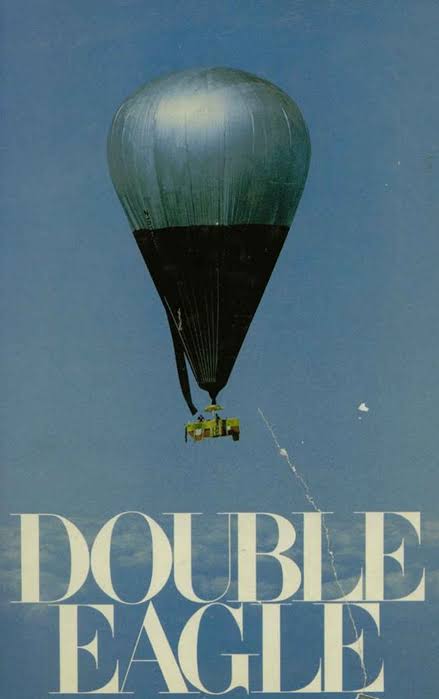
Gavin first heard this story when Benny Abruzzo handed him a book — The Double Eagle, the true account of his father Ben Abruzzo and Maxie Anderson’s first attempt to cross the Atlantic Ocean in a helium balloon. That was over ten years ago. It took until the Albuquerque International Balloon Fiesta this October to finally sit down and record it in person.
Benny Abruzzo grew up inside one of the most remarkable aviation families in history. His father, Ben Sr., built the Sandia Peak Tramway, turned Albuquerque into a ballooning capital, and then — with co-pilot Max Anderson — set out to do something that had never been done: cross the Atlantic Ocean in a helium balloon. They failed on the first try, nearly dying in 50-foot seas off the coast of Iceland with no survival suits, frostbitten and beaten. A week later, Ben Sr. said: “let’s try it again.”
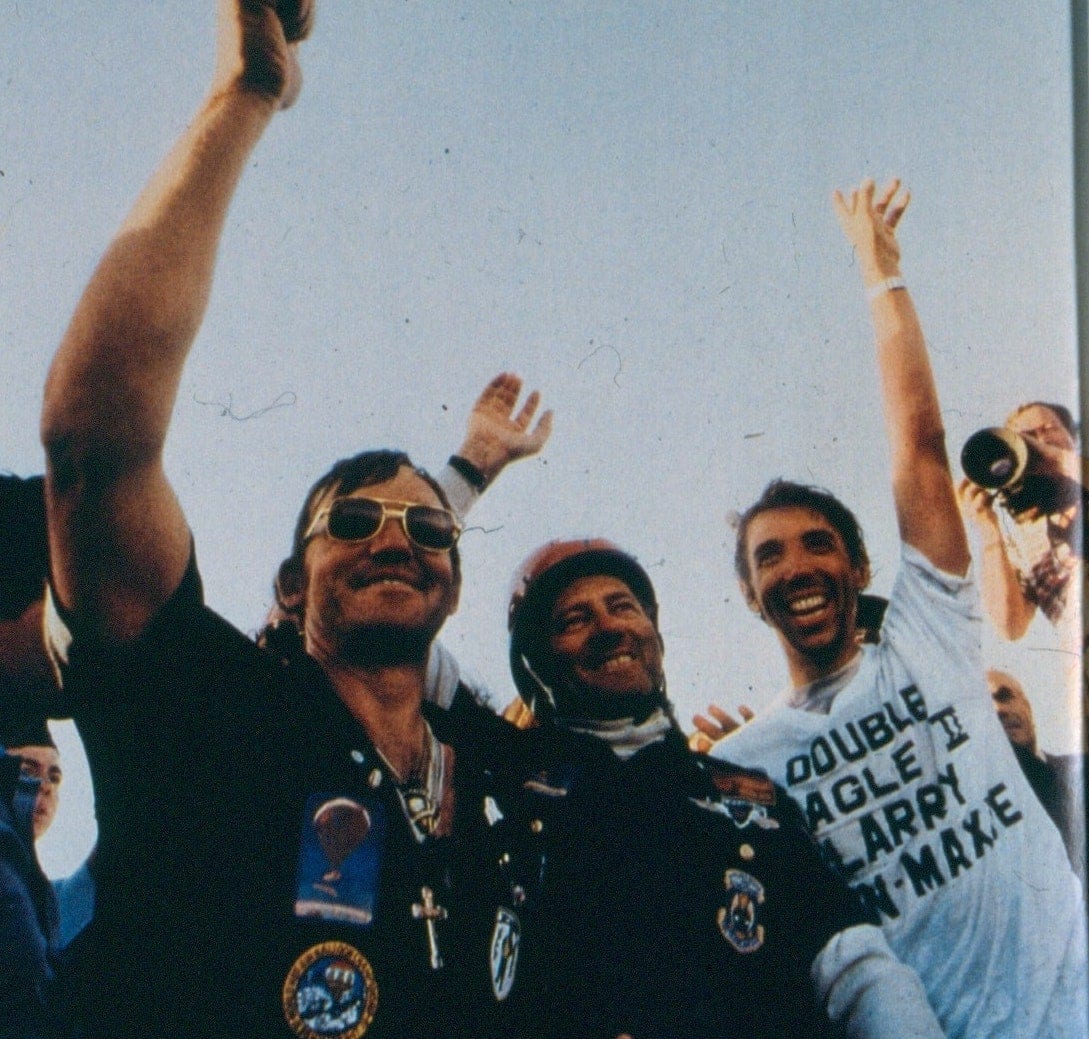
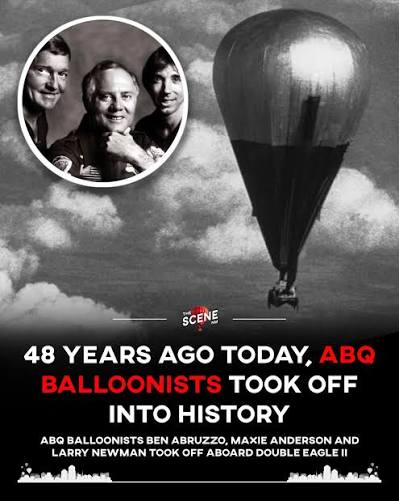
The second attempt — Double Eagle II, 1978, now joined by hang glider pilot Larry Newman — succeeded spectacularly. They landed in Miserey, France to a reception that included the President of France, a wave of fame that followed them home to New York and New Mexico, and a legendary appearance on The Tonight Show with Johnny Carson. And then Ben Sr. set his sights on the Pacific.
Benny shares the intimate family side of all of it: what it was like to be 19 years old watching your father lift off into the dark Atlantic; the moment they learned the rescue operation had started from Iceland; what his father looked like when he came home from the failed attempt — the only two times in his life he saw him look beaten; how Max and Ben Sr. were too alike to keep flying together; how Larry Newman came into the picture through a hang glider on the ski hill; how the Pacific crossing was attempted twice and finally completed in three days from Japan to Northern California, which ended in a spectacular crash.
Ben Abruzzo Sr. and his wife died in a plane crash in 1985, just 4 years after the flight across the Pacific. Max Anderson was killed a year earlier when a balloon landing went catastrophically wrong. Larry Newman survived things that should have killed him, and eventually they did. And Richard — Benny’s younger brother, possibly an even better pilot than his father — was racing the Gordon Bennett in a hydrogen balloon over the Adriatic- and then vanished.
This conversation is about adventure and legacy and what it means to come from a family that doesn’t quit. It’s also, as Gavin says, Shackleton aviation — untethered, unrepeatable, and magnificent.
Recorded in person at the 2026 Albuquerque International Balloon Fiesta. Ben Abruzzo III — Benny’s son — was Gavin’s trainer and supporter for all four of Gavin’s Red Bull X-Alps races.
Support the Podcast
A buck an episode, that's all we ask
If you like what you hear, please consider becoming a subscriber to ensure our high-quality content continues. You can also help contribute to a healthier, greener planet through our partnership with Our Forest.
See our donation and subscription options here.
Listen to the Podcast
Listen to us on all the most popular podcast platforms:
00:00 — Introduction: Why this episode took years to make 03:16 — Setting the scene: Albuquerque Balloon Fiesta, 600+ balloons 05:09 — 1977, Maine: Standing at the launch of the first Atlantic attempt 07:25 — Ben Sr.: the visionary who built the tram in Albuquerque and saw things before they existed 10:07 — How a helium balloon actually works: diurnal cycles, ballast, the jet stream 12:52 — Icing and waterfalls: when the balloon plunged from 30,000 feet toward the ocean 14:42 — 1977 technology: no GPS, no satellite phone, airliner sightings as the only location fix 16:29 — When the jet stream bends wrong: the first flight makes a full 360 without knowing it 18:10 — Dead reckoning in a balloon: why you have no idea how fast you’re going 19:29 — The launch team: family, friends, and the weather crew who told them to go 22:54 — Ben Sr.’s New Mexico flying history: hot air balloons over the Sandias 26:31 — Finding out something had gone wrong: the rescue operation out of Reykjavik 27:40 — The ditch: 50-foot seas, no survival suits, jumping from the gondola into the North Atlantic 30:15 — The gondola: lawn chairs, Kentucky Fried Chicken, and sheepskin boots 35:02 — Coming home: the only two times Benny saw his father look beaten 37:39 — Fear of family: Ben Sr.’s real emotion after the failed attempt 38:57 — Never again lasts one week: reanalyzing what went wrong 41:42 — Enter Double Eagle II, and the decision to add a third pilot 46:19 — Larry Newman and the hang glider hanging under the gondola 48:40 — How Ben Sr. got into ballooning (Sid Cutter) and how the Abruzzos got into hang gliding 52:19 — Why the kite going in the drink was the right outcome: the reception at Miserey, France 54:56 — Johnny Carson, the wave of fame, and what the French gave them 57:17 — The co-captain problem: why Ben Sr. and Max never flew together again 01:00:56 — The Pacific: bigger, meaner, and the next logical target 01:01:19 — Was the family ever going to be crew? 01:02:36 — Where did Ben Sr.’s drive come from? His grandfather’s immigration from Italy 01:04:56 — What happened to everyone: Ben Sr., Max, Larry, and Richard 01:13:19 — How quickly the Pacific dream formed after the Atlantic success 01:15:39 — The “Double Eagle” name: where did it come from? 01:17:58 — Pacific attempt one: the balloon drags its anchors in Japan and is destroyed 01:21:09 — Pacific attempt two: launched from Japan, crossed in three days, stuck into a California forest 01:23:22 — Richard Abruzzo’s round-the-world attempts: Project Earth Winds and the Hilton balloon 01:25:25 — Weather windows: how do you know when to go? 01:28:16 — Can you actually steer a balloon? Richard’s extraordinary piloting 01:32:37 — The Gordon Bennett race: the America’s Cup of ballooning 01:33:01 — Richard and Carol Reimer Davis: the Adriatic, and then gone 01:37:28 — What do you teach your kids? Benny’s answer 01:39:53 — Ben Sr.’s philosophy: “I don’t want to grow old sitting on a couch” 01:41:53 — Don’t stop: Benny at 68, a brand new balloon, and a lot left in the tank 01:43:29 — Outro
speaker-0 (00:14.094)
Hey everybody, welcome to another episode of the Cloud Base Mayhem. This show has been on the front burner for many, many years. I have wanted to do this for ages, ever since Benny Abruzzo, who was my guest, handed me the book The Double Eagle, about his father's totally insane f first attempt and second attempt of the Atlantic Ocean in a balloon, in a helium balloon.
Way too far to do it in a hot air balloon. It had never been done before. It was all theoretical. It is the definition of insanity. I had no idea how these things operated, especially in a time before GPS and Loran. And yeah, this is what this one is all about. The reason it took so long to do it, he handed me this book many, many years ago.
the Abruzzos and I go way back. Ben, his Benny's son Ben was my trainer for all four of my ex-Alps and supported me in all those races. And the three of us and his family have done a lot of skiing together and a lot of flying together all around the world. And this story is shackleton aviation. It's just it is madness. And you're
for a treat, but I've wanted to do this one with him ever since I read the book, and we've talked about it many, many times over the years, but it had to be done in person. I didn't want to do this remotely. So after the X-Red Rocks this year, I got on a plane, went down to Albuquerque for the balloon fiesta, which is the largest hot air balloon fiesta or gathering in the world. I got to fly with Benny and his balloon.
And just I which I'd never done before. It was awesome. It was pretty amazing being in the sky with six hundred other plus balloons. It is wild. It's a wild form of aviation. But what his dad and his co-pilot Max and then later on Larry and you'll hear all that in this story did back in the day, it was just it's one of those things that can't be repeated now because we have technology. Back then they were literally flying by the seat of their pants. And
speaker-0 (02:33.898)
in for a treat. So that's a little bit of the backstory. My guest is Benny Abruzzo. It was his father who did this back in the late 70s and then the Pacific early 80s. And what we do with paragliders just isn't even we're playing checkers compared to what these guys did. Magnificent. Enjoy.
speaker-0 (03:16.29)
Benny, we have been trying to do this for a very, very long time. And one of the one of the things you said was we gotta do it live. So here we are in Albuquerque at the balloon fiesta and you got to go flying with your younger son today. There's an amazing amount of history with balloons in your family that I have learned since I met you in Shaman in twenty thirteen and all the adventures we've had and all the adventures we've had with Ben.
Your older son and my exhelps and everything else, but you talked about your brother and the Adriatic and the Gordon Bennett, and this is more about your dad and Larry and Max and their crossing, the first crossing of the Atlantic and their first crossing of the Pacific. But you handed me this book, which I've got in my hand, double eagle. You've got the museum, your Brutto Museum, right down the street here. There's just legend.
on top a legend on top of legend in your family.
We gotta go to the launch, I think. Nineteen seventy seven. You're out in Boston, you're nineteen years old, you're the cr one of the crew, you're getting ready for your dad and his two other pile was it two on the first one? No, just Max. Just Max. they're going off to be the first to cross the Atlantic in a helium balloon. Tell us you remember this day? Do you remember the stress? You remember your
Your hi his wife, your mom, what what was what was that day like and tell us what they were going to do because this is this is shackleton all wrapped up in aviation. I've never read a book that was such a page turner like that. I mean you can't put this thing down. It's totally insane. It's insane.
speaker-1 (05:09.962)
Yeah. So you got the first part right. There we are in Maine. I gotta step back just a minute. The setup is Dad comes home and says, I'm gonna fly across the Atlantic Ocean in a balloon. That right there gets everyone in our family at pause, big pause, big deep breath.
And my mom says, Have you thought this through?
I would say Dad said, sure, sort of. Now we're standing there in the field. Now it sinks in. And we're all standing there. The balloon is gorgeous. The inflation went flawless. It's this majestic beast. Something none of us have ever seen before. First eyes. dad had seen it in when it was built, not inflated, on the floor with some air in it.
So here it is, and I'm 19 years old and I'm part of the crew and I can't even get the brain straight that they're going to take off, fly for a few thousand miles into the night and cross this ocean.
And how much of this at this point is this we know we can do this? Or is this theory? Is this math? Is this nineteen seventy seven? This isn't the balloons we just went and did at the Fiesta. This is a helium balloon. Things how much tall I mean looking at this picture.
speaker-1 (06:53.952)
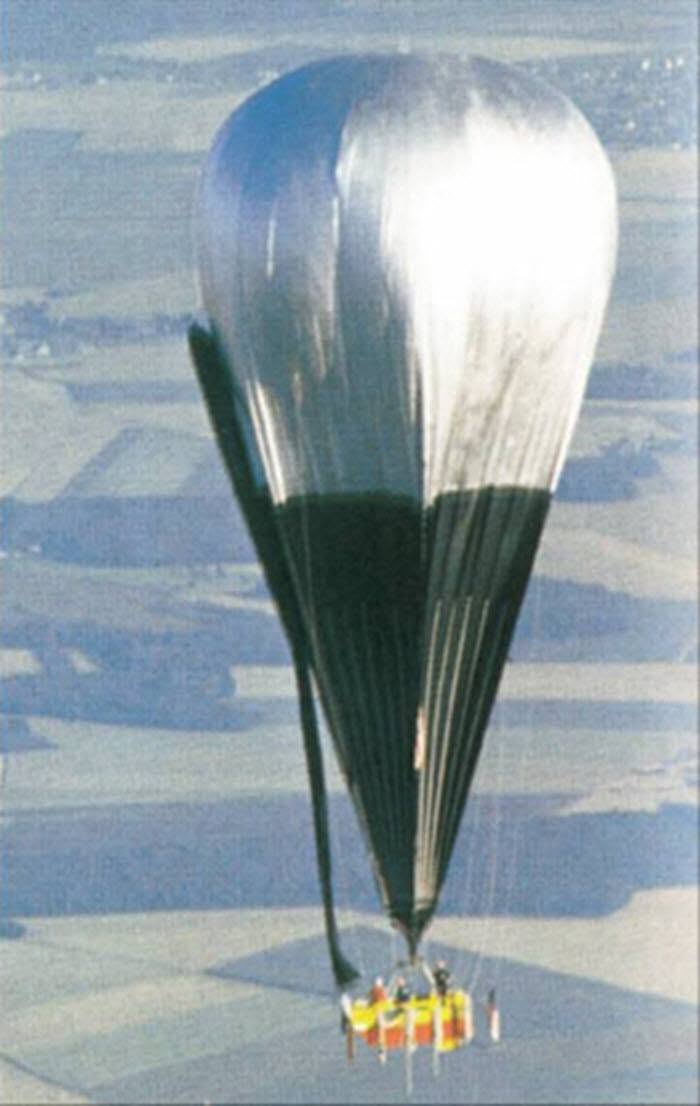
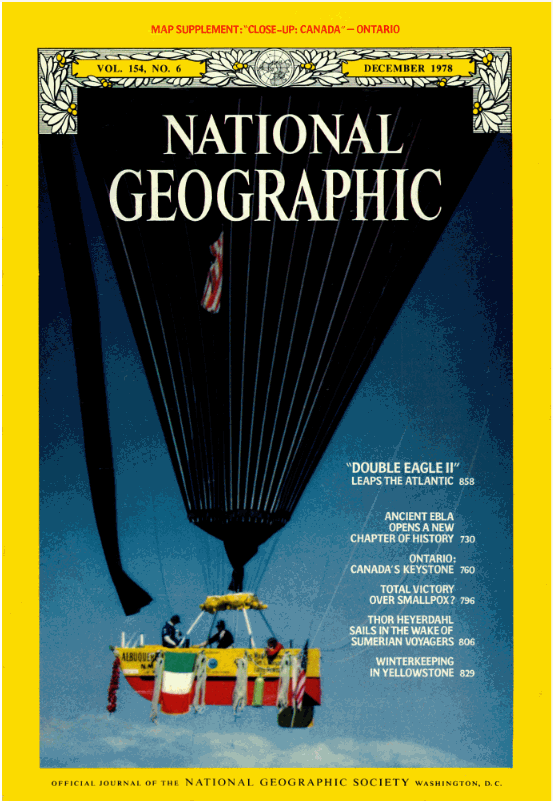
It's a single cell. It dwarfs anything you saw at the fiesta today. towering machine took us hours upon hours to fill. Giant semi-trucks of helium go into this one little balloon. And so there she is, she's standing there. It's time to say the goodbyes. And my mom looks into my dad's eyes.
speaker-1 (07:25.954)
Come home.
Your dad was he built the tram ski areas. I mean, your your dad is is just one of these massively larger than was one of these massively larger visionary. As a visionary, absolutely. was he scared? Was he t it was his did his confidence just overpower this? I mean that when you think about what they did w as you get into the book, you're just going
These guys batshit? I mean it I mean it is incredible what they set off to do.
So when you take his life in perspective, came from a very small family, no money, Italian immigrants, and one thing after another through his life, he could see something that either hadn't been done, whether it was real estate or something like the tram, which was an attraction for a a city which is now Albuquerque and New Mexico's greatest attraction.
And he could see what that would look like in the future. So I think he saw.
speaker-0 (08:42.38)
this happening. And there there was as as I remember, there there's some urgency here. It wasn't just his idea. There's other people that are trying to
Ed Yost, who built Dad's balloon, got within miles of the coast, got into what we would consider offshore winds if you're a surfer, which is great for the break.
Not so good in a balloon when you're at the bottom of your ballast, you you're fighting every inch to get to that coast to make the mark, and he couldn't get there and he put it down in the water. And that had been done, but unsuccessful. They they were attempt 17-ish, and I'm gonna say that 16-17 or so, and then
Fast forward, the one that works is attempt seventeen or eighteen.
Technically what's happening here that's different than what we see at the balloon fiesta ma many people listening have seen, you know, the propane goes off and you're you're putting hotter air into a balloon. This is totally different. They talk about the diurnal
speaker-0 (10:07.382)
Nights, I think as they have it. So it you have a day and a night. Once you leave, you can't put more gas into this balloon.
No, the the theory was simple. Single cell closed with helium. And when I say closed, you there's this the image of the balloon is quite majestic. It has this big like snorkel that looks like it hangs down to the side. That's the passive vent. So that if the balloon is gaining expansion of the helium molecule, it can passively vent the excess and they don't have to open the top.
An expansion happens from the sun.
From the sun. So daily heating. It's a very critical thing because this was designed with a valve that opened like the lid of a jar and would go open and let the gas out and then shut. That was to be used only in extreme condition. If they were supernova going up out of control from superheating, you can't throw ballast off.
That makes you go faster, right? That's the reverse side of the equation. So you have to get rid of the gas. Snorkel takes care of it to a point, now you're overclimbing. If you get too high you burst and your day is done.
speaker-0 (11:30.922)
And wicked hypo I they were they were they were hitting almost forty thousand feet in places going across the ocean as I remember.
Yeah, but again, you gotta put it into perspective. They were in a boat that they made out of wooden fiberglass that was open air, no capsule, oxygen tanks, oxygen mask, clothes you wear. Imagine going, you're a paraglider pilot, gets kind of nippy at 15,000. At 20k, which we're not supposed to fly.
I've seen people with ice on their face. They're up at 30 and 40 over the ocean and they're surviving in open air condition.
And and they're they're a rocket ship, both up and down at times. It it the you you c sometimes they were in a free fall. Your dad called it a waterfall.
They had moments where they gained icing and the weight of the balloon overcame the helium ability to lift. So they went from 30,000 feet to almost straight into the ocean and they thought they were gonna go in. As they got close to the lower atmosphere, it finally warmed up enough. Giant sheets of ice came off of the balloon.
speaker-1 (12:52.706)
They dad said it was nothing short of beautiful and terrifying. And then the reaction to the shedding of that much balance is now you're going supernova again. You're going back up.
And I I I remember that the the biggest thing is when they take off from from Boston on on the first one, again it's it's a lot of it's theory, but they they they know they've only got seven of these diurnal tip overs. They've got seven nights, seven full days, and that's if everything goes perfect. They've gotta get up the coast, up into Nova Scotia, they've gotta then boost up into the jet stream.
Weather's gotta be perfect. They gotta stay high in the jet stream, go all the way across, and they can get there in hopefully five or six days. But if things go sideways, like we're about to hear about, then they you can't add more helium. You can't you can't keep going indefinitely. You've got to start shedding weight. You start hucking stuff overboard. That's the only reason, that's the only way to keep going up, right?
It starts simple. You start with sandbags. And the sandbags are a very measurable ballast. So you want to go up, you throw out a scoop of sand. You want to go up a little faster, throw out ten scoops. You want to get going because you don't like the weather that's in front of you or there's terrain, you throw a bag or two out. So there's the control.
When you start getting into the latter part of the flight, you're now out of sand. Now you start throwing things out that you don't need as much as the other things. Sometimes that's your food, it's your water, then it becomes your avionics, which by the way they had very little of. You
speaker-1 (14:42.592)
have to take yourself back to nineteen seventy seven, didn't have GPS, didn't have satellite phones, we didn't have cell phones, we didn't have tracking. The only way they were sighted for location was by passing aircraft and it was a visual.
This is United Airlines 747. We spot a very large balloon object flying at 32,000 feet. Never seen this before. And then that came back to launch headquarters, and now we knew where they were.
And this whole thing with the sandbags, this is a a big deal, I remember, because you can't just throw these off willy-nilly. You know, that you're you're messing with your diurnal equation. Every time you do that, then you know, if you're in one of these waterfalls and you just start hucking these off, then the reverse is gonna happen. The balloon's gonna heat up and then you're gonna rocket ship back up and then you gotta start dumping the gas, right? And which is really what really don't
So the whole idea is to try to take the balloon, get off a launch, have a controlled climb, controlled climb, but you want to get into the jet stream. Once you're in the jet stream, it starts to get pretty simple because you're traveling at a hundred and some miles an hour.
In a balloon, which is kind of a mind-bender because the balloon doesn't know it's going 120 miles an hour. Because if you look at it, it's not a very odd aerodynamic looking ship. It's not like our new ozones or any of these cool wings we fly. And so you're going with the air mass, eerie feeling to imagine you're going that fast. So cool thing, you get up in it and it's awesome.
speaker-1 (16:29.014)
When the jet stream changes because remember, it's all theory on where it's gonna go because there's a low pressure that develops and a high pressure develops and it bends it left and bends it right. In the first flight along the way, they did a turn to home, had no idea they had turned to home, knew they were in trouble, they were
Looking into the dark sky, having no idea where they were even going or what trajectory they were on. They actually had done a full 360. They were still being driven into the ocean and they had to make a decision. The decision was controversial between my father and Max. it resulted in them ditching into the ocean.
We will get to that. That is one of the craziest ditching into the ocean stories.
Yeah, most people don't want to ditch into the ocean twenty foot sea.
And not when it's blowing as hard as it was. And, you know, they were they were it it wrote you know, rogue waves and I remember it being a fifty foot sea. I mean it was blowing I think something like seventy knots, you know, it was a hundred miles an hour. I mean they were in a proper storm when they had to ditch. And imagine jumping out of a gondola if we w when your timing is wrong. I mean if the if you get it right at the top of the swell, sweet, you're gonna drop fifteen feet.
speaker-0 (17:59.938)
Get that off just a little bit, you're gonna take a hundred foot fall.
Yeah, I think when I said twenty I was thinking of Wyoming.
Yeah.
speaker-0 (18:10.444)
Well, okay, so th yeah, and that that deserves a a quick chat as well about this dead reckoning. I I didn't understand that about balloons. You're going whatever the wind is going. You have no wind on your face. You can't hold your hand out the window and understand what you're doing. So you can't dead reckon really at all. You have no idea what speed you're going. The Seventy seven, they didn't have GPS, they didn't have Loran. They had radios, so they could
call ships or airlines could call them and give kind of an idea. But there's there they don't have any concept of how fast they're going, right?
No, they did take a sextant, and the theory was if they had clear skies, they were both educated enough on the use of the sextant that they could align the stars and then know approximately what location. Kind of funny when you think about today, we want to know where we are within a few feet. Yeah. This was in probably an accuracy of miles upon miles. Yeah. At best. At best.
So this so you're sitting there, your mom says, Come back.
Tell me more about this day, do you remember it? Is it pretty clear?
speaker-1 (19:29.096)
yeah. The whole launch was done by a very few number of I'll call it family and and and friends. Family and friends.
This wasn't this organized thing, and not to pick on anyone, but wasn't one of these Red Bull XL things where you have all this staging and support and forecasting and routing and all of that. It was two guys in a balloon with an amazing weather team. That was the one thing they did have. And the weather planning was what it was all about.
The weather team gave them the go window. If you can imagine these guys looking at my dad and Max and saying, We just told them to go. Yeah.
that's heavy. A lot of responsibility on their shoulders.
More than you can imagine. Yeah. Yeah. They're in they're they're they were Rice was the central character. And I believe I'm right on that. Again, this is a bit ago. but they gave them s great confidence that they were gonna hook up into the right jet stream, into the right air mass, and that they would make Europe
speaker-1 (21:00.046)
Approximately with the way that one was moving, they thought they would be there in as early as three to four days. Yeah.
that and that first night just sounded so scary. They take off, I think it was later in the afternoon, and your dad's on watch, you know, somebody's gotta sleep. Or maybe Max was on watch. It it doesn't matter, but they're they're low. They don't want to start throwing sandbags yet. And I think your dad's convinced that they're no, I think no, it was it was the other way around. Max is convinced that they're so they're really low.
And they're still over the terrain. I think it's Mount Washington or Stowe or, you know, some Vermont somewhere. And and they're they're kind of threading through mountains and it's night. They can't see. And there's people on the ground that are I I remember they're reporting, they're they're calling and the thing, but at one point, I can't remember, one of them's convinced that they're gonna run right into a mountain. And in what they found out, I believe, afterwards was that just how air works, your dad would.
We're not gonna hit the mountain because we're gonna go at the mountain and air splits and goes around the mountain. Don't throw sandbag. We don't we don't need to go up and over. We don't need to throw yet. And it worked. I mean he just had this intrinsic I mean, that's not flying out here in the box in Albuquerque. You're you're at night, you can't see, there's there you don't there's no GPS, you don't have a spotlight, you know.
My my dad was also one of the first to fly over the Sandias. So we all know how much wind effect you can have on a solitary feature like the Sandias. That's what makes that mountain so unique. It's this giant fault line in the middle of nowhere. Well, dad decides you can fly a hot air balloon over that mountain.
speaker-1 (22:54.946)
He was successful on his first one, and I may have the order wrong. On the second one, he planted it into the face of the cliffs on the highest limestone band. very successful, I think we called a rapid force landing in the modern age. And
had to be not rescued. He walked himself out of it, but then the next day they had to rescue the balloon off the face of the sandias. So he understood a lot about mountain flying, but I don't think he had it wired.
So this was kinda just I hope we get through I but I remember that first night being incredibly stressful and remind me too, how did they I mean, how did you guys fall on? There's no in reaches up there. You didn't know where they were, but it
We didn't get to follow. No at all. On and again, because I've been on so many of these flights in because we had 77, we had 78, we had I think it was 80 and then 81. And then we had my little brother. and then we had the Round the World Adventures.
It kind of blends all of these together. And so on that particular one, I don't remember if we chase planed or not. I think we did on the first one, but it could have been the second, the successful. But cool experience. Get in an airplane, fly out there and fly next to the balloon while it's heading off.
speaker-1 (24:36.428)
Towards Nova Scotia was a magical moment. I just can't tell you in which one it was because of this it insanely deep history.
I mean, was there a concept it for you at at nineteen w was there any thought of my dad might not come back? Or or were were you not that you you just had so much confidence in dad that it was yeah, he's got this. Well do you remember that time?
You know, y there's two ways our brains work. There's the way we want to remember something, and there's the way we actually experienced it, and then there's that l fine line that we've between the two. I can tell you that we all thought he had this because never in his life did we see him not complete his mission.
We saw him though, dented, damaged, and hurt, like a lot of us when we engage in these kind of sports and these kind of activities. So there's there's the part where and again, this is new mixing with old. Now we manifest that we can see the completion. And if we do that, we're gonna get there.
Because we're part of the control of the idea. I think my dad had that in him 24-7, where he could look forward and go, We're actually gonna do this. And then he would go do it. So then as kids, you look at him and go, he's got this. That right? But then we all know in aviation, those are usually
speaker-1 (26:31.616)
the fla the the three words you hear right before an episode that is not so good.
When did you find out they things weren't going well?
Not soon, because you have to remember they they can't th th there was not good tracking. At some point the airliner that had gotten within some vicinity gave a location, they lost location, then f at s at a point when they started the rescue operation out of an Ikea.
Iceland and that the famous base Revoltec. Yeah. Rekivit. I can never say it quite right. When they started the operation out of there, all we knew is there was a rescue operation. So we did get some information on that. And again, remember we're going from memory. And then at some point we had information that it was successful.
Yeah, basically.
speaker-0 (27:40.418)
This was I revisited this on the plane down here yesterday. this was maybe the most ludicrous thing I've ever read about this ditch. So they things had been going bad. They went backwards. They did this whole big circle the wrong way. They went way too far north. they didn't know that until they knew that and it was, you know
Wicked cold. They're up at thirty five thousand feet. They almost go in the ocean a couple times, so they've got to ditch everything. Your dad was just there at one point there. What do we ditch? Let's get rid of the radio stuff. And it went and it wasn't we don't we think of little radios. They've these are big ass radios with big batteries. They're heavy, of course. That and it wasn't working right. So ditch that stuff. And then you know, ditch the clothing and ditch the ditch the survival suits.
Yeah.
speaker-0 (28:34.828)
Remember that they went in without survival suits and was only because the Coast Guard, the Icelandic Coast Guard, they'd somehow been able to communicate with them and they were right there. It was incredible that they were able to kinda get it low enough that they could jump out of the talk about this gondola. It it's a it's a boat.
Well, a boat's being way too nice. Yeah. It was i it go to the Smithsonian, go to the Albuquerque museum, the Abruzzo Anderson Museum, look at that thing, you tell me it's a boat. No, it it this is some nineteen seventy shit. I know.
Yeah.
They they made it as a catamaran, which you're pretty good with those catamarans. So they made it as a catamaran because they thought it would be more stable. They water tested it in Cochete Lake, right up north of Albuquerque, which is a dead flat fishing lake. So it was definitely seaworthy after that trial. you when when you think about the fact that they were hand manufacturing their
gondola, you know, the connections. gotta give Ed Yost and his team all the support of the beautiful design of the vehicle itself of the balloon. When you saw it, felt it, touched it, they were they air tested this thing to perfection, to pinhole, because the helium has to be that tight. so they had this
speaker-1 (30:15.798)
kind of very advanced almost aerospace capsule and then they were flying in Walmart. I don't think we had Walmart back then yet. But Walmart the little chairs, the little silver ones with the webbing sh shit. That was what their their flying chair, the captain's chair. Yeah, the you forget about those things. you know, high tech food, Kentucky fried chicken. I mean
Some people would have thought about maybe some really intense proteins. I don't know, you do No, they had MRIs. They did they had MRIs, MREs, excuse me. Those were some of the first things they threw out because they tasted like shit. And so those were gone. So they had two-day old chicken. but you have to always go back to the time. they
R E's or something.
speaker-1 (31:15.286)
The the equipment, the clothing. My dad was flying in a pair of sheepskin zip-up boots. Not La Sportiva, high tech, go mountaineering stuff. They were little sheepskin. They were like what you would wear to the bar in Aspen. Okay. He did get frostbite on the first flight. That's right. Go figure footwear and high tech. There I don't think they had a piece of Gore-Tex in that.
Balloon. They were wearing the ski park is that we used at the ski area. If you look at some of the photos, I'm wearing our employee jacket that was from the ski hill. it comical times. how this was kind of like the hillbillies go across the Atlantic Ocean.
How how expensive was this to do back then? Was this is this a you know, a super rich guy sport? Is this a is this a sport? Is this a thing? You well you said there was sixteen there was the sixteenth attempt or seventeenth attempt so
All the people all the people doing this, I I hate to use classification because I don't like that. it was not economic wealth that got you a chance at the Atlantic, it was heart, determination. it was one of aviation's greatest feats that had not been done. When Lindbergh crossed in the airplane, that was it. And everybody thought we're done. Then
The early guys said, pfft, that wasn't anything. He had a motor. We're gonna do it in a balloon. That launched this idea that it was one of the last great adventures. You talked about Shackleton. They had done that. You talk about the poles, Adminson, Smith, Scott, all of them. All my heroes. I've read all the stories. This was one that was hanging out there and it couldn't get done. And it couldn't get done.
speaker-1 (33:18.102)
And so I think that's a huge thing that drove my dad and Max, and then eventually Larry, to not give up. Dewey Reinhardt, if you want to hear more, look up Dewey Reinhardt's story. He was right there. Dad and Max and Larry snaked him.
It's like going into goal. They made the right move on the right day they got off the ground that much before him. Dewey was right. And they center punched it. Yeah. And Dewey is a beautiful man. I've met him, I've sat with him. When my father and was inducted into the World Balloon Hall of Fame, I went and of course my father and Max
Nor Larry could i be there, but Dewey was there. And what a magical man.
I should know this from all my stand I can't remember, but it the it had the temperatures and everything that they ditched into. They'd already thrown their survival suits over, so they went in with nothing. The sheepskin boots and stuff. you know, but the Coast Guard was there and so i it was it was insanely miraculous that your dad and Max didn't die. It was it was it was a proper storm. The seas were
Massive. You know, I mean just to get somebody out of that kind of sea is incredibly dangerous and hard. you know, it's freezing. You're off the coast of I think they were within twenty five miles of the coast of Iceland. It's not that warm up there, even in summer. and they've got no protection. They just have to ditch as they're flying.
speaker-0 (35:02.518)
in the in the ocean is coming up to the bottom of the gondola, they gotta keep it from getting swamped and they gotta time it right and jump into the ocean. And they make it and then they go, let's do it again.
Not
Not immediately.
No, Dad came home. There were only two times in his life that dad looked beat, fragile. is a g is a word that comes to mind. tired.
He's forty seven at that one. They took it out.
speaker-1 (35:43.382)
Yeah. I mean but man, he did not look young. the other time I saw him in that condition was after he was knocked off of the second tower of our tram. Free fell it was a ground out eighty feet and it would have killed him. And he manipulated himself 'cause he was a diver, put himself into the metal superstructure and stopped the plummeting to the earth in the ladder rungs and the steel superstructure.
and bruised and broke every rib, his back, and he was completely purple. Fast forward, the next time I saw him in my lifetime with him looking like that was after he came back.
From the first one. After the ditch. Yeah. And and how is Max?
Max didn't get as much frostbite. Dad got bad frostbite on one foot. he had to live with that th for the rest of his life and very serious to the point where didn't have any amputations or anything like all of those ice climber guys we all admire that do stuff like that and Everest and K2. but when he came home he sat us all down in the kitchen and by the way, all the great ideas.
And all the the setbacks were discussed over the kitchen table. very Italian. And so he said, never again. And he looked never again, his face drawn, tired.
speaker-0 (37:26.03)
Scared.
No, just not fear. not fear. no, that's an an incorrect statement.
Beat up.
speaker-1 (37:39.25)
Not fear of h his humanity. Fear of family, loss of family, failing us.
Heavy. Yeah. Yeah. Do you think do you think that was the first time in his life that he'd that he felt a a real sense of his mortality?
the reason I brought up the tram incident is I think that was number one, you know, some of us, you included, have a few extra lives in there. We call it the nine lives. Some of us have used twelve and fourteen. Yeah. but this was the first time he had that look of
It just took so much out of him physically. Like he looks spent. My dad's an amazing human and within a week he's back.
And it's back. Really? Mm-hmm. Mm-hmm.
speaker-0 (38:57.654)
Okay.
Week he goes from No, never do never again and
You can see it in him. You can see it in his walk, you can see it in his face, the conversation. It was left undone.
You can't leave things undone. I get it.
So then you go back and you reanalyze what do we gotta do to do it different the next time? What what what w what did we miss? One of the things was they thought they needed a deeper team. I should say my dad did. Team. Hence Larry Newman's decision making. Mm-hmm.
speaker-0 (39:34.231)
A deeper one?
speaker-0 (39:40.14)
Sleep.
speaker-0 (39:44.302)
was gonna say there I I remember from the book there was quite a bit of inner interpersonal stuff going on. This was not this is not easy to sit in a tiny little space with another dude for when when there's some serious decision. I mean they did they didn't always agree.
No, not at all at times. Yeah, and that's hard. So you have co-captains. Remember, there was no captain. There were co-captains, Dad and Max. Take two really strong personalities. And I mean, Max was a beautiful man. No, I spent lots of time around Max and he was a lot like my dad and he was different. I there were
Points in the journey where Max thought going regardless of the risk was okay. My dad always calculated risk. He did it when he played poker. He did it when he made his business decisions.
But he always looked at it very calculated and said, We have to have a reasonable percentage of support here that we're going to succeed at this. And when they put it in the water, my dad thought there was zero chance and they were going to die.
I believe Max was okay with that. My dad wasn't. His family. Max had a family. Doesn't mean Max has a family that's different than our family. Sure. But it's about in that moment, and it happens all the time, and we read about it. You and I read these kind of stories. You've made those kind of decisions. I've made those decisions.
speaker-1 (41:42.982)
lesser circumstance, but you make those decisions about do I want this that bad? Or let's stop, take a break, let's recalculate, let's reset, and let's go do it again. Boom. Double eagle two, first cross, home run. So do I
Think dad made some really good decisions? 100%. After that flight, my dad and Max didn't fly again. Really? Mm-mm. Max went on his journeys. Dad went on his. Dad crossed the Pacific Ocean. Hmm. First ever. First ever. Took two tries. Did too? yeah. there's a book about that.
Really?
speaker-0 (42:34.658)
There is
Yeah, there's a book about it. I didn't Double Eagle Five. It's a good read. The author of the Double Eagle wrote a perfect story. Yeah. The other story is strong. It's a great read. You need to read it. Everyone should read it. You have to remember, they did something nobody had ever done. Nobody had ever done the Pacific either.
But it didn't have the mark because guess why? These same guys had already flown over one ocean. What would keep the super guys from flying over the second one? Right. First time Kriegel did what he did, the second time Kriegel did it was cool. It wasn't as cool.
W what I was thinking about on the plane down here is
speaker-0 (43:32.408)
Doing the unknown has always been a big deal. You know, accomplishing something that no one has done before has driven a lot of really cool shit in our human history. But this one is unique in that today, you know, there was there was faucet, there's there's going all the way around the world, there was, you know, going bigger, but you can't replicate what they did.
Unless you just said, we're doing it with the same tech. But that's what I love about what they did was that you the untetheredness of what they did is I
back the hair is standing up on the back of my neck right now. It
What they did it's Shackleton aviation. They I mean, when they when they left the South Pole to get to Elephant Island or whatever the what was the name of the Seal Island, and they did it by the stars and these little boats with 18 inch freeboard. It just what? And this is the aviation version. It's just remarkable the the capacity for
That kind of unknown we can't do anymore.
speaker-1 (44:56.696)
So that was one of the huge drivers that drove them because again, you gotta put yourself in that time zone. And it's unique, you know, I have two beautiful children, 48, 38 years old, Ben and Dang.
I tell stories.
And sometimes they're like, some of this has to be fiction. They can't really have done it like that. And I'm like, you you have to believe what you want. But what I can tell you is it was that raw and it was that real. And as you said, they were that untethered. And that's what made it so unique.
And what my dad saw and Max, the both of them, same drive to accomplish this goal, slightly different tact. What they both knew is this was one of the last great adventures out there. And they wanted to be the two to do it.
And they bring on Larry Newman.
speaker-1 (46:19.724)
Hmm. You you had to have met Larry Newman to think that that must have been one of the craziest, insane ideas. And my dad brought that to Max and Max looked at him and went, What?
I mean so they go to they go to Maine and they launch and they launch with Larry's hang glider hanging under the gondola for when they get to France, he's gonna climb down the rope and cut away in nineteen seventy nine on a hang glider, right?
Sure. What else would make sense? Right. Right.
It's just I
Exactly. You're reading this going, how much of this is fiction? Is that but they they drugged that thing off the ground and flew across the Atlantic with a hang glider hanging underneath this thing. It didn't get there because they had to ditch everything again.
speaker-1 (47:24.846)
Yeah, but they didn't ditch it until the channel. They made seven point some percent
It made it almost English Channel, he probably could I mean with a modern hang ladder, he still could have done it. He still could have climbed down there and flown it into France. But that is just the cojones on these dudes. Whoa.
So again, perspective, and we'll deviate just a little. How does my dad decide to balloon? He's driving down a road and he sees a balloon go up. He turns his car and he follows the balloon. When the balloon lands, he pulls over and says, Hi, I'm Ben Abuso. And Sid Cutter.
If you go look down there at our beautiful fiesta grounds, and a gorgeous statue of Sid there. And his wife, Jewel, was has been there for the whole event. And I've shared mornings with Jewel. And that is another big, huge history of the aviators of this New Mexico zone, and specifically Albuquerque. And he looks at Sid and says, That's cool as I've seen.
That means.
speaker-1 (48:40.224)
And he says, Yeah, it's hot air ballooning. And my dad says, Will you teach me to fly it? And he says, Yes. And he says, and I want to buy it. And it was done on that day. Fast forward, there's a fellow that comes to Sandia Peak Skiria. This is pre-Newman, but it sets us up perfect for Newman and the Hang glider. He comes to Sandia Peak Skiria with his
17 Chandel. It's a French hang glider. Any of the hang glider dudes out there know what I'm talking about. It was a flying rock, had a three to one glide ratio. The guy comes to the ski hill and says, I want to fly this on the ski hill. And my dad said, Okay, condition.
You teach me to fly and you teach my boys. So we all go up there on our skis and we ski down, take off in a 17 Chandell, and land. We go up when we land. We do it in order. He says, great. And he gave him cash and we now owned the Shandell. First wing that we flew off of this mountain. Absolute insanity. A three to one glide ratio doesn't get you out of the sandillas.
So that puts it into perspective. So then Larry's expertise, we're now all into hang gliding. I'm hang gliding. My older brother, my dad. we've become, and this is all, this is all pre-balloon, right? He's hot air ballooning, but he's not helium ballooning yet. We're all flying hang gliders together. That's how Larry Newman comes into the picture. He shows up with a real wing.
And says, I'm gonna show you guys how to fly. Dad got respect for him in that moment. Larry was a very qualified pilot, jet pilot, aircraft. And so that means he had the nav, the avionics. Not that any of that worked in the balloon, but he had that and he had the drive and he fit that mold of.
speaker-1 (50:56.974)
Well, I'm gonna get in the balloon with you guys and go across the ocean. Imagine that. Quite a younger man going with these other two guys who have already gone once, and he says, I'm in. You gotta give Larry huge credit that he had the stones to step up and go all in. Then came the and we'll hang a hang glider off at the bottom. They actually flew in the balloon.
And he crawled out of the balloon, down into the hang glider, hot air balloon, got in it and flew away. They then also hung it under the the gondola under our tram car, took it out over the front departure zone of the tram to make sure that they could hang the CG right and get all that right, so that he had a fighting chance to go out there, clip in it, and cut.
'Cause this was all they were I mean, they were expecting this incredible reception if they get to France, which they got. I mean they they tr you said it, they're visionaries. They they plant that here's how we're gonna make the biggest splash ever. Not just fly a balloon across the Atlantic for the first time ever, but fly it and climb down and fly a hang glider in. It's preposterous. It's preposterous.
Yeah.
speaker-1 (52:19.082)
Yeah, you you always look at the way it happens. I think it was good that Larry's Kite went in the drink, because to not be in that gondola in that moment in Misery France, when you look at the photographs, when you see the reaction of the French community, that was utter chaos, beauty.
It was perfect.
Everything. There was perfect. Larry needed to be in there with them. He would have missed all that. He probably would have flown down in his hang glider over there and someone would have said, Where'd he come from? Not putting one and one together that he actually came from the balloon. So I think he was supposed to be on the ground in that moment. it was
Worked out like it was supposed to be supposed to wasn't it de Gaulle? No. I mean the president of France was in the field.
Misery France is where they went down. When you see the photos, the traffic and the lights go f beyond your imagination and where it goes. they were treated by the French as heroes of aviation. they the they dad max nobody understood that they were going to get that. That wave
speaker-1 (53:48.504)
followed them home into New York, into New Mexico. it they didn't anticipate that. Some people do things for something. They didn't do it for that. But what came with it is was mind-bending. One of the greatest things is to watch Johnny Carson. And at that time it was just Johnny. There was no one else.
There was no late time late night TV. And Johnny Carson with my dad, Max, and Larry is one of the most brilliant things you'll ever see. And it was it was that level. It was just magic. People couldn't concede that these three guys did that.
How did your dad and Max put this together initially? Were they just really good buds? They were riding motorcycles together and flying hang gliders, or what how what's the history there? How'd those two hook up to do that?
Yes. entrepreneurs. Both successful entrepreneurs. Max ran a very successful mining company. Gold, copper, mining. Dad, very visible at this point in time. Tram Adventure, Disceria, Building of Sandy Heights. They did need
money so they used what they had. sponsorship-wise, the early flights didn't have a lot of, if any, major spons sponsorship. They were able to tie it into I believe it's CBS Wide World Sports. they got great sport from National Geographic. but none of this
speaker-1 (55:49.832)
big money sponsor, they spent their money, their sweat, they built their stuff, and they went and did it. When they got to the Pacific, it escalated a little bit. And you know, if you look at the gondola, there's like JVC written on that was some an audio company. Yeah. Kind of a early Sony. Yeah. Like Beta. Benny Hana, the great restaurateur. He was in the gondola with my dad.
He was a Japanese sports adventurer in his own right. ocean speed racing boats, the big ones, crazy ideas. He wanted to get in a submersible submarine inside the continental US, go into one of the blue holes, and drive his submersible into the ocean.
So I people of that thinking draw people of that thinking. Flip Wilson, great comedian, he wanted to fly across the Pacific Ocean with my dad. My dad said, I don't think you qualified, you're funnier and shit, but I don't think you got this.
But after after they make the the Atlantic crossing and they make it to France, so your your dad and Max never did another flight together?
speaker-1 (57:17.558)
I won't say never. Because again, history, flights, lots, Gordon Bennett, you're familiar with that. It's a it's the oldest one of the oldest racing series. And it was helium balloon. They also did at times use hydrogen. But my understanding it's one of the oldest.
races on history. They did those together. I can't remember if they did another one of those after or not, but they shifted and dad had his eyes sent on the Pacific. Max set his eyesight on around the world. Dad felt the around the world was out of the realm. Remember what we were saying earlier?
When I said there's what is your calculation of risk and also the calculation of success. So Dad thought around the world was a novel idea, but as hard it was to get across one ocean, I don't think he believed that technologically we were there. And also just the amount of variables become extreme.
they but they weren't there. I mean that the the the round the world didn't happen until more way more recently that match
That's my whole idea. But Max was pushing that idea back then. So again, what drives a human being? Max was pushing that. Dad took it and said, What if we did the Pacific Ocean? It's bigger, it's meaner. Let's go do that. So Max decided he didn't want to be part of that or they did not want
speaker-1 (59:18.75)
do it together. And I think it had to do with that co-captain, I think Max wanted to be captain.
I think my dad wanted to be captain. Yeah.
You know when you classify people by personality type tape type A and all that stuff, I don't like that that much. What I think you had was too well, no, you're right. Type adventure. Yeah. So let's put the A there. There you go. Not this control thing. Dad could sit down. Dad could sit down with me as his son and help guide me through my career in a very wonderful way.
And get me flying balloons and jumping off cliffs and flying hang gliders. And it wasn't control type A stuff, that thing. This was type A adventure. So I'll say they both had that. they were driven to be successful, but my dad didn't base success on money. My dad wore clothes until there were holes in them. My mom would say,
Ben, you look like a vagabond. so I don't think that was the drive. It wasn't for fame. It was to to do what hadn't been done. It was to just do it. Not to steal Nike's little frame, but just do it. They they did that.
speaker-0 (01:00:56.268)
You you Benny, you you come from this incredibly s rich family of aviation. I don't I don't you'll have to tell me how old Richard was when he when they did the first attempt. you were nineteen. How old was Richard?
Five years my little sister would have been twelve.
Okay, so you have fourteen.
speaker-0 (01:01:19.382)
So was it ever talked about in the family that one of you would be the crew and one of you would be going across the Pacific with them or was that some a risk that he wasn't unwilling to take?
We weren't
We weren't there yet. I didn't get to that part of my life that it that adventure I was formulating the ideas there. I wanted to sail around the world kinda like some guy named Gavin. I the the dove. Was that the okay, read that about thirteen times. I wanted to do the Pacific Coast Trail both ways solo.
So were we there? Yeah, different dreams. Different dreams.
I won't say not invited, but not ready. And Dad, I think, protecting. but dad would also then take us and teach us how to cliff dive from fifty feet. show us how to shoot and ride dirt bikes and whatever.
speaker-0 (01:02:36.675)
Where did where did he Why with your dad? And where did he get this?
Not from not from my grandfather. My grandfather came here from Italy when he was like sixteen years old, no family here, set up shop in Rockford, Illinois, and they served there was a small little diner and they served the factory workers kind of twenty four seven.
where did he find that?
Did it come from that, growing up poor?
Should have been part of it. I mean, well, I said my grandfather was an adventurer. Let me take that back. You leave Italy when you're sixteen years old and you come to America with nothing. Guess what? You just cross the ocean in a boat. Yeah. You show up and you're a number. And then they give you a little thing. And he couldn't
speaker-1 (01:03:39.83)
He when he first got here, no English, he never did learn to be able to read or write English, my grandfather. So what he would do is he'd sit in the diner with the newspaper and he'd listen to the news and the radio, and then he would pretend he was reading the paper so that people thought he was educated, and then he could communicate about what was going on in the world. And so
That's a real adventure, going into the unknown, establishing a family. So to be fair, my dad comes out of that background. That's step one. he did do a career in the Air Force. He didn't get to fly because he had a very terrible eye stigmatism, pretty much blind in one eye. Wanted to be a pilot, couldn't. so they passed on him and
He became a pretty good pilot.
this is a tough one. What happened to your dad, Richard? What happened and and your Max and Larry? What happened to everybody?
Huh, in order?
speaker-0 (01:04:56.59)
No everyone.
We should have poured a second beer. I think so. Yeah.
we get in a second beer to do this one if we do we'll be right back.
speaker-1 (01:05:10.424)
That's silky.
Okay, we're back. Okay, yeah. Hard one. What happened to everybody?
In order, I can't tell you who first, so I'll just share a couple stories. Dad, since this is what we're talking about, and my mom, same day, and some very dear friends were all heading up to Aspen for a girls ski week.
Dad's pilot. On that day he decided to fly solo pilot. My brother often flew with him, but my dad was capable, rated, all that. I never ever had a moment flying with my dad that I didn't feel I was in the safest place.
speaker-1 (01:06:12.35)
And they took off out of our local airport just down the road from our house. And at six something in the morning or seven something I had been to work that night at the Scaria. The phone rang.
There we're gone.
speaker-1 (01:06:36.226)
Game changer, life changer.
speaker-0 (01:06:43.318)
You were twenty seven?
six. My birthday was four days late. Hmm.
speaker-1 (01:06:59.628)
Didn't do birthdays for a while.
speaker-1 (01:07:04.846)
perspective is important.
First few years, life goes by, you don't know what you're doing. I worked a lot, I think I was angry a lot. I was lost a lot.
But it was
On the other hand, it was fairly straightforward. Kinda like with them and their flight.
They didn't quit. They kept going till they did it. What's the message to a young twenty six year old? Don't be a pussy. Don't quit. Move forward.
speaker-1 (01:07:57.004)
Luckily I had the support of my most beautiful wife, Sandra.
and a very rock solid young man who's become your really good friend, bet
speaker-1 (01:08:15.33)
So if you're twenty-six and you have a son who's seven or eight years old.
With an amazing life partner. You don't stop. You don't quit. You move on. You heal. I'm still healing.
But the thing that gives you the life is the adventure. We don't know what's coming. It's probably best we don't. Because then it gives us the drive to go explore. Since my mom and dad have been gone, the majority of my life has been exploring and adventure.
Doing silly things like flying with Gavin McClerk. And I don't know, Helliskiing with Gavin McClerk.
And always with my boys and my friends and my family because that's what we lived with. We had a rich life. Not wealth, rich, heart, love, kindness, support, all the way. I chose not to go to school at one point. There we go.
speaker-1 (01:09:49.196)
Because I went and applied myself and I went to work and I created something. I was a potter. I was a I was it was cool. I made beautiful things. Figured out. starting artists is not my calling. Didn't afford enough time for adventure. So you move, you shift. Now you have things in life that make you wake up.
You go flying the Alps, you go helliskiing in British Columbia, you go paragliding in Hawaii, you go surf some really big badass waves. Adventure is part of it, but the real adventure is what we get out in our hearts, our souls, from being with people.
Max.
Sad, tragic story. I think they all have a bit of that. he was doing what he wanted to do, which was flying balloons, continuing to push that envelope. they went in for a landing. I'll call it a little bit of a forced landing. They were trying to get clearance to fly into Turkey, Russia, one of these places.
And they weren't given clearance, they were given threat. They tried to put it down in adverse conditions. And when and again, this is all theory, but this touches back to something that I had to do for my dad on the Pacific flight. When they landed and they fired the seven grenades that would
speaker-1 (01:11:41.76)
Cut the cables and let the balloon go and leave them on the ground. The theory is the cables were relaxed at the exact second they fired that. And as we all know, if you take a climbing rope and it's loose, it's really hard to cut. Stretch that climbing rope and you can touch it with the blade of a knife and it'll disappear before your eyes.
So the idea of the seven grenades is they would fire while it was under tension.
result is they think it cut part way, lifted it up, then the cable under stress, which is what cables do, fail and they hit the ground.
He had his good friend with him, and that was two tr very traumatic losses to aviation.
Literary?
speaker-1 (01:12:39.884)
Larry lived nine lives, went into the ground in a parachute wrap-up.
Two of them changled went in hot. Fellow with him, died, he didn't. Survive. later in life, health took him and probably not so kind way. I but Larry Larry left.
Some years after.
speaker-0 (01:13:19.918)
How long after their successful crossing of the Atlantic did they set their sight well, did your dad set his sights on the Pacific?
Pretty simple math and short. So they landed in 78. I think mom thought, good, that's done. Yeah. There's another ocean. yeah, we all knew that. We didn't know that you had to actually fly across it. So if you're in 78 and the first attempt at the
Surprise.
speaker-1 (01:14:02.498)
Pacific is in eighty. There's no time in there. That means it was decided now.
Yeah. They're in France and he's thinking about it probably.
god. Yeah. Maybe on the flyover. Yeah. You know, maybe day three when they had their feet up. And if you look at the pictures, it's it's just magical. They're eating sardines, they're getting suntans. Larry's taking a poop in a bucket and he's half naked. I mean, it's ridiculous. You look at the photos of the fly. So why wouldn't you go, this is that easy? Let's go jump over that other pond. So
It is ridiculous.
speaker-1 (01:14:41.9)
The first launch tip was in nineteen eighty. And very fancy balloon, bigger balloon, bigger volume, more people, enclosed gond gondola.
When you say enclosed
Not pressurized capsules but hey, let's keep the the ice storm that comes off the balloon, out of the balloon. Let's keep the driving rain. Let's be a little warmer. You can control the air temperature, the climate. they did not do what brightling and some of these other guys did later on with pressure. You know, they're
Yeah.
As tech grows, the adventure changes. And it doesn't mean bad. I think what the Brightling guys did was amazing, the orbiter. it's a nice read. read the double eagle. Yeah.
speaker-0 (01:15:39.18)
What we'll come back to the Pacific. Wha what's the history of the double eagle?
You know, I it's one that I I have some really special archived information that a very good friend who's working on a project took all of the history of the eagle and the double eagle and put it together and I'm gonna find that answer in there. Here's what I
Okay.
Do you know that are the bits? Ed Yoast or Dewey Reinhardt, can't remember which, called their project the Eagle. And I think it was Dewey's. This is that fact check thing. I don't do that stuff well because I don't I'm not part of that tech world. But one of the two, it was definitely Dewey. There you go, I just answered.
Ed Yost was Silver Fox. There you go. So he came over with the Eagle. I don't think them talking together it had anything to do with this or the naming because he was that or that. Ben and Max came up with the double eagle. Two of them. Dewey's trying to go. so that's part of it. My dad,
speaker-0 (01:17:16.824)
Maybe they were were they honoring Yost 'cause that was their balloon? I mean he he was the design Do we okay. So we don't actually know.
He was sober fox.
speaker-1 (01:17:27.008)
I don't I like I said, we gotta find the answer. Okay. We don't know. Okay. My dad had a very big eagle he wore. I can't remember if that was pre-flight, post-flight, big golden eagle around his neck.
Okay, so they take the double legal three, right, to to Japan to do the Pacific flight.
So this is where the math gets weird. So they have the double eagle, the successful is double eagle two. Yeah. They go and double eagle three is the one that almost seems like the faint mystery. I don't understand whether it was three or four that was the failed Pacific, but double eagle five is the successful.
When you say failed Pacific, they didn't even get off the ground, right? Didn't they they they they just decided they didn't launch that one?
one they took over what was now going to be the biggest helium aircraft probably ever launched for this purpose. I don't know if it's bigger than the one that went to the jump. He jumped. Yeah. Though no before that it was I think it was Kittinger was the early one. way back. Yeah, yeah, yeah, yeah.
speaker-0 (01:18:42.016)
Right.
Well Felix Baumgartner.
speaker-1 (01:18:55.488)
So anyway, but for the purpose of this kind of flying biggest, they went to Japan. when you're gonna cross an ocean, pick pick a shorter point. so they went up into Japan, got it all put together, got it inflated, winds picked up slightly.
And the aircraft basically drug the anchoring equipment. They had a crane and like a big dozer or cement truck, something, and they lost control of it. And as it got over to the end of the parking area and towards the water, they laid it down. The system is so fragile, especially that one.
The first double eagle material would actually had like a hand to it. Quite durable, quite stretchy, rubbery. The Pacific balloons looked like flying trash bags. Right. Poly, super clear, super thin. They were going for weight. Yeah. Flying helium is all about weight. So they went with a lighter fabric that gave it greater lift.
also because they were taking more individuals and a bigger capsule and those things all adds up. Anyway, very tall, the upper level winds above the ground were significant enough at drug and they lost it.
Take a year forward, they're back again. better technique, better rigging. You were there. Yeah, I was there. And I missed the first one. I was there for the second one. better rigging, better idea. Again, what do you learn from the first one? Just like on double eagle one and two, or the double eagle and then double eagle two.
speaker-1 (01:21:09.902)
Yah, you do it better. They got it up, got it filled, very successful, and launched out of Japan
Picture perfect launch. got away, could climb, gotten a really good jet stream, gotten a very fast jet stream. They were making the coast of California in three days. Jeez. Haulen. massive storm on the coast.
Yeah.
speaker-1 (01:21:51.582)
and basically went into the mountains up in Covolo, Northern California in at night.
And as you would say, because I've seen a few of your landings, they stuck it. They literally stuck it into the forest at night in driving rainstorm, put a tree stump through the floor. None of them hurt, but that'll that'll stop you from getting drug. And then they cut the balloon loose.
They splatted.
speaker-1 (01:22:31.754)
I had done the rigging for the explosive grenades. so I was happy that worked. and that was round two of I don't
So their second attempt they made it across the Pacific.
And then the interesting thing about balloons is is I understand and I'm not I don't know anything about balloons. I I learned more today than I've ever learned other than in this book. But once it's done, it's kind of done. Right? I mean people it how many times has the Pacific been flown in a balloon?
I think that one.
Exactly. Right? It's kinda it's one of those weird things where it's not like they're looking for a different line or you've done it. Okay, you're getting now now you gotta go around the world. And that was the Breilinger.
speaker-1 (01:23:22.562)
Yeah, Max Max flew one of the first successful Trans America flights. the Round the World it was attempt multiple times. My little brother Richard spent a lot of time on trying to fly around the world. It was called Project Hilton Earth Winds, something like that. Sponsored by Hilton Hotels.
Baron Hilton himself was a huge supporter and became a friend of my little brother's. And they spent an extraordinar, energy, and quite a bit of money trying to make it work. And they couldn't get the vehicle to fly.
They were using a reverse idea where you had a helium balloon above and it looked like an hourglass, and the lower one had air in it. So by pressurizing air, you can change air density. So that became your ballast. So if you wanted to go down, you put air in it. And if you wanted to go up, you took the air out of it. And it was going to prolong the life of the helium.
And the ballast. So basically, you had you you said it earlier, not recharge, you can't recharge the helium except for heating through that number of cycles, and then it's the gas is gone. In this case, what they decided was they could control the flight path better by changing the ballast. They could create ballasts and take it away. The thing was so big and enormous. We tried to launch it out of Reno.
Nevada multiple times and we got it up in the air and it did fly and it failed, but it was the most insane flying vehicle you've ever seen.
speaker-0 (01:25:25.482)
I when your dad did the Atlantic in the Pacific, what I don't remember from the book is it is it like the Eddie where you show up on the right day or do you go and wait for the right day? I mean, of course they've got even back then they had, you know, we they don't have nearly the weather resources and forecasting that we do now and all the apps and all the stuff, but they did know, okay, this is the season.
This is when the jet stream tends to be strong. But but I I don't remember that. Did they did they go to Boston and just wait for the right day? Or did they go, Okay, this is a win the window's opening. We gotta get out there.
They stayed home forecasting periods. And then as it started to develop, it became a hurry-up and and same with all of the attempts of all these great adventures. not just Yoast, you also had Fawcett, Forbes.
Hurry up go.
speaker-1 (01:26:39.662)
the Bright Lean guys, all of them were trying to solve the math of how do you do this and the weather backing behind them were some of the better meteorology groups out there, but always remembering that it's forecast. And then once in, you're just in. And Richard and and you know, you talk about
How does this thing tie together? Richard became the first, second generation to accomplish the Atlantic Ocean. Nobody even wrote about that, really, but think about it. Dad's son does the same thing. He did it in the Trans-America race, and he his eyes were set on going to France. He and Troy Bradley.
And they take off. They took a little bit of a Rodriguez, as we call it, and they had it right, and they ended up in Africa. Now, that's a miss. That's more the way you fly and the ex house.
Touche. I had to throw that in there. I'm sorry. Gavin is the most awesome. Everybody knows listening. You're my hero, baby. You're my hero. You're my hero.
So yeah, so the bug catches with your little brother. And I mean, I I I think we would both agree that he's even even better pilot. He's one of the best that the sport has seen. Is that too much?
speaker-1 (01:28:16.749)
Right.
speaker-1 (01:28:28.022)
No.
And and this is weird. This the the I I just have to interject here. It's weird to to me that you're a really good balloon pilot. These are things that you you can't really steer, you know, but it's amazing. I I've I got to see it today. You really are piloting something and you're you're you're either really low to the ground because the wind's going one way and the that but at that level, like the Gordon Bennett level and flying across the Atlantic.
Man, it's again, i yes, there's amazing piloting happening, but it's it's it it's a funny thing, isn't it? I mean, you can't steer, you can't turn, you can't
Yes, no, and no. Yes, yes. You can steer when it's available. You change elevation, you go from 270 to 180. You just made a beautiful turn and you controlled it as the pilot. So you're in control of your aircraft. Now, can you turn around and go zero? Yeah. That's why they call it the real ground box. You can take off out of launch, fly out.
Go to the south, pop up, fly to the north, lower down, fly back and land in the exact same spot. I flew a perfect FIA triangle on my recertification for my balloon about a month ago and blew everybody's mind because I landed thirty feet from where I took off after an hour and a half of flying in a balloon. It works. You can drive Richard was phenomenal. Mm-hmm.
speaker-0 (01:30:00.812)
Yeah, that's wild.
speaker-1 (01:30:07.98)
He had the technical brain to analyze the air mass he was flying through all the time. And just like you, or a Kriegel, or a Maxine, make the better choices on the day than maybe a couple other people around you, and the result changes.
And now you win. That's how you win a Gordon Bennett. You put together a series of decisions, you're committed to them, you believe in them, you got good weather behind you, you got good help. But in reality, in that moment, when you're flying that vehicle, it is you. And if you go up or down at the right rate, catch the right layer, and then have the
Patience and tenacity stay within that layer. And it'll be like riding in the worst snowmobile whoop-de-doos you've ever had, and you're just being bounced and bounced and bounced. But the difference of staying in that layer takes you southeast versus southwest. And you make goal, it's it. It's a beautiful sport. It's so flow, so much of a mind game, it's a flow and
Richard could do it like no other. He won like two or three cars at this balloon fiesta thing to the point where all of the people competing against him started to not like him because he was just too good. He'd go down there, they had this ring toss thing or key grab. It was a key grab. They had keys on a pull. And you had to fly from wherever you decided, fly into this field, and there's a pull in the middle of this field.
And you had to randomly without reaching your body out of the gondola, pick the keys off of the little hook and you win a car. Now how does a kid win two or three cars? Cause of luck? Or cause he's a badass?
speaker-0 (01:32:18.19)
Yeah, that just doesn't make any sense to me. Incredible. So the the Gordon Bennett is the is the balloon version of the America's Cup. If you win it, it comes home to your country. Yeah. And it's pretty it's cross-country ballooning. It's not flying in the box.
Cool stuff.
speaker-1 (01:32:37.19)
no, it's flying at night, it's distance, to a target, closest, blah blah blah. It's
And you're flying you're not flying hot air balloons.
No, helium. Yeah. Occasionally they've done hydrogen. There becomes part of the problem with my little brother's foot.
And go ahead. Yeah. This is a brutal one.
speaker-1 (01:33:01.998)
So top of his game, he just keeps winning. America's challenge, he wins. Gordon Bennett, he wins. Carol Reimer Davis, beautiful lady pilot, very skilled.
speaker-1 (01:33:21.902)
Believe she was Air Force pilot to athlete. They go to Europe for one of the Gordon Bennett's. And you know, the world's a funny thing. Helium at times has become a difficult or expensive resource. And there have been times when they choose hydrogen.
as a substitute flying gas. And it's cool, has a lot of the same cool lifty properties and all those things, but it's a volatile gas.
So I think that Hindenburg thing
Yep, good example.
So they were flying in a race, and they were doing great. again, just one of those we're we're all watching and he's doing what he could do and and Carol, the two of them together, putting on a hell of race. They got a great track. they decide to
speaker-1 (01:34:42.028)
take what my mind believes was a little bit more southerly track out over the Adriatic and while crossing they went from about 15,000 AGL to gone.
What do mean?
speaker-1 (01:35:06.946)
They were on radar communication tracking, whatever at about fifteen thousand AGL over the Adriatic and then they were gone.
speaker-0 (01:35:18.892)
What what made him gone? Like lightning?
It's all theory, but there was storm in the area. to think that the balloon just failed catastrophically
Do they carry parachutes at the and this kind of thing? I mean, c can they jump from these things?
One of the one of the things that you go back and forth over is the parachute thing. My dad took them on some flights, on others. I think that might have been what they threw over first. The parachute. Right. Because they're heavier as shit. And are you gonna parachute into the Atlantic Ocean? No. No. I'm gonna throw the parachute away. I'm gonna go in the ocean what may be way maybe. But especially if
Yeah.
speaker-1 (01:36:09.9)
Getting rid of that parachute is gonna get me over on the dirt, right? Yeah. Because in your world, we don't like dirting. In ballooning over oceans, you like dirty. You want to make dirt. Hard to get hurt on the dirt, terrifying to go in the water. Similar to hang glider or paraglider. You don't want to put a paraglider in the water. We've all heard those stories. Yep. I've put mine in three times because I'm that guy.
Yeah.
speaker-1 (01:36:40.678)
So we think catastrophic envelope failure. And when that happens, that happens and you take terminal velocity at X and you tell me how long you get to contemplate what happened and where you well what the outcome is gonna be.
So most likely lightning or something. Some
We we we it's the only thing that makes sense. There was weather in the area, they were sighted, they were good, and then they were gone, and then they were found
Sometime later he
Some fishermen found.
speaker-0 (01:37:28.226)
Benny, you you've told me that story and your parents, these are hard things, obviously.
speaker-0 (01:37:44.856)
What do you what do you teach your boys? What what what is the I teach what what is the sum of of where do we where do we leave this talk? Because it these are hard things, you know, you're I see how painful this is for you.
speaker-0 (01:38:08.236)
It's life, right? We don't know like you said, you said it very eloquently. We none of us we all know where where we're gonna end up, but we never know when.
speaker-0 (01:38:22.368)
Is the lesson here to do more or do less?
Hmm. That's a good one. That that's loaded. That's okay though, because it snapped me out of that. there I need to share something. There is always, always, always joy in the sorrow. There is happiness in the sadness.
I can't tell one of these stories. I can't relive one of these moments where there's perfect balance between the tragedy and the triumph.
The the moments it provides and the moments it has provided are the only reason to hang around this place.
My dad, there's a beautiful clip of him, and I'm gonna show you this after we wrap this up. We'll find it over the next sh very short period of time. We won't take this many years. There's a clip of my dad, and to paraphrase it, they he was asked, So is this risky? And he said, There's always risk in doing what's hasn't been done. And
speaker-1 (01:39:53.004)
He said, but it's worth the risk. He says, I don't want to grow old sitting in a couch. I want to live this life. It is a magical life.
So what do I tell my sons?
speaker-1 (01:40:16.738)
What you want to do? You should do it. What is your imagination? Follow it. Ben, how far do you want to go? Texas? Piece of cake. You wanna do the X beer? I'll support you. Might not be very good at it, but I'll support ya. Might lock the keys in the car, but that's okay. I'll finally get you.
As human beings, we should be there for each other and for ourselves. We should follow these dreams, my God. You. I love what you've done. Ben, amazing. Dr. Dane, my youngest son, you just look at him and you go, You can't do that. He did. And so, yeah.
Is it worth it? 100%. Do we get blessed? For what period of time? I don't know. My dad left at 55 when I had my fifty-fifth birthday. It was profound. I was young, ice climber, flyer, still the best skier on the planet.
Yeah. That's why my name's King and your dick nose.
Second.
speaker-1 (01:41:53.698)
Have to drive forward, have to follow the passion. That's why I have a brand new balloon. That's why I just took some of my dumbest friends and closest friends and my kids flying. All a lot of them for their first ever. and it's because we can't stop with our imagination, with our goals. We gotta find a bright light out there.
Don't sit too long. It's okay to rest a little bit, but Gavin, get off your ass and keep moving. You could make fifth. it's the story that's always been there. I'm not gonna quit. I'm 68 years old and I'm just getting going. I got a lot left in the tank. My dad would have never stopped for a minute. Neither would my brother Richie. my brother Lewis.
Is one of the most amazing pilots I've ever been with. And about three days ago, we flew together in my new balloon. And we had one of the most magical days we've had in years. So we're gonna stop. Nope.