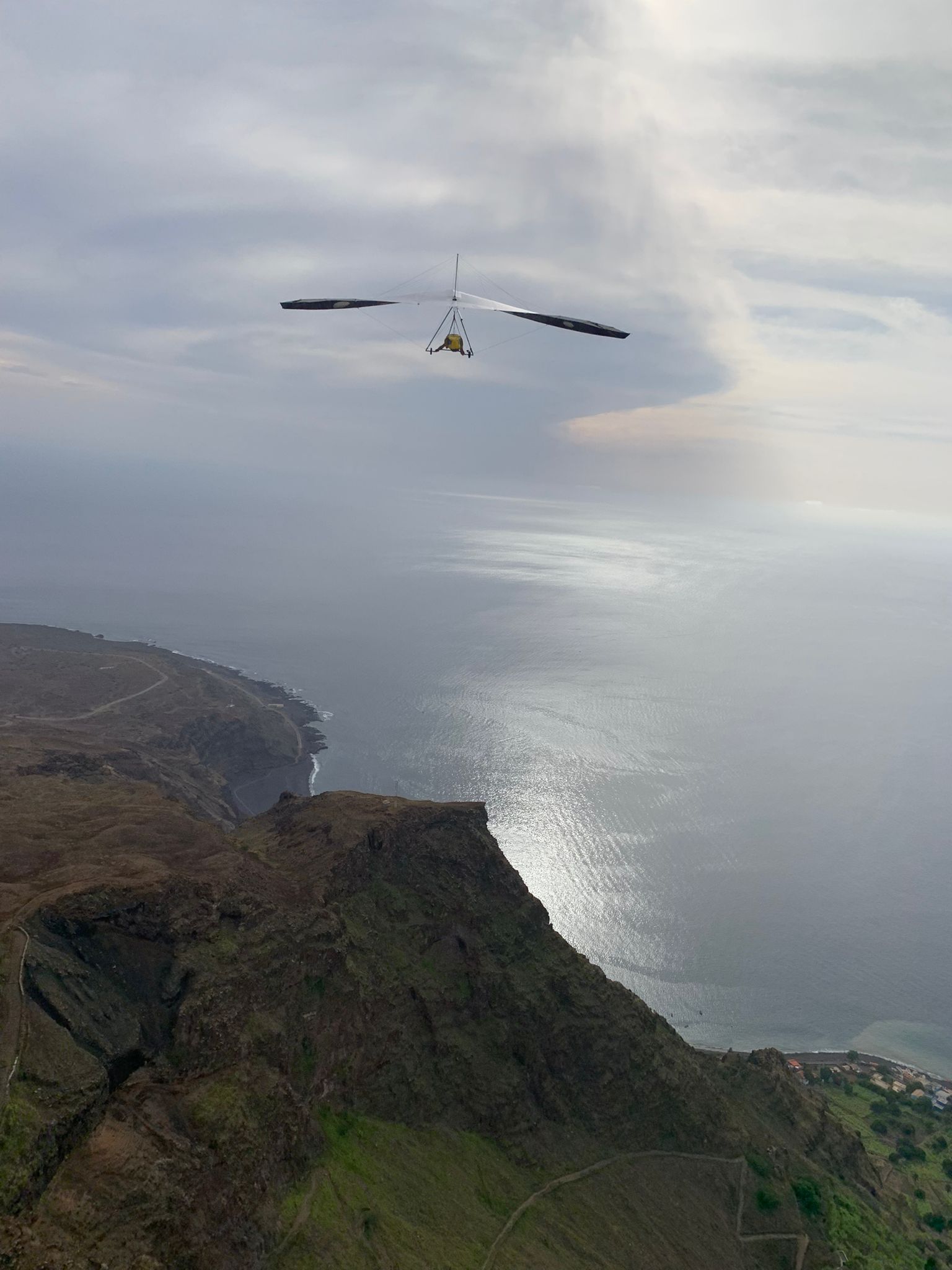
Portuguese pilot Emi Carvalho got into hang gliding over a decade ago. Now living in Switzerland Emi is fully bi-wingual, and has instructed both hang gliding and paragliding. His passion these days is bivvy flying and depending on the weather will pick the kit that fits the mission, but more often than not the kit that fits the bill to have more fun is a short-pack hang glider. It’s a bit heavier (similar to a light-weight paragliding tandem set up) and a bit more bulky, but you get to fly prone! In this fun talk Emi shares his expertise with short pack hang gliders, their development, and their application in adventure flying and bivvy trips. Discover how this innovative gear (that isn’t really new, but is being newly utilized!) is potentially transforming the sport, making it more accessible and versatile for enthusiasts seeking new horizons and wicked adventures.
Support the Podcast
A buck an episode, that's all we ask
If you like what you hear, please consider becoming a subscriber to ensure our high-quality content continues. You can also help contribute to a healthier, greener planet through our partnership with Our Forest.
See our donation and subscription options here.
Listen to the Podcast
Listen to us on all the most popular podcast platforms:
Development of short pack hang gliders Logistics and transport of hang gliders Advantages for bivvy and adventure flying Learning curve and safety considerations Future potential of short pack hang gliding
sound bites
“Landing on slopes going up is an advanced technique” “Top landing with a hang glider is more challenging” “Short pack wings give more range and versatility”
Chapters
00:00 Introduction to Hang Gliding and Bivvy Flying 06:27 The Evolution of Hang Gliders 09:28 Learning Curve: Hang Gliding vs. Paragliding 10:59 Safety and Risk in Hang Gliding 14:45 Landing Techniques and Challenges 21:46 Volbiv: The Art of Bivvy Flying with Hang Gliders 24:57 Planning and Logistics for Bivvy Adventures 27:44 Choosing the Right Gear for Conditions 29:51 Choosing Between Paragliding and Hang Gliding 33:56 The Advantages of Short Pack Hang Gliders 38:41 Learning to Fly Short Pack Gliders 42:06 Logistics and Gear for Hang Gliding 48:03 Reviving Interest in Hang Gliding 52:36 Reflections on the Journey and Future of Flying
Emmy, great to have you back on the show. You reminded me that we did a weather show with you quite a while back, so we might have to talk about weather again, but you've been doing some.
Pretty fun things. I've never actually heard of Volbiv with a hang glider except from Jeff Shapiro. He talked about it years ago and said, hey, we could do a bi-winged wolf, know, bivvy trip. And I thought that is just ludicrous. I can't imagine doing that with a hang glider, but he had kind of some cool systems put together and I'm excited to hear about yours, but welcome to the show.
Emi Carvalho (02:08.737)
Thank you very much, Kevin. Nice to see you again. Yeah, the short pack hang gliders, they roughly speaking, weight as much as a tandem paragliding set. So it's not exactly the most hike and fly and volvive approach, but it's definitely much more friendly than the standard long size hang glider. And that's possible, yeah.
Gavin McClurg (02:32.642)
What did you call it?
Emi Carvalho (02:34.953)
short pack hang glider. So the largest difference is that the standard hang glider when you pack it instead of being a backpack that you can carry anywhere it's five meters so that's what 15 feet 15 feet long or so tube that is quite problematic to transport. We usually carry it on top of our cars with some adapted leather on top of not leather sorry like a net how
Gavin McClurg (02:36.622)
Short pack.
Gavin McClurg (02:49.229)
Yeah.
Emi Carvalho (03:03.669)
Yeah, some adapted transport mechanism on top of the car so that you can move it around. And a short back one, it short backs to only two meters. So that's something you can actually carry in your back. And that makes it much easier.
Gavin McClurg (03:19.628)
Is that because the tube then extends? how does it look in the air compared to a standard hang glider?
Emi Carvalho (03:26.167)
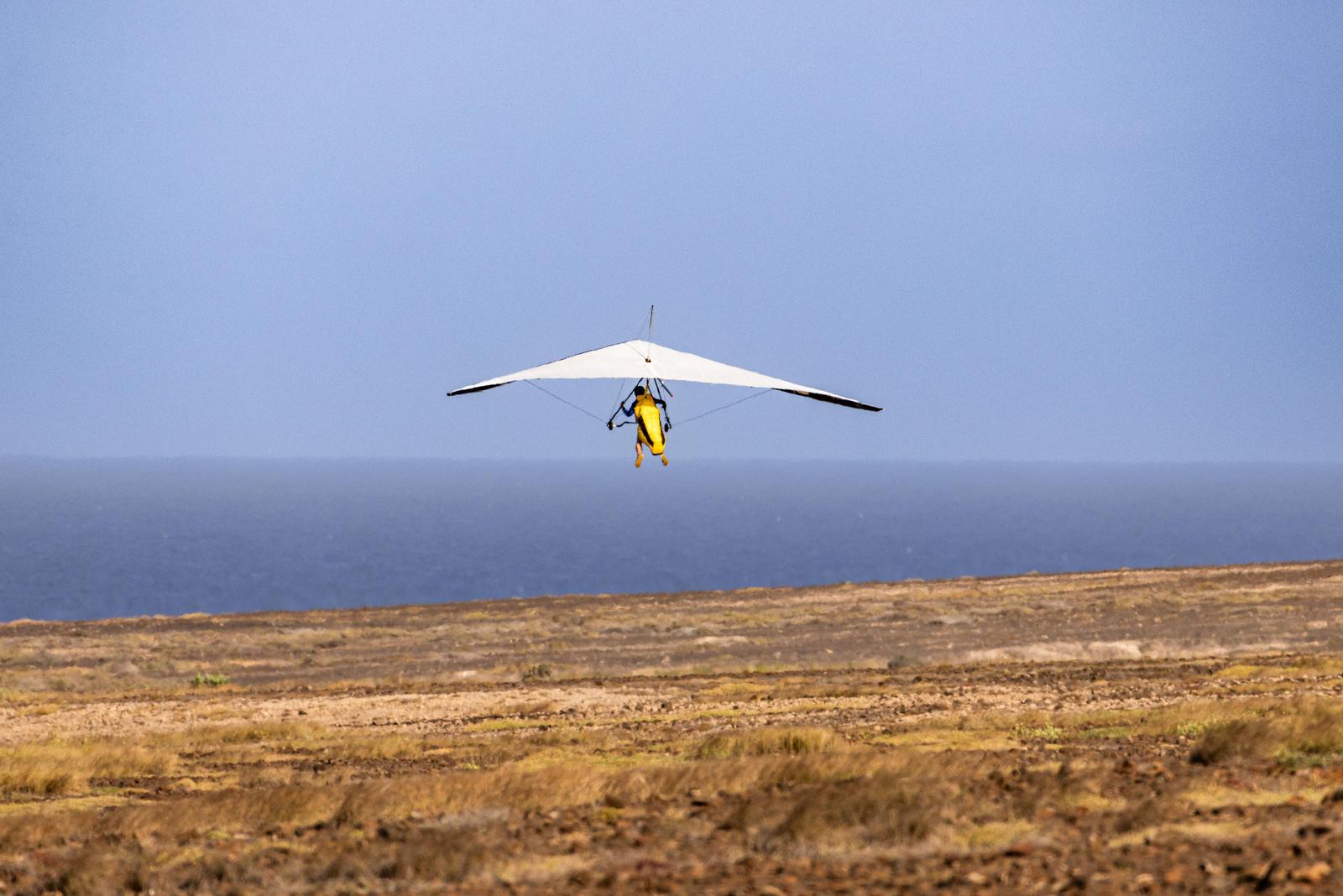
It looks like a standard hang glider, although not the latest models. So if you compare it, we are typically talking about wings from the nineties, eighties and nineties, or maybe two thousands in some cases. But anyway, the models are very similar to a beginner wing. And so if you compare it with any standard beginner wing, once it's assembled, it's very standard, very normal. Indeed, the biggest difference is that the standard tubes are
divideable in three and that means that you can really get it to one third of the length roughly and that simplifies a lot in the logistics of transporting. Of course that has the disadvantage of taking a bit longer to prepare it, much more than paragliding for sure, but it's worth it for the special flights that you can do with it.
Gavin McClurg (04:17.966)
And was this developed specifically for kind of bivvy flying or was this just developed so people could transport it easier and people like you are going, hey, I can use this for bivvy flying.
Emi Carvalho (04:30.487)
So the company that makes these type of wings, there's actually a few. I'm gonna talk about the one that I, the model that I own. The company that did this model has been developing hand gliders since the seventies and they came up in the eighties with their first hike and fly model. Remember their paragliding was just starting then, right? So you had the option of having maybe,
15 kilos or 10 to 15 kilos all together weight with a paraglider that could fly with a glide ratio of 4 to 1, 3 to 1, 5 to 1, I'm not 100 % sure what were the marks at that time. Or you could have a hang glider that was heavier, for sure, about 25 kilos, so that's, I don't know, 50 pounds or so. But that has a glide ratio of 10 to 1. And that was very...
a very significant step back then. Of course, then the development of paragliding and the glide ratios that you get nowadays, you easily get better glide ratios with any competition paraglider. So that decreases the interest perhaps of these type of wings. And anyway, hang glider went into a very different development stage where it kept focusing on performance. And so you find wings that are much more logistically
Coversome because they are these very large tubes that you need to move on top of your car. You cannot take cable cars. It's difficult for air travel. But when they are flying, they have much better performances. They fly with glide ratios of 15 to 25, depends if we are talking about rigid wings or flexi wings. So yeah, originally, to come back to your question, sorry for the long answer. Originally, they were hike and fly machines. That was the goal.
Gavin McClurg (06:22.456)
Huh, wow. I mean, I can't remember who it was. it was one of the hang gliders I had on the show and I need to get more. So I'm excited to talk to you. I mean, I know you spent a lot of time paragliding as well and instructing, but you know, I think I asked the question. So what's the main thing that's great about hang gliding? And he said, well,
Birds fly like birds fly, right? With your head forward. I thought, yeah, exactly. We don't sit. Birds don't sit and fly. So it does make sense. It's sexier way to move around the sky. How'd you get into all this? What's your background? You're from Portugal, but you're living in Switzerland. Is that right?
Emi Carvalho (07:10.231)
Correct. So I fully agree with that answer, by the way. It's really the body position that is the biggest advantage of hang gliding, I'll say. The wing is so close to your body as well. And the way that you control it is somewhat similar to how you drive a motorcycle, for example. It really gives you a feeling of belonging to the wing or the wing belonging to your body. That is,
Gavin McClurg (07:34.158)
It's not so separate.
Emi Carvalho (07:35.702)
It's not so separate exactly. course, with paragliding, you develop similar sensitivity to it and you have the sensibility of understanding very well doing, but it's still, it's an extension of your fingers, let's say a paraglider. It's an extension of your fingers, but it's not a bird flying or Superman or Neo or whatever flying creature we could imagine. It's a different thing. It's you are seated, right? And with the hang glider being in this lay down position,
Gavin McClurg (07:56.802)
Yeah.
Emi Carvalho (08:02.711)
I think it's the biggest difference. Then of course you have the speed and the glide ratios. We could talk about that, but the biggest one is the position. So I learned how to hang glide first. I learned how to hang glide first back in Portugal 11 years ago. And the reason for it was I finished university, I was working and studying before, and then I had a few savings and I figured out that I should get a hobby. Flying was a good idea because I...
Gavin McClurg (08:10.647)
Just the being prone. Okay.
Emi Carvalho (08:32.413)
vividly recall a with my parents to one of the mountains in Portugal. They are not very high, but we still have a few mountains. And I recall seeing a group of hang gliders flying. And that stayed in my mind. I must have been, I don't know, seven or eight years old. And like, I'm sure almost everyone that you talk with that flies, I also had those dreams of flying when I was a kid.
So yeah, when I had a bit of money and a bit of time, I decided to start hang gliding. That's how it all started. In Portugal, we often learn how to fly in the dunes. It's very similar in the US. In California, for example, I think it's one of the hotspots for hang gliding as well, where you learn in the dunes, you are typically flying with a significant amount of wind, very often too much wind for paragliders. Maybe not so much now with parakites and...
and mini wings, but at the time when I started, those were either non-existing or less popular than the mini wings at that time. So the hang glider allowed us to fly more often than the paragliders. yeah, again, the body position was a big difference. But if you start thinking about traveling, then things change.
Gavin McClurg (09:46.256)
What was the, because you do both, what's easier to learn looking back? mean, obviously it's not so, that's maybe not the greatest thing to think about or analogy because you already knew how to hang glide so you could bring those skills to paragliding. But if you were just starting fresh, what would be, if you could do it all over again, what would be the one to learn first?
Emi Carvalho (10:12.395)
I'm very glad I started paragliding because paragliding is easier to start. And so I guess it will be similar to skiing and snowboarding, right? If you develop yourself in one, it's less likely that you will want to be a beginner again in the same places, but with this other sport. And it will happen the same. If I had started paragliding, I think I would never even try hang gliding. Or if I was to try it, I will give it up quickly because...
Gavin McClurg (10:18.425)
Okay.
Emi Carvalho (10:41.975)
It's a longer process to learn. think in paragliding, realistically, you can get to that beginner license level, whatever that means in each country, the IPPI 3 or so. You get that into roughly 10 days, a bit more, a bit less, depends of course, but top level, that's what we are talking about. And hang gliding, realistically, you need at least twice as much, probably a little bit more. And it's more physically demanding because in the beginning you are...
particularly in the dunes that I was mentioning, you are carrying the wing up and down the dune. Down is easy because you are just gliding or running down, but carrying it back up again is much easier with the paraglider.
Gavin McClurg (11:25.071)
Yeah, sure, sure. What about the risk aspect at the learning end of things? know, whenever I watch somebody learning out of hang glide, I'm always kind of going, oh gosh, you know, like the landings with the flare and it seems trickier, but I don't know, is it?
Emi Carvalho (11:45.496)
I think it's trickier, I will agree with that statement, because the wing has less passive safety. In the paraglider, if you don't do much, look, the thing is not flying that fast and it's so far from the ground. You might be on the ground or close to the ground, but the wing itself is far from the ground, right above your head. So you don't have to worry too much about the wing hitting the ground, you just have to focus on yourself and...
running and not touching the ground very fast. And if you have a little bit of wind, then it's so slow that even if you are not very athletic, that doesn't really matter. That's why you have elderly people learning how to paraglide and they are perfectly capable of doing so. For hang gliding, I think it depends if you are learning the dune style or soaring style, ground takeoff style, or if you are learning...
to fly with a towing mechanism because in the towing mechanism it can be as easy to take off, even easier actually because you might have a mechanism with wheels that really balances the wing in the beginning and then eventually you are off the ground and there's double safety in the winch mechanism that both the pilot and the instructor can disconnect it so you are quite safe in that aspect but eventually you need to come for landing of course.
And if you don't do the flaring appropriately and you don't have wind, if you have wind things get easy, but if you don't have wind or if you have very light wind, the typical behavior is that you will hit with the bars or the wheels that you usually have in a school on the ground and the nose, so the front of the wing goes down and you hit it as well with your face. That's why you often see the hang glider pilots, they use full face masks, almost all of them.
Gavin McClurg (13:38.863)
Yeah.
Emi Carvalho (13:39.776)
There's a reason for that, otherwise we lose our teeth in the learning process. But then when you are, after you pass those process, those initial steps where again, you should be very supported by a school to guarantee that you develop slowly and with safety. Once you pass those, it's different. So you have different sources of...
of risk when paragliding or hang glider or hang gliding. Some of them are still the same, but while in paragliding maybe the largest issues are associated with collapses on the wing and stalls stalling a wing in paragliding. It's a, it's a massive thing for a beginner. Of course you can develop that later on, but for a beginner, that's a massive issue. That's not so in hang gliding. First, you don't really get collapses because you have a, don't have an inflatable wing. It's a,
mechanism with aluminium or with carbon fibre. And then you also don't really have a big issue installing unless you are very close to the ground, because when the wing stalls, the wings are built so that they are nose heavy, meaning that after it stalls, the nose goes down and you regain the flight. So you could stall the wing in a standard flight in your second or third long flight, long altitude, high altitude flight.
without any issue and of course that's not happening with paragliding, That would be crazy to do that. But there's an additional risk that is the landing. You need much flatter landing zones, first of all, and longer as well. So while with paragliding you can land almost anywhere realistically, it's not so with the hang gliding. You need a bit more space to land.
Gavin McClurg (15:32.463)
Yeah, this was the thing that...
always when Jeff talked about, you know, Volbiv with a hang glider, that was the first thing I thought, man, there's very often when I'm flying Volbiv, I mean, it depends on where in the Alps, there's so many places to land. It's not really an issue. I mean, there are, course, places that are also very deep that you wouldn't, would it be trickier to land? I remember a lot of very tight landings in the ex Alps for sure. But a lot of the places we are, you know, there just is a lot of trees.
You know, thinking about doing it, for example, on the trip that I did with Will Gadd across the Canadian Rockies, that would have been really scary on a hang glider just because there were so many places we had to put it down that were tiny, you that just didn't have a field or...
any kind of run out. You really had to almost bring it in like parachutal to come into a really tight spot. So that always made me nervous. So I'm assuming terrain choice and where you're doing these trips is a big part of the decision making.
Emi Carvalho (16:39.327)
It's quite relevant. Almost always when you are flying paragliding as well, you should check the landing or at least be familiar with how it looks with any obstacles and so on. And that becomes more relevant for hang gliding, particularly because of the flatness of the ground. Because when you are flying, I don't know, 1,000 feet above the ground, everything seems more or less flat unless it's a clear slope. But when you are coming very close, it might not be so. And while on a paraglider,
That's not a gigantic problem. It just means that you land in a slight slope or something like that, because again, the wing is very far from the ground. But on the hang glider, there is an issue. The wing is so much closer to the ground that if you have an uneven terrain, you will probably hit one side of the wing on the ground before you manage a perfect landing. And that will, of course, make the wing turn and have a little crash. There's a few things that we can do to...
get more prepared. So one of them is the choice of the wing. Of course a performant wing, a high level competition wing will glide like crazy and it will have a very strong ground effect as well that you start flying maybe two or three feet from the ground and keep gliding for 50 meters so you need a space.
But if you have less advanced wing with worse glide, with worse flying characteristics, then you will not have such a space requirement. You can land in shorter places. So that's one. A second one that you might see particularly with the high aspect ratio, the competition wings, is that sometimes before landing, you see the pilots dropping or opening a small parachute.
a drag chute that as the name indicates, the operation there is to increase the drag and therefore decrease the glide angle so that you don't need so much space to land. You could use that one with any wing, but it becomes more relevant for performant wings that need to land in tight spaces. And the third thing is, I'm not good at that, but
Emi Carvalho (18:59.191)
advanced hang glider pilot will be good at that. That is, we can also land on slopes, going up the slope. So while the paraglider will typically choose on a slope to land across the slope, So side slope, not going up, not going down, maybe going up in the X-Alps, but except that one is usually on the side, the hang glider will always choose to come going up slope. The reason for that is because it's important that it doesn't hit the ground with one side of the wing again.
Gavin McClurg (19:07.407)
Mm.
Emi Carvalho (19:29.047)
And so if you have a slope, usually you could make a good landing as well as long as you have an unobstructed slope. But of course, that's then again more of an advanced technique. Now, if I...
Gavin McClurg (19:43.745)
How would you compare that to the whole flying uphill, downwind, fly on the wall type landing, that Kregel and really Patrick.
I always credit them to that move that happened and they started putting out on videos about 10 years ago and the rest of the world went whoa oh my gosh and now that the level they're doing at is really extraordinary. I worked at this very very hard for the both the 2019 and 2021 races and never I mean I still
there's a good chance I'm gonna blow that when I do. mean, it's a very fine movement with the variables or many, but I understand with the hang glider, it's, like you said, is it easier or does it still require the same amount of skill or because it's really easy to mess up with a paraglider with your timing and.
Emi Carvalho (20:41.847)
It's easier on the hang gliding, on the hang glider. That being said, I can do it with a paraglider, but I cannot do it with a hang glider because I'm a better paraglider pilot with many more flights than I have hang gliding. So I assume Kregel was probably inspired also by how hang gliders land because that's a standard landing procedure for a few decades now. And indeed, what makes it easier?
Gavin McClurg (20:50.384)
Emi Carvalho (21:11.895)
conceptually for a hang glider to do it is the range of speed that they have. So they can easily speed up by just pulling the bar closer to your knees and you easily speed up in that final approach and all of that energy that you gain you can then also more easily transform it and also faster transform it into the right angle so that you are going up with the terrain and then eventually flaring and stopping.
So it's easier to do it with a hang glider. If you have a paraglider and a hang glider pilot that are doing the same type of cross-country flights, let's say both of them do 100 kilometers flights with some regularity, the hang glider pilot should be able to do those type of landings up slope while I assume that most of the paraglider pilots at that level will probably opt to down side slope rather than up slope.
Gavin McClurg (22:07.952)
So is the kind of the coup d'etat for doing bivy, is it still at the end of the day to top land and camp where you've landed and take off from the same place? that what you're trying to do with the hang glider? Or I mean, obviously that's what you're trying to do, but is that what you're often able to do? is that the trickiness of top landing with the hang glider just make that, it has to be an extraordinarily good spot?
Emi Carvalho (22:36.277)
Yes, that's a big difference between paragliding and hang gliding as well. Our volvive means typically landing down. Of course, we aim to land up in a nice large flat area or going up slope. But the reality is that the added risks that you take by trying to do a top landing close
Gavin McClurg (22:45.082)
Okay.
Emi Carvalho (23:02.741)
sorry, trying to do a landing in the top of the mountain where you have a wing so much closer to the ground than the paraglider is that it's very easy to have it uneven and again mess up the landing while it's much easier to land on the valley, particularly because in the valley at the end of the day or in the middle of the day, you expect that you'll probably have some good valley wind, right? And that also simplifies the landing approach for a hang glider. And then you either hike up or...
The vulbev there very often might be that you just take the cable car up. And I know that it sounds strange for a paraglider, but for a hang glider, if you are flying, just taking the glider with you and taking public transport, that still feels like vulbev because the logistics are so much more complicated. And so you might just be landing on the valley and then take the cable car up if one exists or take a bus.
Gavin McClurg (23:37.584)
Sure.
Emi Carvalho (23:59.167)
or just find your way up, you might also do a hike and fly to go back to the mountain, sleep there and then repeat on the next day or even sleep on the bottom and go up on the next day because also an important difference between paragliding and hand gliding is the logistics of packing and unpacking the wing take much longer on the hand glider and therefore you probably don't want to do multiple flights in the same day.
most of the time you are probably looking into doing one flight, maybe two flights in the same day, if you are doing Volbiv. It may be different if you are doing Tandems or if you are doing coastal soaring flights. That's maybe a different story and you try to do a few more, but if you are thermaling and doing some cross-country flights, you are really going for one per day.
Gavin McClurg (24:50.161)
Do you think Volbiv with this hang glider setup, it realistic to go very deep? What I mean by deep is...
in the Alps, you don't necessarily need to carry a lot of food because especially if you're landing down in the valley bottom, you can just go to the bakery and get more stuff and have a nice night and then go back up the next day. Like you said, if you're only really shooting for one flight rather than a morning sletter and then the big flight of the day and then an evening sletter, something if you're only going for one, then you're not so worried about time. I imagine you can.
take time to have a breakfast and take the cable car up or hike, especially if you hike slowly, you can save a lot of energy. given the weight, it is heavier. Like you said, it's more like carrying a tandem kit. Is the approach quite different in terms of how deep you can go?
Emi Carvalho (25:47.865)
Yeah, well first a big difference is how much you rest after the hike. So if you are thinking about taking a cable car or any other way of transport up the mountain, except hiking, then you might very well do it just before the flight, because then you can probably assess the weather conditions better, you can choose the ideal spot to go, and so you go up taking the transport and then everything is rather easy.
If you are doing a hike, you probably don't want to do that because it's going to be more tiring. And so you probably would prefer to either hike up in the evening, I mean, after your flight for the next day so that you sleep on top of the mountain already. Or if you are doing just one or two days, that is what I do more often, you might just hike up starting at the evening. So for example, one of the...
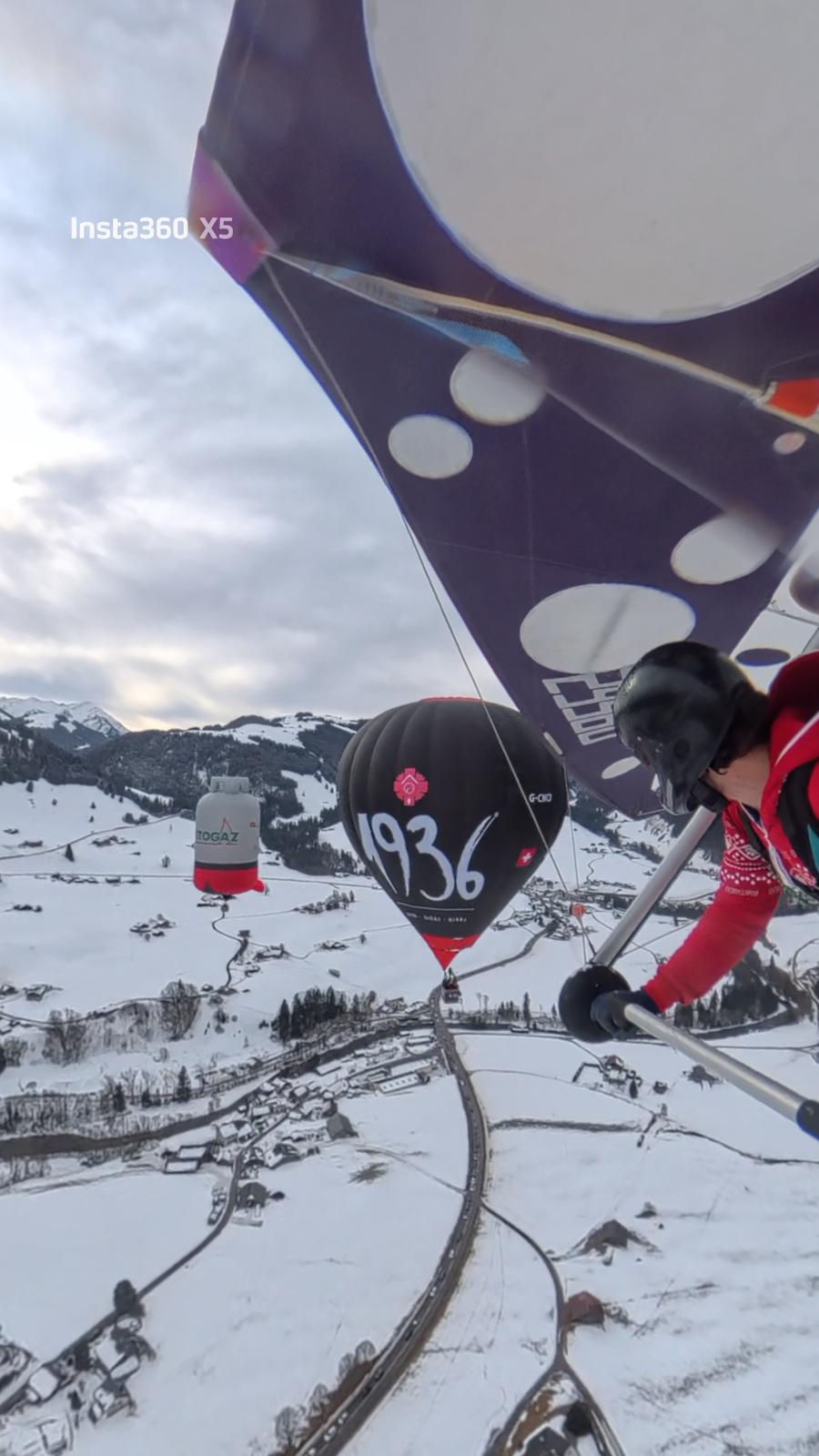
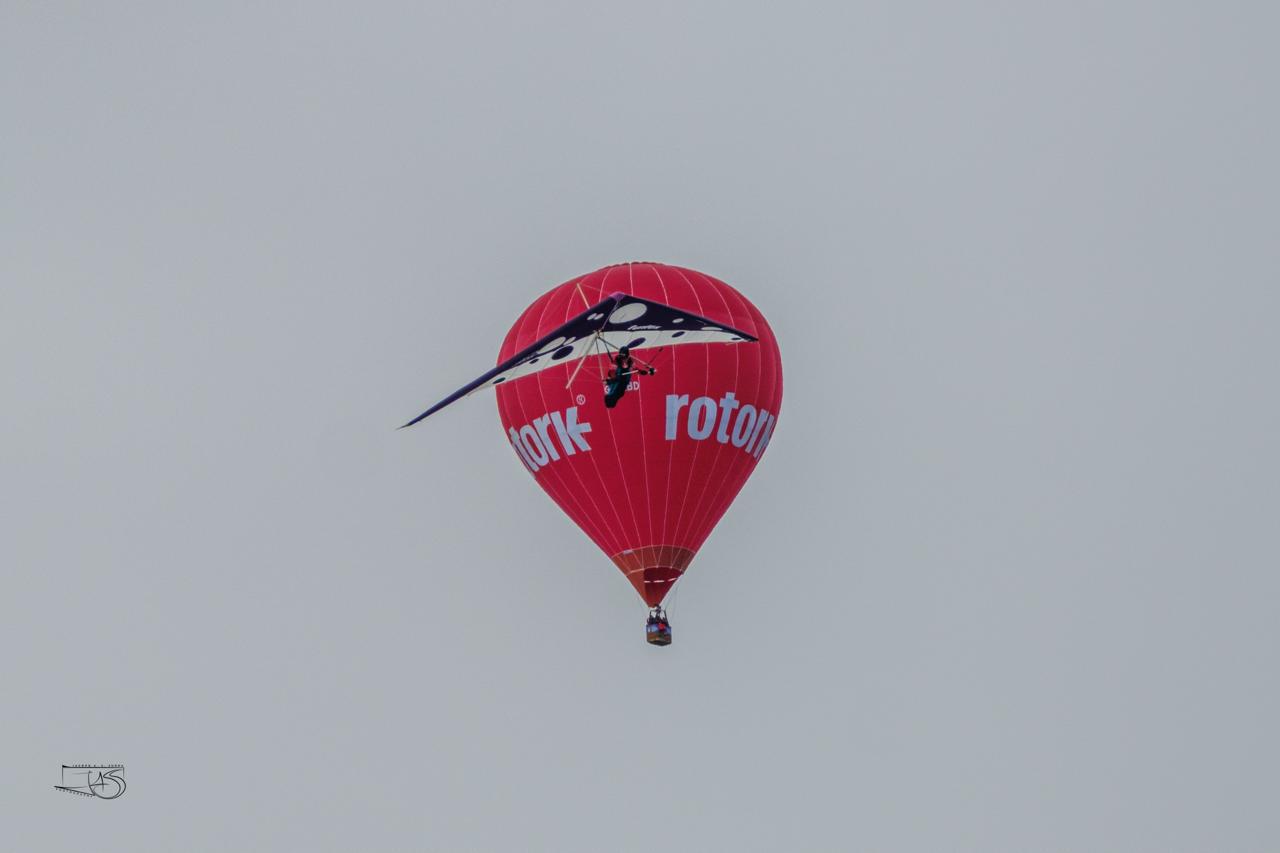
flights that I like to do the most here in Switzerland with the hang gliding, with the hang glider hiking is on a specific hot air balloon festival that happens every January in the French side of the country. And there's no cable car up. There were cable cars, but they have been closed for close to 10 years now. And so the only way up is hiking and
Last year, for example, I went up with the goal to fly relatively soon afterwards, but then I had to be there for close to three to four hours to really just rest because I was quite tired after hiking up with the whole gear for four hours. This year, for example, I started in the evening. I started with about 4 a.m., went up, got to see the sunrise. That's quite magical as well with all the mountains full of snow.
And then waiting there very relaxed until the hot air balloon starting to take off so that I could then fly with them. I think that's the biggest difference that you need to really account properly with the time for resting after the hike because otherwise you are destroyed. Then in terms of how deep you go, if you are looking for thermals and trying to push it.
Gavin McClurg (27:44.411)
Wow.
Emi Carvalho (28:04.224)
I think the limitations are more associated with the landing areas. So depends on the valleys where you are. If you have been flying in those places and you know that you have familiar spots where you are going to land or you studied the terrain before, then I don't see a big difference between that one and paragliding. But again, assuming that you do have the nice flat places to land or that you have the right technique to land going up the slope. Not my case.
Gavin McClurg (28:34.713)
If you say you're looking at the weather and I know you're very good at weather, so you're sitting in Lucerne in Switzerland and let's say Monday, this Monday looks really good and you can get a couple days off of work, what kit are you gonna grab? If you've got, okay, I've got a two or three day window here for a really nice.
local triangle bivy and maybe you can get into the ballist or something and whatever you pick it but something that looks pretty good where you can cover some ground for for two or three days are you going to grab your paraglider kit or your your hang glider kit?
Emi Carvalho (29:12.088)
depends on the weather conditions. If the weather is perfect for specific spots, I will always choose the hang glider kit. Because there are some spots where the probability or the likelihood of flying with a hang glider are much more reduced than with a paraglider because of the conditions to take off or the conditions to go up.
regarding transport, regarding cable cars. So for example, if I have north wind, I will always take the hang glider because I go up the glacier here that is 10,000 feet, just taking the cable car, easy to do with a paraglider, but rare to do with a hang glider, but I'm lucky enough with the short pack that I can do it. And then taking off from that direction, I know that I can go...
either towards the east or towards the west. I know that both directions have relevant interesting spots to land and thus I prefer the hang glider. If I have a strange, not a strange, but a more varied weather situation where I might not have the wind conditions to allow me to take off from point A, go to point B and take off from point B easily with the hang glider.
Then I choose the paraglider because the paraglider is easier to take off with more varied wind conditions. You've seen the X-ops also and maybe in random slope you see people taking off with backwind, taking off with sidewind, standard wind of course, headwind is even easier. You don't see anyone taking off with backwind on the hang glider because the speed for takeoff it's...
Gavin McClurg (30:41.937)
Sure, take off anywhere.
Gavin McClurg (30:57.358)
Yeah.
Emi Carvalho (30:58.36)
It's higher and again the wing is closer to the ground and therefore you really need to have a little bit of help from the air already, from wind, to make sure that the wing is more stable otherwise while you run the movement of running creates some oscillation on the wings that if the terrain is not the best might again mean that you touch the terrain with the tip of your wing and then it's not a... then you crash on the takeoff.
So yeah, if the wind is changing more, I will go for the paraglider. Paraglider is for sure more versatile. If you have to choose between paragliding and hang gliding and you only want to do one, I would say go for paragliding because it's much more versatile. You can fly in more conditions, in more places, et cetera. You do not have the same body position feeling as a hang glider.
And if you would like to have that one, I think that these short pack gliders are a good direction because the increase in logistics, it's visible, but it's not the end of the world. Again, like I mentioned before, it's like transporting a tandem paragliding wing kit. It's feasible. You can put it under your bed. If you live in a city that's easy, you can transport it on a bus and a train on anywhere really.
Gavin McClurg (32:09.158)
Yeah, it's reasonable.
Emi Carvalho (32:19.544)
And again, you can access those places and have the possibility of flying in spots where only hang gliders will fly either because of the wind or because of the steepness of the terrain, whatever it might be.
Gavin McClurg (32:34.054)
That was the next thing I was going to ask. my supporter in the last couple of X ops, Revis, who's also been on the show with a good friend of mine, he got into hang gliding a few years ago to learn something new and to fly prone and other things that people get into hang gliding, but also because he really likes flying big distances in Nevada. And Nevada is one of our states that has, it's the most mountainous state second to Alaska.
the glider pilots love flying there because of the wave.
but it's also, it tends to be pretty windy. So for the days that we can fly paragliders out there, when they're good, they're amazing. It's one of the best in the world, but they're few and far between, because there's just often too much wind. And so he wanted to learn how to fly hang gliders because you can fly in more wind. Is that still the case with these short pack gliders? Back to my other thought.
my thought process of, you had a potential day coming up Monday, Tuesday, but for two or three day, baby, but the wind is strong ish, would that be a reason to choose your hang glider?
Emi Carvalho (33:48.035)
Yes, for sure. If you have stronger wind, you always prefer to be on the hang glider than the paraglider. And the short pack hang gliders, again, when they are opened, they are standard hang gliders, again, not competition class. The short pack look more like a not beginner, but maybe intermediate wing level. But that still gives you the advantage of the speed range that you have with the glider. So if I have, for example,
30 km per hour, that's what 20 knots west. I can still go and fly a hang glider in a couple of spots easily here and similarly for different wind directions. But probably I'm thinking about going more deeply into a valley where I'm more protected and where the valley wind local phenomenons are actually the ones governing the weather situation if I want to go with a paraglider. But with a hang glider I have less that problem.
Gavin McClurg (34:29.788)
Great.
Emi Carvalho (34:46.548)
It's, I think, ultimately gives you more range. And the range also starts at higher speeds. That's relevant as well. Again, very light winds, paraglider is easier, stronger winds, eventually paraglider stops being an option, right? And hand gliding is still an option at those higher winds. Of course, eventually there's a limit as well. That being said,
Gavin McClurg (34:48.348)
So more range, it just gives you more range.
Emi Carvalho (35:09.002)
I wonder if you ask me again in five years if I'll still agree with that because developments in the technology of paragliding. We have these parakites now that can fly with faster speeds, standard flights than most paragliders did before. Of course, there's also the speed wings, but that's a different type of flying. are typically just going down, right? Unless it's really windy and then you might be soaring as well. So...
It seems that the gap there it's getting shorter between paragliding and hand gliding at higher wind conditions, wind speed conditions. Often in hand gliding, in the hand gliding community, there's a discussion about what's happening to the sport and to the practitioners of hand gliding because the reality is that while in the 60s, 70s, 80s was very popular, it has been a steady decrease since then. And of course, that's with
Gavin McClurg (35:41.106)
I'm losing.
Emi Carvalho (36:04.938)
associated with the introduction of paragliding because hang gliding used to be the cheapest, most affordable, most easy to learn and logistically best method to learn how to fly and to fly wherever you wanted until paragliding appeared and then it's paragliding without a doubt, right? And it will never become hang gliding again because paragliding is again just a bag.
Run and fly do deckwing is what one kilo or something like that. The X-ops kits are typically two to three to four kilos. So you will never be able to compete in the hang gliding world with that. And eventually hang gliding went into a direction of performance. I think that there is space for these.
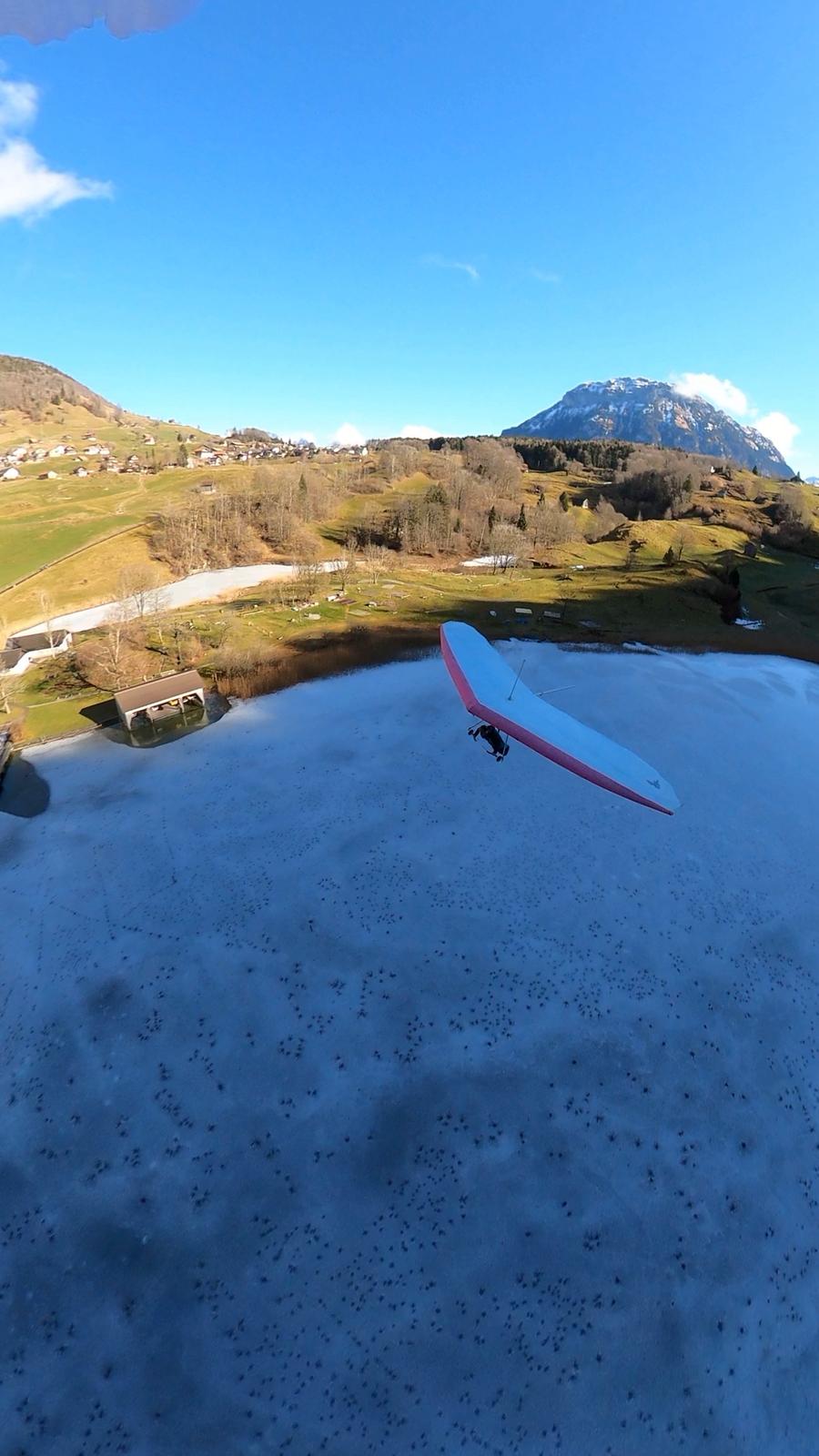
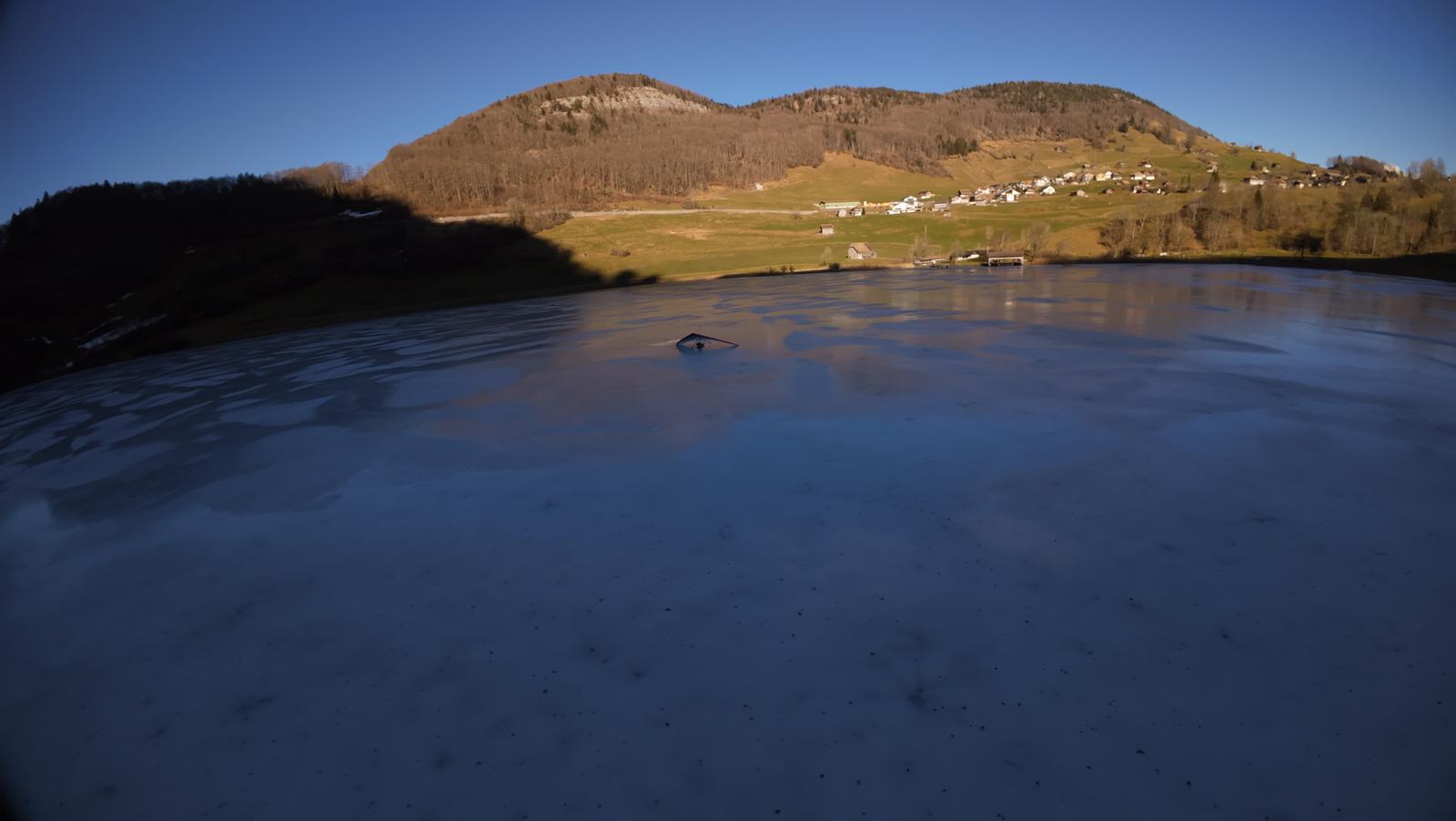
adventure type of hang gliding and we have been talking about Volbiv but I will expand it and call it more adventure type of flying because you can just take the wing to places where you wouldn't otherwise take a hang glider because of the logistics of carrying it. Just in the last 12 months I've flown in the desert island, I've flown from the glacier, I've landed on a frozen lake, I've flown with the hot air balloons and I've
beginner to intermediate hang glider pilot. It's not that those were incredibly difficult flights per se, is that the logistics are incredibly difficult for a standard hang gliding kit. But for the short pack suddenly it gets much easier. So I think there's some place there for the short pack gliders to occupy a place for someone that has been paragliding that wants to try something new.
but doesn't want to go all the way to the competition hang gliders because again, the logistics are a bit of a, not necessarily a killer, but a big obstacle at least.
Gavin McClurg (38:07.779)
For the listeners, Emmy, who are paragliders like myself and have spent their lives or most of their time under a rag rather than a rigid, what...
what would they be looking who are inspired by hearing your story here today? What would be a reasonable amount of time they could look at to have to dedicate to learn how to fly a short pack well enough to start doing these types of trips?
Emi Carvalho (38:39.104)
I think a short back glider is controlled exactly the same way that the standard one is. So basically you need to go through the standard process of getting your license, but then instead of choosing to buy the most common long hang gliders, you'll buy a short back one. And there's, I believe at the moment, three companies that sell this type of wings. All of them are still active. All of them are still selling new wings. And you see a lot of them in the second hand market as well.
in hang gliding the second hand market it's very relevant because again there's less pilots and therefore there is more wings there are more wings for less pilots that are searching them therefore it's probably cheaper and the wings tend to be more durable as well than paraglider wings one of the ones that I fly for example is from 89 and it's still it went for a quick check recently
They made one or two replacements of some cables and that's it. Other than that, it's in good conditions. So it's the standard process to learn how to hang glide. And to learn how to hang glide, I think the biggest difference is that you want to learn locally. I think paragliding, probably about 70 to 80 % of people learn locally and 20 to 30 % of people learn on a paragliding trip. At least that...
Those are the statistics that I remember reading. I used to work for a school focused on paragliding trips. And I think for hang gliding you want to learn locally. And the reason for that is because it's going to be less reliable that you'll be able to fly five days out of seven. So there's going to be, out of those five days, one is going to be bad wind, the other one is going to be too much from the side, the other one is not going to be windy enough. So you will have...
two days that are perfect for learning in your local area. And therefore, in the process of going to the classes, whenever you have the availability, you can expect to get your license. Depends again of how much education you put into that, but top level from six to 12 months, if you are dedicating weekends, for example, or every odd weekend to it. And then once you get your license, you can...
Emi Carvalho (40:57.204)
already be doing this type of flights because they are not technically more difficult than the others. It's really technically they are exactly the same. It's just the access to the takeoffs that on the with the standard hang glider it's quite difficult with a short pack suddenly becomes much easier. You can basically go and take any cable car that paragliders take or bus or boats or trains or whatever.
I even use an electric bicycle with a tool that is this little car that is connected to the bicycle where my daughter goes in. And so I put the tool and then I put the stand up paddle on top of it and the glider fits perfectly in. So it's really easy to go anywhere. So the short message is that the logistics become much more easy. It's the logistics that are the change here, not really
Gavin McClurg (41:34.871)
Emi Carvalho (41:53.049)
the skill necessary to fly. Those wings fly the same as the others. will be somewhat like talking in paragliding, talking about a standard double surface wing and a single surface wing. We fly them more or less in the same places with the same conditions. One of them is probably easier to carry up.
Gavin McClurg (42:13.213)
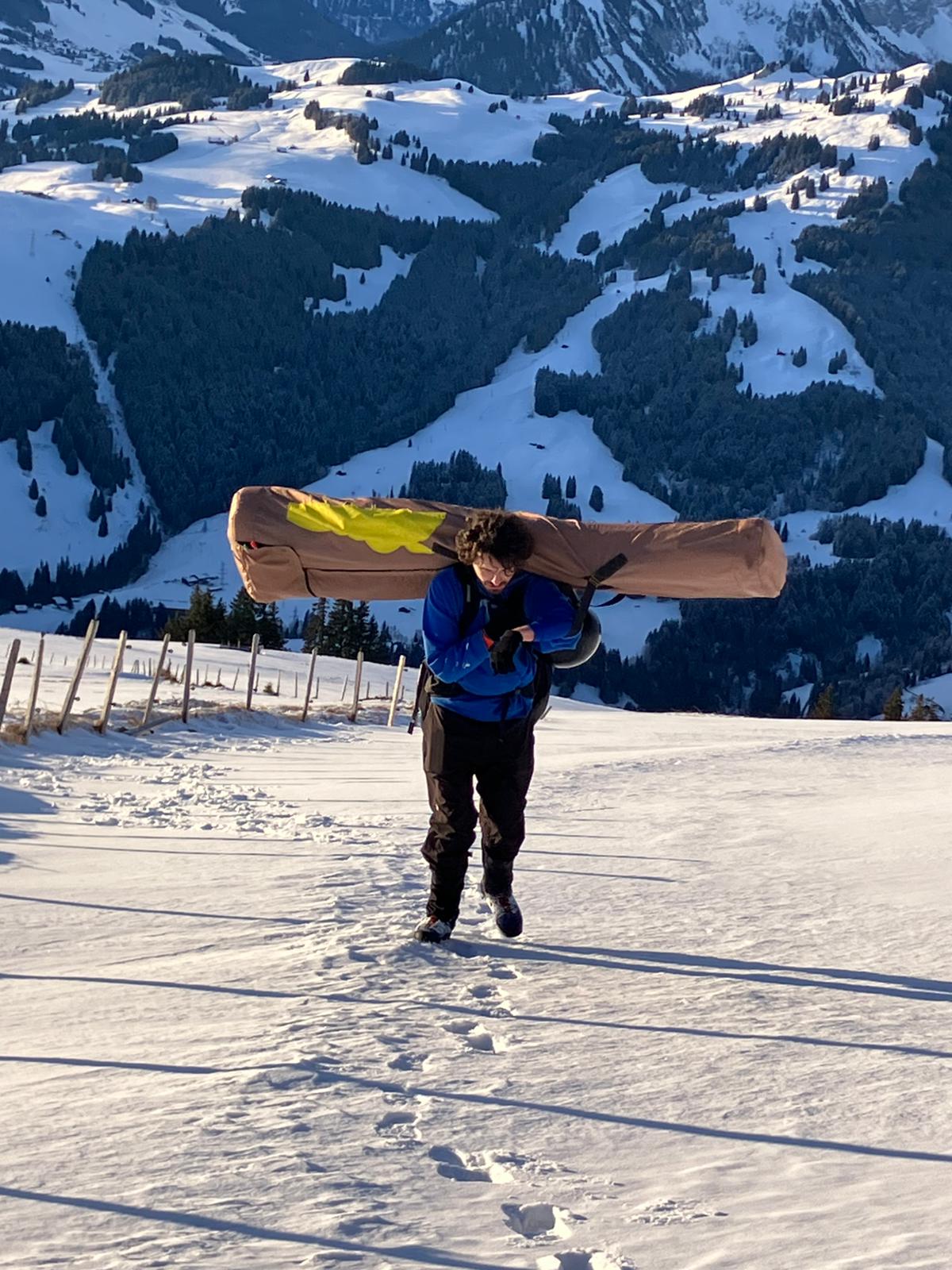
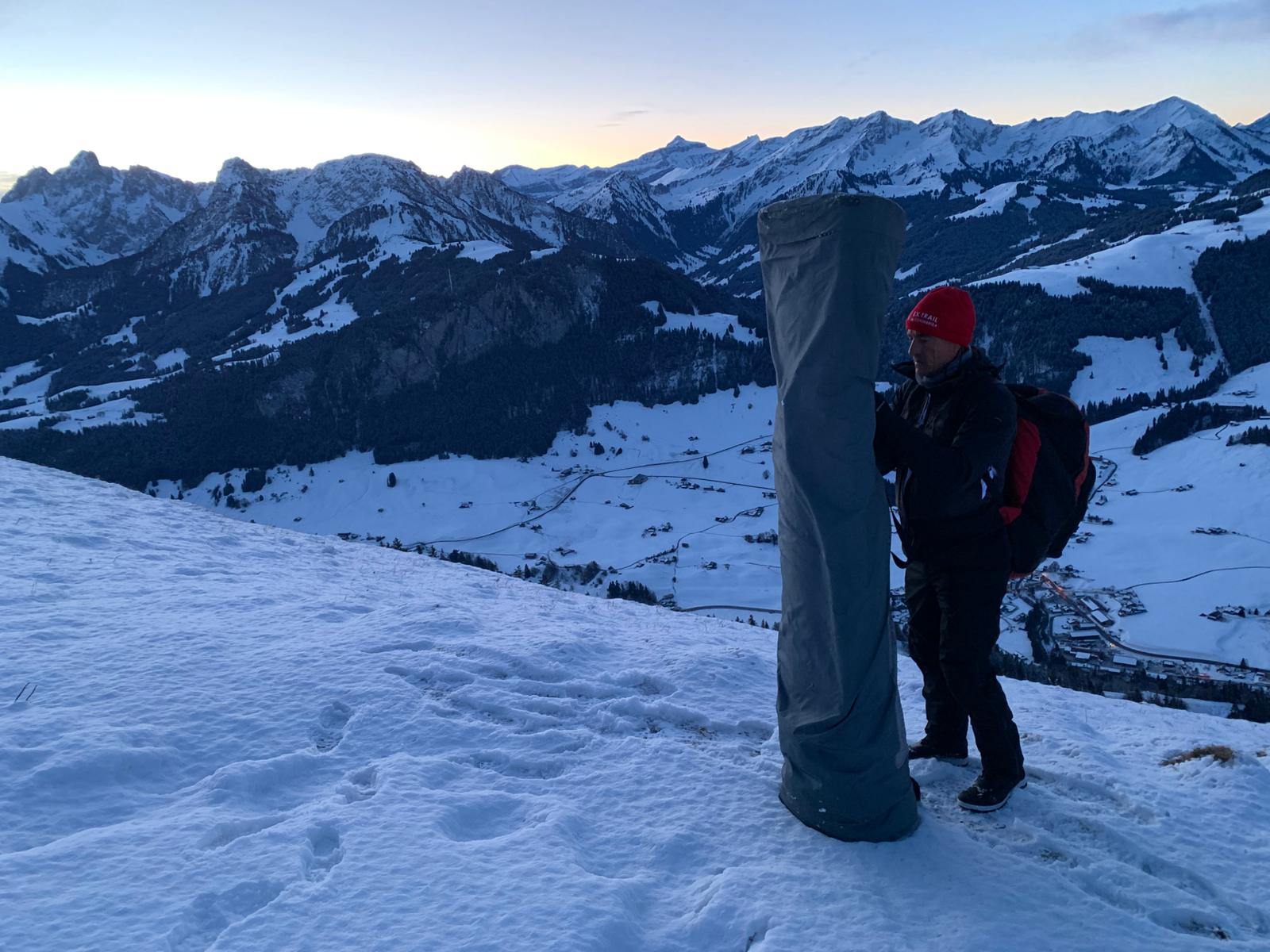
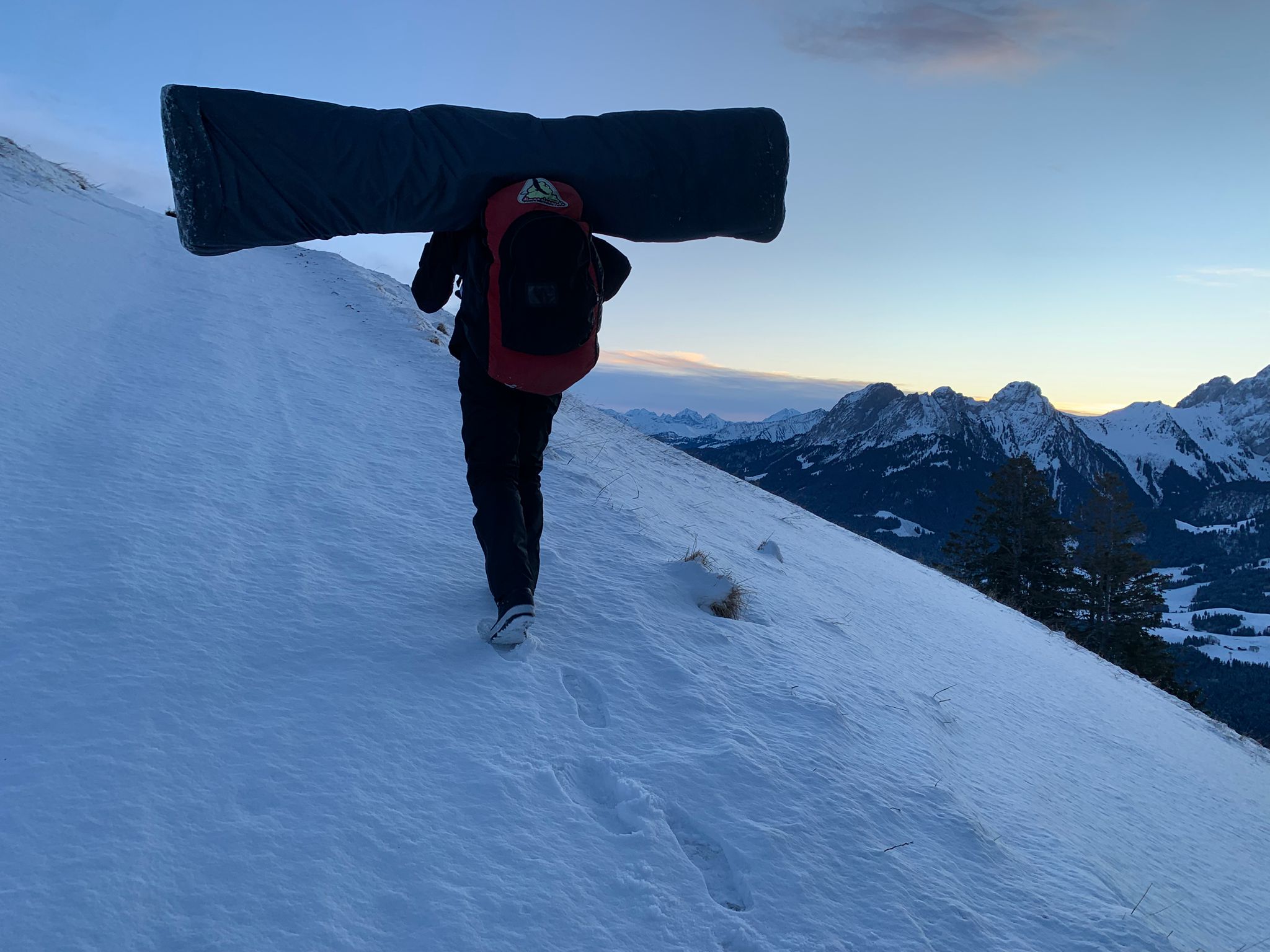
We'll have to put up a picture on the website when we post this with your gear. I'm having trouble imagining it. Is it still a backpack and then you've got the rods over your shoulder or, sorry, the tubes over your shoulder? What does it look like?
Emi Carvalho (42:30.498)
Probably you want to imagine one of those bags to transport your ski gear, not necessarily just for two skis, but probably the family size. So for you, for your wife, and for the kids. And then you have it on your back. It's the exact same size, same dimensions. I actually also have one of those bags
Gavin McClurg (42:40.04)
Yeah.
Gavin McClurg (42:45.053)
Yep.
Gavin McClurg (42:52.689)
Okay.
Emi Carvalho (42:59.672)
ski backpacks to put the hang glider on. It's a little bit tight but it works and it has advantage that it has the wheels while my standard carrier doesn't. So depending on where I go I might put it in one or the other. And then yes you carry that on your backpack on top of that or you carry that as your backpack and then on top of it you have your harness that you somehow attach either on top or on the side.
I'll send you a few pictures from Hikes so that you can imagine it. yeah, imagine a standard hike and fly paraglider kit and now triple or quadruple the size vertically up and down. That's what I'm carrying.
Gavin McClurg (43:45.876)
but a lot narrower like a ski bag. mean, like you said, a family size ski bag. So it's not the big fat thing that we carry with paragliders, just longer. That doesn't sound too bad. I mean, if you were going to, on a two week trip somewhere with your family, you've got kids, you're gonna go somewhere, you're gonna go to South Africa to fly for two weeks and hang out with the family. Would you bring two kids? Would you bring your paraglider kit and your hang gliding kit? Or is that too much?
Emi Carvalho (43:54.53)
Correct.
Emi Carvalho (44:15.659)
I usually take three, but maybe I have a very comprehensive family that allows me to do these things. I usually take a smaller paraglider if it's windy, a standard paraglider or a little bit larger if it's light wind and the hang glider, yes. As long as I'm not going on, you said South Africa, so probably to go there I will have to fly. So I was actually answering if I can drive there, if we are going for a tour in the van.
Gavin McClurg (44:20.665)
Hahaha
Gavin McClurg (44:30.406)
Okay.
Gavin McClurg (44:41.07)
Okay, no.
Emi Carvalho (44:43.545)
If I'm flying then I probably either choose one or take both if I'm going alone. If I'm going with the family realistically I just take the paraglider because I know that I will not have so much time anyway to fly and the time that it takes to assemble the kit and to disassemble it so instead of being five minutes with the paraglider, 20 minutes if you are doing it really slowly,
it becomes roughly one hour with the hang glider for both packing and for unpacking. And so, yeah, that's time that I'm not flying. If I'm doing that and my family's waiting, that will be the only limitation or the disadvantage associated again with paragliding is or with even standard hang gliding kit is how much longer it takes to unpack it. Again.
Compared with paragliding, that's very relevant. Compared with hang gliding, it's maybe 10, 15 minutes more than the standard time anyway. So it's not a gigantic difference, particularly if you are flying once a day.
Gavin McClurg (45:50.036)
I mean, it doesn't sound like it's, yeah. It doesn't sound like this is something that could happen given the length of time for set up and tear down, know, hike and fly race, for example. when you're telling these stories, I'm imagining something like the Veracruz fly, but in a hang glider. mean, is it, again, you're not gonna be racing for the podium, but could you do it? Would it work?
Emi Carvalho (46:18.041)
So.
The Virco very often focuses on multi flights per day and usually the idea is really typically maybe four or five flights in the same day, right? So there you will have to limit it. You will have to do it in a different process. Maybe you, if you are doing three flights in the same day, it's not pleasant anymore. Then it's really just pushing it and it's pushing your physical limits. I mean, and it's not so...
Gavin McClurg (46:43.251)
Mm.
Emi Carvalho (46:49.529)
you are not going to find joy, at least I will not find joy in doing that while with the paraglider I would. I think if you were to, I was discussing it recently with one of the two hang gliding instructors that are active in Portugal, there's only two left, and I was discussing the idea of how to adapt the XALPS for such tiny hang gliders.
And we were thinking that it will have to be a different process where we will probably accept some support to go up, not everywhere, but in some places, like you have night passes right now for hiking at night, right, or running at night. You will have a mountain pass or something like that where you could take some sort of transport to go up. And then you'll have to have shorter distances, particularly in the beginning and...
Gavin McClurg (47:28.007)
Yeah.
Gavin McClurg (47:33.723)
Yeah, yeah, that's good idea.
Emi Carvalho (47:45.06)
certainly the level, if a race like that was to start, the original level of the hike and fly hang gliders will be so much smaller, so much more, so much low compared with the hike and fly paragliders that maybe what you do in one day in the Ferco Fly, maybe you will do four days with the hang gliding version of the competition.
Gavin McClurg (48:14.868)
Yeah, that would be cool. I'm imagining just how neat it would be to do a little hut to hut trip, not even as a race, but just as a, just personally that'd be, you know, there's, they're everywhere in the Alps and that would be a kind of a fun way. Like you said, if you had the fly on the wall landing down and.
And a lot of the huts are in places where there are fields relatively close. Maybe you could put together a little route that would work like that. But yeah, super, super inspiring. You've mentioned several times, and we all know this, that hang gliding has been continually suffering in terms of numbers for many, many years now. Do you see this as potentially bringing some interest back?
is a potential to bring people back to the sport.
Emi Carvalho (49:06.465)
I think so. That being said, I'm talking about what I like to do the most, right? I explored paragliding, hang gliding, hang gliding with standard kit and with the smaller packs and eventually I found that this is the one that I like the most out of all. So yeah, I'm certainly biased in giving this answer, of course, because I'm talking about the thing that I like to do the most. That being said, I'm not the only one with this idea. Recently on the pilot
magazine of the USHPA. There was an article as well about from a hang gliding instructor based in California about the possibilities of raising the sport or at least giving a little bit more of fresh new people starting the sport with this in mind.
that's created a certain debate in the community where most people that are practicing hang gliding right now, they disagreed. Most people that were replying to the article were saying, no, we don't think that this is actually going to be something that will have people interested. That being said, Hang glider went into the direction of performance in their development. And therefore the pilots that remained are naturally pilots that are also biased into the direction of performance.
So here we are discussing if there is new public, not the standard hang gliding pilot that exists already, but new public that will start hang gliding. And so I still think that yes, the answer is yes, that that exists. I'm not sure if that will be paragliding pilots that want to try something new because then again, it's like you are a very good skier and now you are starting to do snowboarding or vice versa. Might be more focused on people that
are not yet flying that they did a tandem, hang gliding tandem and the paragliding tandem and they figure out hang gliding is the one that I like the most. And then what are my options? And usually if you give them the other options, the standard hang gliders, they say, yeah, maybe not because the logistics are too complicated. I think if you add these into the menu, they will say, actually I could take this one. I could learn, I could have it stored in my apartment.
Emi Carvalho (51:28.185)
I can carry it inside of my car, I don't need to adapt anything, no large changes in my lifestyle and I can just go and fly whenever I want in different places than I would usually. And I think there's a market for that because hike and fly was also not a thing in paragliding until 20 years ago, let's say, right in the beginning of the 2000s, okay, the ex-Alps were starting but it was not really a massive widespread
Gavin McClurg (51:51.092)
Yeah, of course.
Emi Carvalho (51:57.05)
group of pilots that were flying. And now, at least in the school where I was teaching until recently, I don't have any more time because I'm family. But in the school we were getting maybe one out of three pilots wanted to go and do hike and fly, not competing, but they wanted to go up the mountain and fly down. So it massively changed the possibilities of the sport.
Of course you have acrobatics and have mini wings and you have different types of ways to enjoy paragliding. In hang gliding you don't really, you just have one way of enjoying hang gliding at the moment or mostly, that is these performance wings flying in competitions or outside of competitions and having these adventure possibilities that a short pack hang glider can bring.
I believe that it will open the sport for more participants to start.
Gavin McClurg (53:03.296)
I mean, one final question. This has all been super fascinating. yet again, every time I talk to somebody who hang glides, I'm always very inspired and I need to just take the leap. Like you said, if you ski, it's hard to take the leap to snowboard. That's what your jam is. And paragliding has just been my jam. Like you said, there's so many different ways to enjoy it, but flying prone just sounds awful sexy.
If you could rewind the clock back to you've heard this question many times on the show, but it sounds like 11 years ago and you could tell that Emmy what you know now, what would you tell that Emmy? Would you change anything? Would you? Would you do anything differently?
Emi Carvalho (53:45.39)
Definitely I would get one of these short pack gliders really early and I might not have started paragliding because of that, because then I will have something that I could travel with and be able to fly in different countries easily. That being said, paragliding, having the possibility of doing both really plays in my favor for these adventures because I very often go and fly with a paraglider first to
to fully understand the place before doing the commitment of hiking with hang glider to fly there. So I guess that going in the direction of also paragliding, I would eventually have done that as well, but I would definitely have done much more hang gliding flights, and I made the choice of buying, if I knew that they existed, if I made the choice of buying a short pack hang glider sooner. They are not more expensive, they are not flown differently.
They are just a different way of packing the same type of wings. And the advantages that that brings outweigh the disadvantages, the losing a little bit on the glide ratio and the extra time of setting up or packing the material.
Gavin McClurg (55:02.952)
Fantastic, man, good stuff. Like I said, really inspiring. And I look forward to maybe getting over in your part of the world and sharing this experience with you. It sounds like a hoot. And you're in a very good part of the world to do it. I need to spend more time over there whenever I possibly can. thanks, Emmy. Thanks for sharing this all with us. This was not something that was on my radar. I didn't know that this even existed. So very cool.
Emi Carvalho (55:32.003)
You're welcome, thank you for having me. And yeah, anytime that you come by, if you are in the Alps, you might let me know. I have an extra hang glider. We could go to the training slope. You can run down the slope with the glider. In one day, you'll manage to take your feet off the ground for sure.
Gavin McClurg (55:51.602)
I'd love to, that'd be great. Emmy, appreciate it, man. Enjoy the rest of your winter. Hopefully see you in the spring.