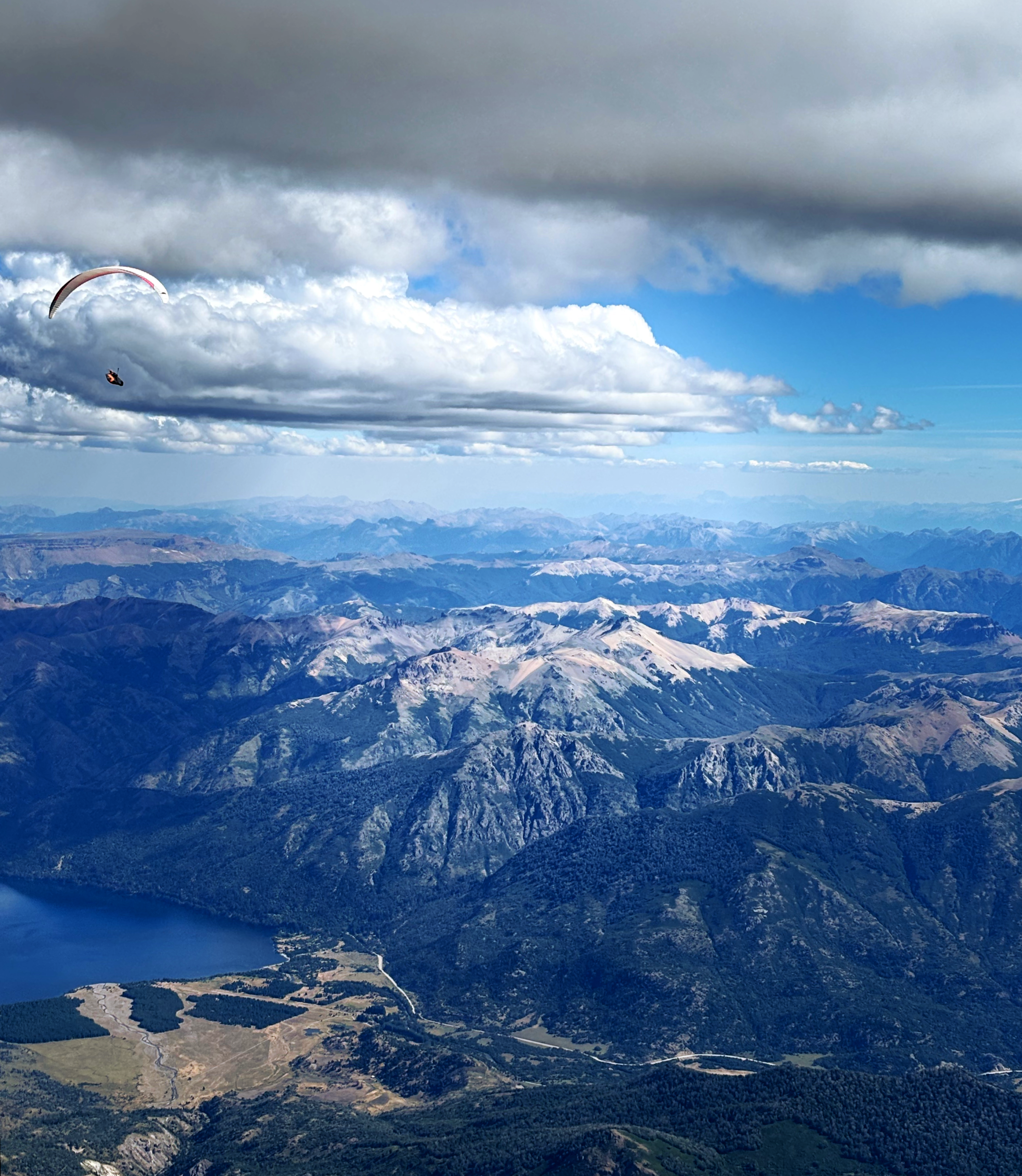
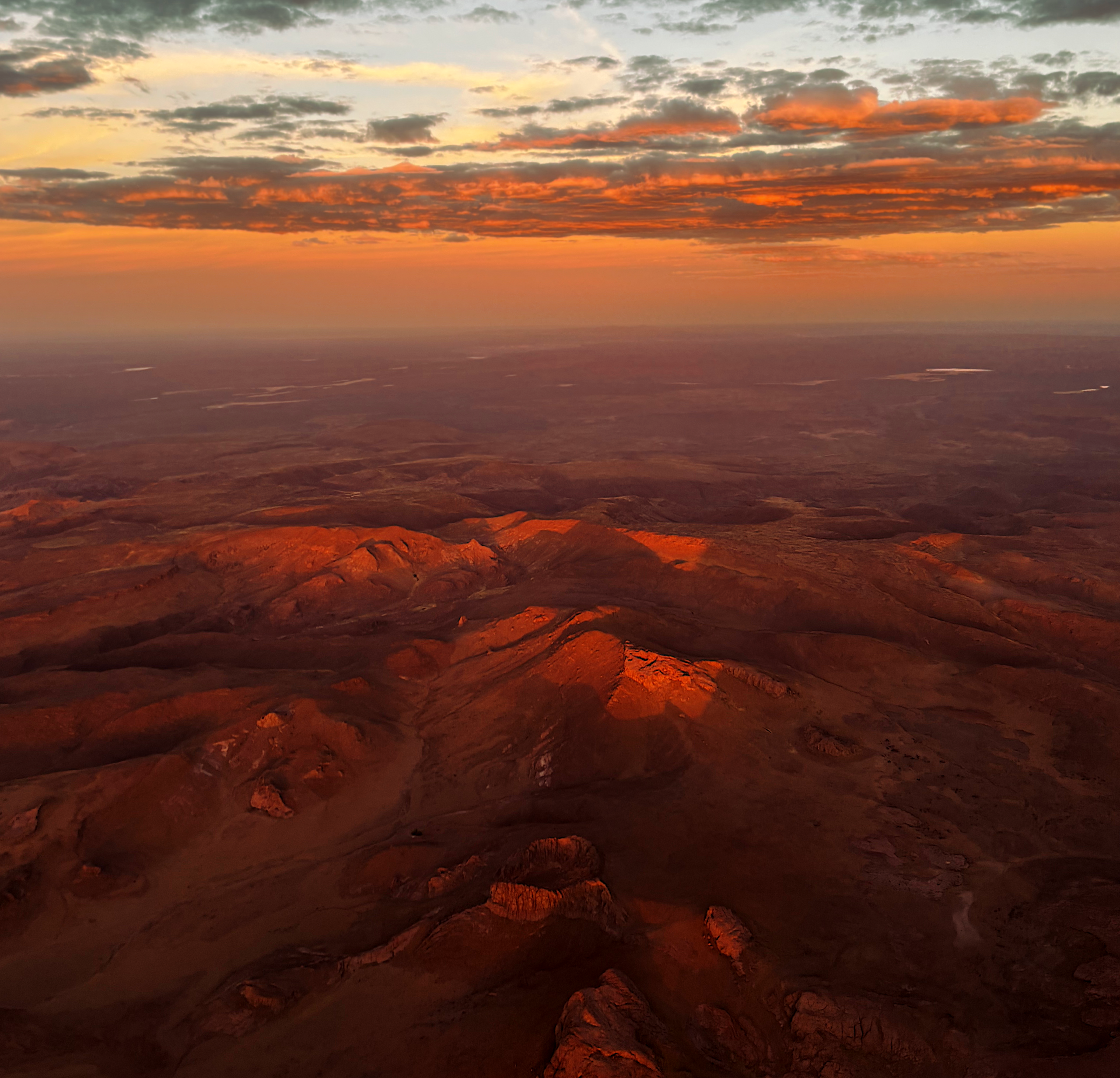
Kris Holub is one of the most versatile pilots in the American free-flight community — an accomplished acro competitor, XC pilot, and SIV/acro instructor who has spent the last four years running clinics out of Oludeniz, Turkey. Gavin sat down with Kris in person during a weather day at the US Nationals in Chelan this June to talk about his extraordinary winter season in Bariloche, Argentina, where he and his friend Marcos Rosenkjer explored one of the most underrated and unknown and seriously awesome XC destinations in the world — and capped it off with a 345km convergence flight into the Patagonian desert.
This conversation covers everything from the meteorology of the famous Patagonian dry-line convergence (think Texas dry line, but bigger and more reliable) to Kris’s philosophy on SIV training, his journey from robotics engineer to full-time acro instructor, and a refreshingly honest “stall rant” that challenges some of the community’s most deeply held assumptions about what pilots actually need to learn — and when. Please don’t just listen to this one, check out Kris’ images and videos below and check out Kris’ instagram for some unreal videos from the trip.
This is the first episode where we are launching two versions- a shorter 30 minute version on our normal podcast channel, and the full version on our subscriber channel. We never put anything behind a paywall, if you aren’t a subscriber of the show and can’t afford to support our content, just email me and I’ll set you up with a lifetime subscription, no questions asked. Confused? Find out how to listen to the subscriber channel here. This post has the shorter version below.
Support the Podcast
A buck an episode, that's all we ask
If you like what you hear, please consider becoming a subscriber to ensure our high-quality content continues. You can also help contribute to a healthier, greener planet through our partnership with Our Forest.
See our donation and subscription options here.
Listen to the Podcast
Listen to us on all the most popular podcast platforms:
Bariloche, Argentina as a world-class XC destination: the terrain, climate, local flying community, and why it’s not the savage Fitzroy-style Patagonia most people imagine
The Patagonian dry-line convergence: how it sets up, how to read it on SkyEye and Skysight, and why it could support 500km+ flights on the right day
The 345km convergence flight: a 9-hour epic that included a first-ever vol biv, a near-dark desert landing in cactus field, and sleeping two nights under the stars
Why Starlink changed everything for XC flying in the Patagonian steppe
Vol biv logistics in extremely remote terrain with no roads on Google Maps
The lifestyle case for Bariloche vs. the Roldan/Valle Columbia circuit: world-class backpacking, climbing, wing foiling, kite boarding, and skiing on the non-fly days
Kris’s acro origin story: from a 15-hour pilot in Turkey to infinite tumbling in Gerlitzen in under two years
Quitting engineering twice to pursue flying — and why teaching acro scratches a completely different itch than tandem
The 2024 acro competition season: placing 3rd at his first Acro World Qualifier, the ego trap of performing well, and why the XContest black hole and the acro comp black hole feel eerily similar
The SIV philosophy: why Kris builds the spiral progression before collapses, and why “lockout spiral” is a misleading term
The stall rant: why stalls are not the holy grail, when they actually help, and what pilots are missing by fast-forwarding to them
Why wingovers may be the single most transferable SIV drill for everyday XC flying
The “search for spin” as an underrated and surprisingly un-scary maneuver that every pilot should experience
How acro training expands your situational awareness “soda straw” — and why that matters more than any specific maneuver
The new subscriber channel format: what’s changing and what’s staying free forever
Mentioned in This Episode:
Marcos Rosenkjer — Argentine pilot and Bariloche local, mastermind behind the convergence missions
Hernan Pitoco — Cordoba-based pilot who joined the convergence flight crew
Skysight and XCSkies — the forecasting tools that called the convergence accurately
UTI (Convergence layer on Oudie) — the instrument overlay that shows the convergence line in real time
Antoine Girard — the French para-alpinist whose record flights above Broad Peak inspired the Patagonia crew
Santacroce (Santa) — the coach who taught Chris his first stalls
Colin Papa — the coach who taught Chris rhythmic SAT through infinite in Gerlitzen
Mike Jimenez / CoPilot — the acro coach Chris hired for his 2024 comp season
Where to Find Kris:
Kris runs SIV and acro clinics primarily out of Oludeniz, Turkey each spring and fall. Go to beyondsiv.com
speaker-1 (00:17.08)
Hi there everybody. Welcome to another episode of the Cloud Based Mahem. In fact, episode 278 of the Cloud-Based Mayhem. It kind of blows my mind. Been doing this now for 12 going on 13 years. Thanks to all of you listening, which I really, really appreciate. My guest today is Chris Holeb. I did this in person, which is rare.
days but that was fantastic to sit down with in. We did it in the airstream during a bit of a weather day in Shillan at the US Nationals at the end of June. So there is gonna be some native sound you'll hear in the background, some birds and stuff, but hopefully it's not too bad and
What a great convo. It Chris is one of my favorite people. He's been in our community for a long time. And you know, we all gravitate towards different things when we get into this fantastic sport. And Chris went full acro and still very keen on acro, spends a lot of time going around the world and flying acro, competed for a long time, still does sometimes, but he spends a lot of time in Ullu Dennis now teaching SIV and acro, and he's very, very good at it.
And he spent a good portion of last winter, our winter, their summer, down in Patagonia, living and flying there with his buddy Marcos Rosenjaker, who has been in our community for a long time but has relocated now permanently down in Argentina. And this is much of this today, this talk with Chris is about his adventures down there. And they capped it all off at the end with a 300-plus convergence flight. This is the convergence they
been seeing down there set up almost in the same place on the days where it was flyable and they think they didn't get it all the way to the ocean this time but they think on those days you could actually fly all the way to the coast and so
speaker-1 (02:15.02)
This is their story of the deepness. You're very, very remote down there in this part of the world and how it all came together and the glue of their team. And some remarkable photos and videos come along with this. So as you're listening to this show, go to cloudbasemahem.com and pull up the the post from this and check out some of Chris's amazing videography from that.
trip and others right after Shallan he went up and sent a really cool flight. They broke a bunch of records actually that week up in Pemberton, up in BC. So and one little new addition that we're starting off with this show with Chris is that we're gonna cut off the main show at around 30 minutes, the typically free show.
Don't get too worried, everything will remain free and it always will be. We're never gonna put anything behind a paywall. But I had someone a lot smarter than I am look at it recently, and I told him that I was basically following the same model that Sam Harris does. And he listened to Sam Harris and he Yeah, but Sam switched over to this way years ago, and you should too. And the reason is, is because
We've always only asked for a buck show, as Sam does, and we won't have any advertising and never will. We think you dig that. But the reason he cuts it off at a half an hour and you have to s go to the subscriber channel is it does push people to support if they can. And like I said, all we've ever asked for is Buck Show.
If you can, great. And there are many ways to do so. You hear that at the end of every show, so I won't go into it here. But what's going to happen here is about a half an hour, it's gonna cut off and it'll you'll hear me again and say, hey, go over to our subscriber channel.
speaker-1 (04:05.258)
If you are a subscriber already, that's where you'll find it. And from now on, just listen to everything on the subscriber channel. We're going to put out two versions: the one that goes a half an hour and the one that goes the full time. And we're also going to create another thing. Sometimes we're having really amazing conversations with people, and I try to keep it to about an hour, but we're leaving a lot left unsaid. And that's what we feel like that's the statistics show that that's about what people can listen to, is about an hour. But we're also going to have a little we don't put out much.
bonus content but we will in the future so when these conversations are just we're just rolling and it's painful to cut them off in an hour I'm gonna keep them going so you'll hear another one every once in a while we'll have a conversation that goes more than an hour and you'll find that in the bonus content which is also on that subscriber content. So
Go over to the subscriber, you'll see under podcasts on the link on the website under that menu. You'll see the subscriber drop down, go to that, it shows you how to sign up. If you're not a subscriber and you're a subscriber, if you've ever bought anything off the website, if you've reached out in the past, it's a lifetime subscription. If you can't support it financially and you're not a subscriber, just send me an email. I'll get you all set up, no questions asked. Maybe someday you'll be able to. But the the statistics behind it are about six.
percent of our listeners actually subscribe and support the show financially. I'm hoping we can bump that up a little bit and it'll just make this more of a yeah, it'll make it more of an endeavor that covers more of the pills. So Chris Holub, fascinating individual so with some great thoughts about risk and learning and things to avoid and things to focus on and just all around a great conversation. So enjoy.
speaker-1 (05:54.766)
Chris, it's kind of a treat to be able to do this in person. We're here in Shillan at Nationals and you showed me some pretty crazy stuff video wise from Patagonia and it reminded me of this I was following all that when you were doing it. So let's let's start there and then we'll dig into your history a little bit. But this Patagonia trip looked w w just incredible.
speaker-0 (06:18.462)
yeah, no, I'm I'm psyched to be doing this too. It's fun to be face to face, chatting. yeah, I had a great time. So I went down there from beginning of December through mid March and it was kind of open ended. I knew I wanted to spend the winter there 'cause I had done the last couple of seasons in Valle Columbia. Kinda feel like I was sort of doing Groundhog's Day. Yeah. Doing the same thing over and over, just wanted to try something new.
And it turns out my friend Marcos Rosinger, who he came to Boulder some years ago, around the time I started flying or a little after. And he grew up in Georgia, but he's from Baralochi, was born there. So he's kinda like half American, half Argentinian, mostly American, if you ask me. Yeah. so he he moved back to Barlochie a couple of years ago. So I've known of it. I've had friends who have gone down there and they sing the praises of like how beautiful it is and how fun.
So I like, I want to do something different. Like, that looks like a cool lifestyle. I'll hopefully be able to fly. I know Patagonia, you has a reputation for difficult weather. But he was selling it lot because he does a lot of sailplanes and kiteboarding, wing foiling, there's backpacking, there's like all this cool stuff. He is living on a sailboat right now. wow. Yeah, so I can't remember where he was at the time, but I know he lives
speaker-1 (07:21.112)
Yeah, wind.
speaker-1 (07:30.516)
Is Luis down there too?
speaker-0 (07:38.252)
I think full time on a sailboat now. So it's just Marcos and his wife now. Yeah, actually he has a kid on the way coming soon. Yeah. Yeah, so
speaker-1 (07:44.068)
he's married.
Alright. He and his dad just pop up in the craziest places. I'll just see I think last year when I was over doing the media thing for the XOPs, it was just boom, they were there all of sudden. Do that all the time.
speaker-0 (07:57.206)
Yeah, yeah. Yeah, so he invited me down there or he's had an open invitation for a couple of years and I hit him up and I kinda asked, Hey, what's the deal? When's the time to come? so I was coming from a Dune flying trip in Peru right before that. So I did Peru in November and then showed up in Baraloche. And I found an Airbnb for the full time for you know three plus months and it was pretty reasonable cost of living. So I kinda just showed up. I'm like, Well, I've got a friend there, I'll just
Kind of see what happens and figure it out.
speaker-1 (08:29.154)
Paint a picture for Bariloche. What's it like? What is or what's it similar to? Where is it?
speaker-0 (08:33.87)
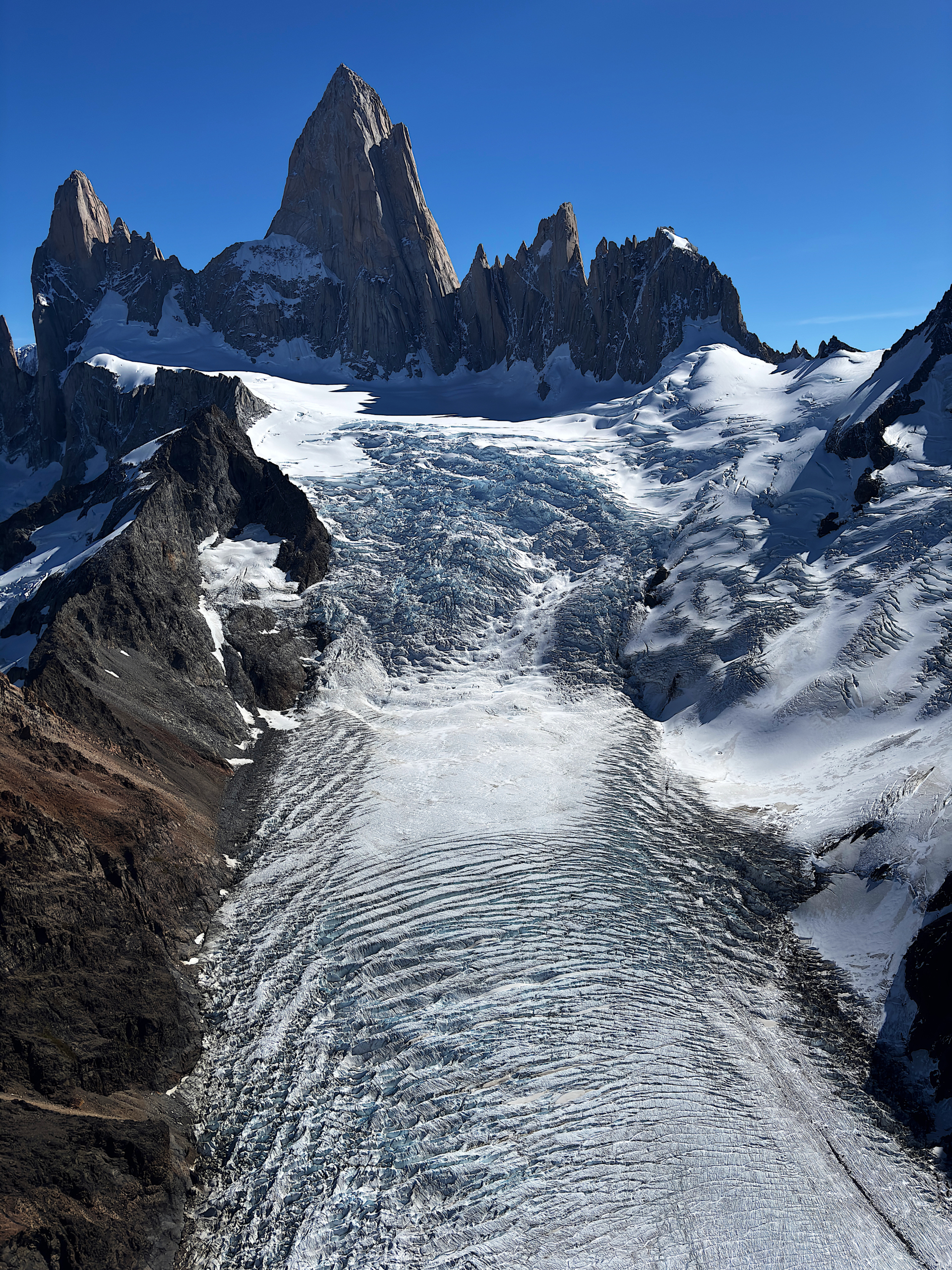
Yeah, so you know, Argentina's pretty long north south. It's very large landmass and Patagonia, you know, I I was actually ignorant of this before going down there. You know, I always thought of Patagonia as, you know, the the clothing skyline, Fitzroy, Cerro Torre, you know, the savage weather, all that stuff. And I I did not realize that Patagonia is actually a a very large region. I forget what the exact landmass is, but you could basically imagine combining like Washington, Oregon, Idaho
Utah and actually the Yeah, it's it's kind of runs north south. So you have the Andes that runs north south with the Chilean side on the west and Argentinian side on the east. And you actually I think those comparisons of those states is pretty accurate, basically kind of the in a in a in a way. So yeah, the Andes in that region around Baraloce, they're not as
speaker-1 (09:03.96)
More skinny and
speaker-1 (09:22.528)
A lot of landmass.
speaker-0 (09:27.714)
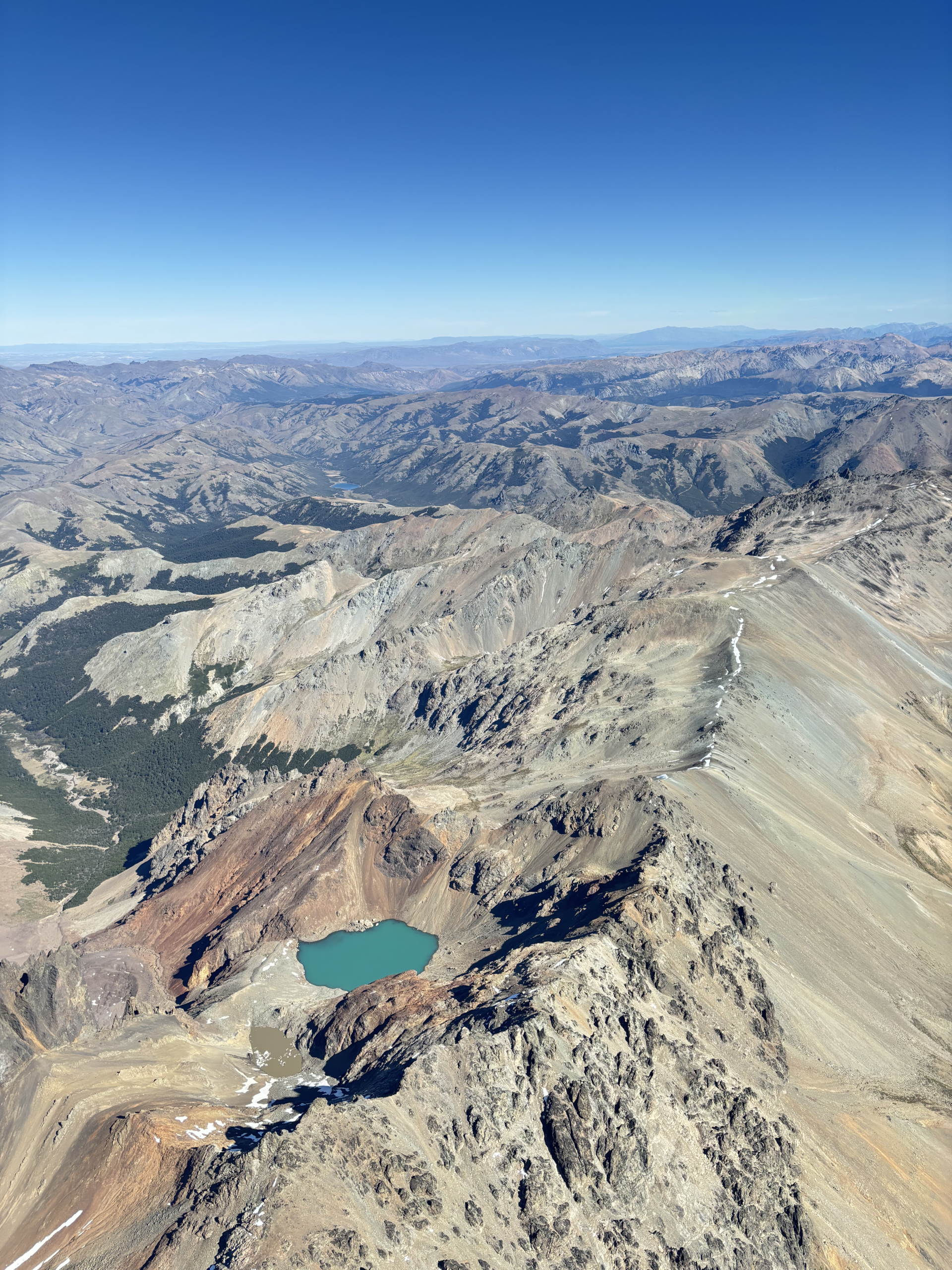
huge and epic as further north and they're not as dramatic as like the Fitzroy skyline. But you know, they're pretty good size. And I think it's like maybe eleven K is typical. There's some volcanoes that I think go up to like fourteen. Okay. So it's relatively high. And I think the town is at maybe like three or four thousand feet, something like that. So there's some decent prominence. And what's pretty interesting about it is you have all these biomes that change pretty quickly. So
You Baraloche, I would describe it as imagine like you took Switzerland, but it was conquered by Spain and you butted up against Wyoming. Yes. So yeah, so it's got you know, you got this little Swiss German, like very European style town, beautiful mountain lake. There's a ski area there, and like
speaker-1 (10:06.782)
Yeah.
speaker-0 (10:19.8)
maybe thirty-five K to the west, there's a glaciated volcano, and just beyond that it turns into rainforest on the Chilean side. But if you go ten, fifteen K east, it turns into desert for a couple hundred miles. And they call it the Estepa. It's a the geological term is Esteppe, which is basically a high desert plateau. And that runs out for probably a couple hundred miles, like basically all the way to the Atlantic Ocean.
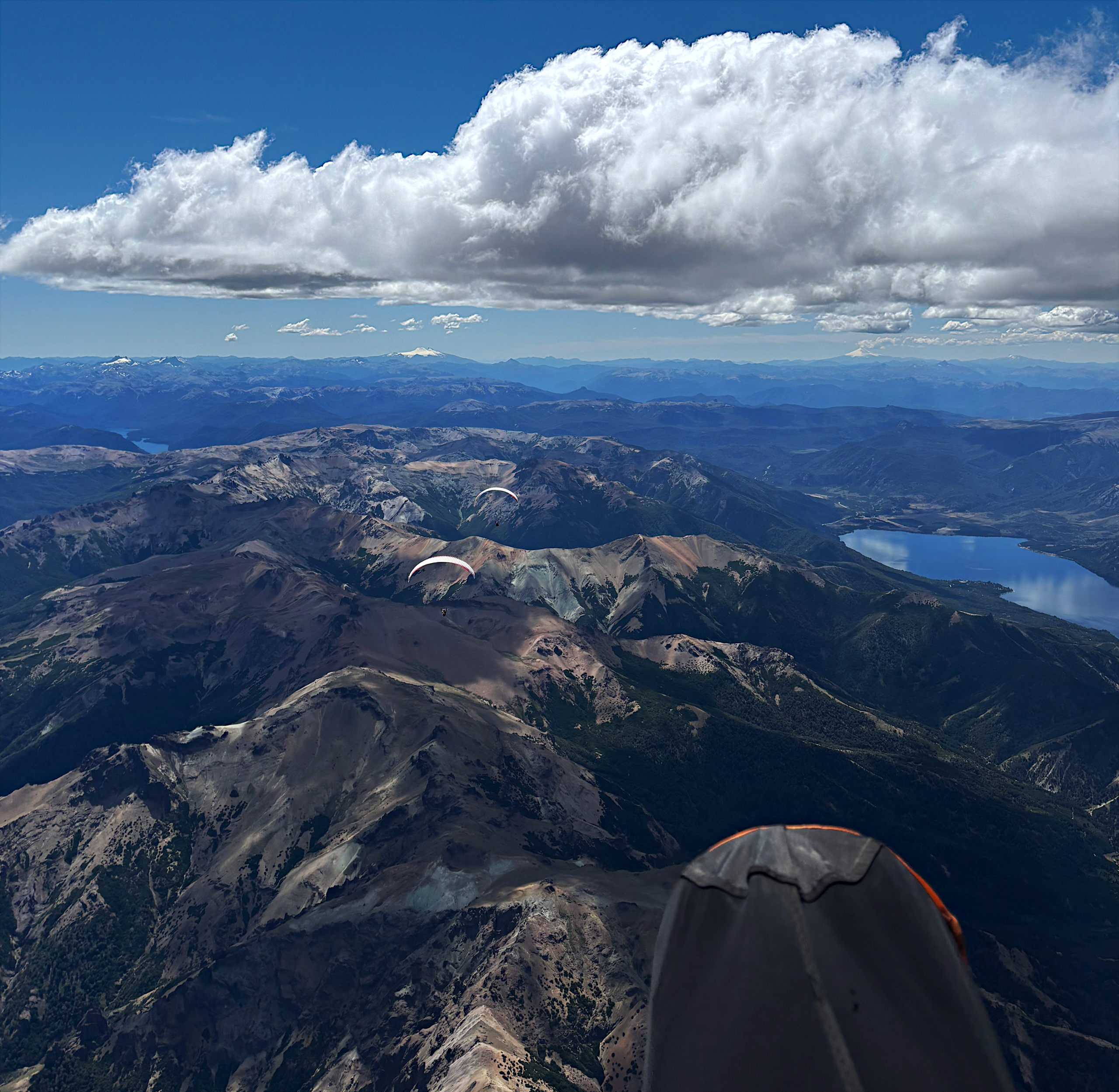
So you like in one flight, you can fly over a glaciated volcano, over Alps like terrain, into the desert, and you can do that all in one flight. So it's crazy that you can
speaker-1 (10:56.482)
The video you showed me, that sped up video that you were doing with the three D camera, it was it was very much kinda Serro Torre type terrain with the lakes and the snow and the and then the desert. It was crazy how it changed so much.
speaker-0 (11:11.618)
Yeah, it it changes really, really fast. It's really dramatic. And I know some of that is because you have kind of a fern like effect of the prevailing westerlies come up over the Andes. It drops a lot of moisture on the west side. Yeah. And then it dries out. So even within Baraloche on the western side of town it rains quite a bit more than the east and it turns into
speaker-1 (11:31.678)
Sierra's phenomenon. You're taking all that yeah, that moisture from the Chilean side and it just dries up on the other side.
speaker-0 (11:38.208)
Yeah, but the peaks are so dramatic that the transition is more abrupt. Right. so I think it's a fair comparison to if you took the Cascades but you like smashed up against Utah and Wyoming. Because the the steppe or the steppe reminds me a lot of Wyoming. Like if you teleported out there, you'd be like, This looks like kind of a weird version of Wyoming and it's really remote. It actually makes Wyoming look populated. It's there is
No water, there is no lakes, there's no streams, or no ponds, or no trees. There are very few roads, very few towns. it's extremely remote population wise. I think the population density is probably similar to like Alaska in that region, and you can go a long ways between anything.
speaker-1 (12:30.722)
And so were these, you know, that the you posted when you had the big one, I'll let you tell that story, but were these day missions, were these big week long bivies, how are you handling that kind of remoteness and dealing with it from the safety side?
speaker-0 (12:45.848)
So w what I really liked about it is I don't think I flew the same line twice in the entire three or four months I was down there because you can do mountain triangles over Alps like terrain. The difference is the cloud base can get up to fourteen K, so you're actually quite above the terrain most of the time. And there's also missions where you'd go out and see the Estepa, and most of them were day or overnight missions.
speaker-1 (13:09.39)
And these you know a couple hour strikes from Bariloche or are you guys going into the mountains and staying there for are you going deeper or is it just from Marcos's place?
speaker-0 (13:18.744)
So mo most of the days we would start in the from the ski area. So if we're doing like a triangle in the mountains, we would start there and then you can go that's right. Yeah, you can drive or I would usually Uber 'cause I didn't have a car down there. You can drive to the ski area and they'd actually don't let you take the lift up, but you can hike up and it's like fifteen hundred feet and you take off from there and you can go many different directions. So
speaker-1 (13:28.268)
up town.
speaker-0 (13:44.638)
on the days that were good enough for mountain flying, we would start there and usually try to do some kind of triangle and come back. he also just found the launch in the last year or two, kind of right at the beginning of the Estepa, which also happens to be underneath a very common conversion zone. So he found some logistics where we can drive out there and we were hiring a local buddy of his to take his truck out and with a Starlink and that's kind of the
the new tweak that turned this place on because Starlink only became available there in the last couple of years. And before that, it's like if you bomb out, you have no hope. There's no way you're hitchhiking. You have no cell service. And the bigger problem is even if you have a pin, Google Maps can't route you because none of the roads are on maps. So what the driver would have to do when you if you have a pin is he's gotta open up Starlink, Google Maps, go to satellite view, trace the roads manually and figure out
how to get to you. So if you don't have service, it's a real issue to get out of there. So but with the with the driver and Starlink, you we were able to do the days that were a little too windy for the mountains, fly out into the desert, and often we would go so far and so late that you know it would take six, eight hours to drive home and we're not landing until nine or ten PM so we would just camp there and then drive back the next
speaker-1 (15:09.974)
What is your solar window? What were what were you guys getting in mid summer? So that what's that's around you started around the solstice, right? December mid December and then
speaker-0 (15:18.54)
Yeah, so the latitude is forty one degrees south. So it's basically similar to the Wyoming border. I forget exactly when solar noon was, but I think typically we could launch call it eleven o'clock plus or minus depending on the day. Yeah.
speaker-1 (15:33.408)
Yeah.
speaker-0 (15:36.202)
Yep, the yeah, the ski area predominantly accepts northeast, which you know, because southern hemisphere, northeast is ideal. So he did a like a two hundred K or almost two hundred K FAI down at the skier a couple of years ago, which kinda put that place on the map for me. And he started really early.
speaker-1 (15:55.372)
And is there are there is there a local crew? Is there a club? Is there is this happening there? Is it just you guys?
speaker-0 (16:00.82)
No, no, th there's actually a pretty solid crew. I would if I were to estimate, I'd say in Baraloche there's maybe thirty or so pilots, and in the greater general region, which includes further north along the lakes and also down south in El Balsan, I would guess there's call it seventy five or so pilots. There's not a lot of
higher level pilots. There's a couple of guys that are doing really good XC, but a lot of them are more beginner intermediate and they're flying El Bolson, which I think is a little more well known. It's a bit more consistent, but it's west facing so it doesn't get exposure until later in the day. It's a bit later start. It's a bit lower
speaker-1 (16:45.644)
I is this place that you guys are flying, is this where Marcos was trying to do a comp a couple of years ago?
speaker-0 (16:50.872)
He was trying to do the comp out of El Bolson, which is the more reliable place, and then that ended up falling through with just some logistics
speaker-1 (16:59.96)
But it could it work.
speaker-0 (17:01.716)
It it could work. Elboson definitely flies more, but you don't get as big of the days 'cause you can't start as early. but it is more sheltered from the wind and weather, and those guys are definitely flying more. And
speaker-1 (17:16.288)
Is it would you compare it to I mean is the westerly influence a big deal like it is in Boulder or it how reliable is it? Is it something you've gotta really watch out for or is it s the the Andes are so big that they're they're blocking most of that?
speaker-0 (17:30.17)
It's it's not as dangerous as the Boulder one. In Boulder you have the the really strong prevailing westerlies in the uppers, and we kinda have this like lee side bubble, and that can break down very quickly, and then the the westerlies come in and surprise you in there, for whatever reason that I I didn't fully understand, did some research and kind of forgot exactly what the meteorology behind it is, but it doesn't tend to do that. It's when it's west, it's just
It's west, it's windy, you can't do anything, and on the days where it's working
speaker-1 (18:00.608)
Okay.
speaker-0 (18:02.894)
Yeah, and what was nice is, you know, going down there I was imagining El Chalton, Fitzroy like that kind of patagonia of we're gonna get destroyed by hard weather. And it was actually very, very nice climate. not too hot, not too cold. most of the days where it's west, it's not even nuking, it's just kind it's just too strong for paragliding, but he was
teaching me a bit of wing foiling and so it's kinda perfect on the days where you can't paraglide, you can go do that stuff. So in December there was like a three week stretch right after I got there where things were shut down, but that was still kind of early season. But January, February is when it was pretty consistent and
speaker-1 (18:45.528)
So kinda that Roldanio Valle time period is perfect down there. So if you're looking for something different to do, it's sounds awesome.
speaker-0 (18:49.986)
Yeah, and that's
And you kinda gotta choose one or the other. I would say because these weather windows are less consistent, you know, it's not via rolled over you're gonna fly every day. I think I kept the stats and over that ninety day period from December through March, I think I did fifteen like pretty quality XCs, so it worked out to something like one every six days. And then in January, February it was a bit more frequent. We actually had one stretch of
four good days in a row. That's where that big flight that we'll talk about in second happened. But typically the pattern we would find is you'd get one decent mountain day, one really good one, and then the Westers would start to move in, then we could go fly the Estepa, and then it would be too much. So you gotta get one to three days in a row and then you kinda sit on your hands for a week and then rinse repeat and it's not
speaker-1 (19:47.106)
Imagining pre frontal was what you were flying on or is it post?
speaker-0 (19:51.116)
I think it was postfrontal. you know, they didn't have like the weather discussion and I'm really bad I I I'm good at meteorology for for sizing flights. I'm really bad at macrometeorology of identifying fronts, so you kinda see there's a cleared out and like the collapse rate's good and but you know, it's not so regularly cyclical that you can plan on yeah, it's gonna happen. You know, you might get a couple of days in a row and then maybe nothing happens for ten days or something. So
speaker-1 (20:04.47)
speaker-0 (20:18.902)
It's kinda tricky to go down there for anything less than two weeks. I think you're rolling the dice, getting skunks. So it's it's a better place to go for a longer period of time and sounds.
speaker-1 (20:28.174)
Yeah. And I've been in Argentina. I mean the food's amazing and the
speaker-0 (20:32.606)
the people are awesome and yeah, it's great. That was kind of my other thing with roller vies. Like they're great, you know, the flying's awesome. They're world class for a reason, but I find that the lifestyle af after a while I'm like, Man, I I kinda miss home. This is different. It's tough when you don't fly. But there I'm like, this is incredible. You have world class backpacking, world class climbing, amazing kiteboarding, wing foiling, mountain biking, you can ski in the winter.
Like you have all this stuff you can do. So unlike those other places, like it's a great time on the ground. Like you have tons of fun. The people are great. It's very European feel. Like it has a lot of Italian influence. So it doesn't it doesn't feel like South America at all. It feels like
speaker-1 (21:17.632)
In Europe. cool. Yeah. And are there refugios and little cafes and cool places?
speaker-0 (21:23.884)
Yeah, yeah, there's a large refugio network all through the national park. So there's like the big classic loop you can do is the four refugios trek, and I forget the stats, but I think it's something like twenty-six miles round trip and maybe like twelve thousand vertical game up and down and most of the way people are doing that is going and hiking all day, staying in the refugio, getting a meal, and they kind of bounce from refugio to refugio.
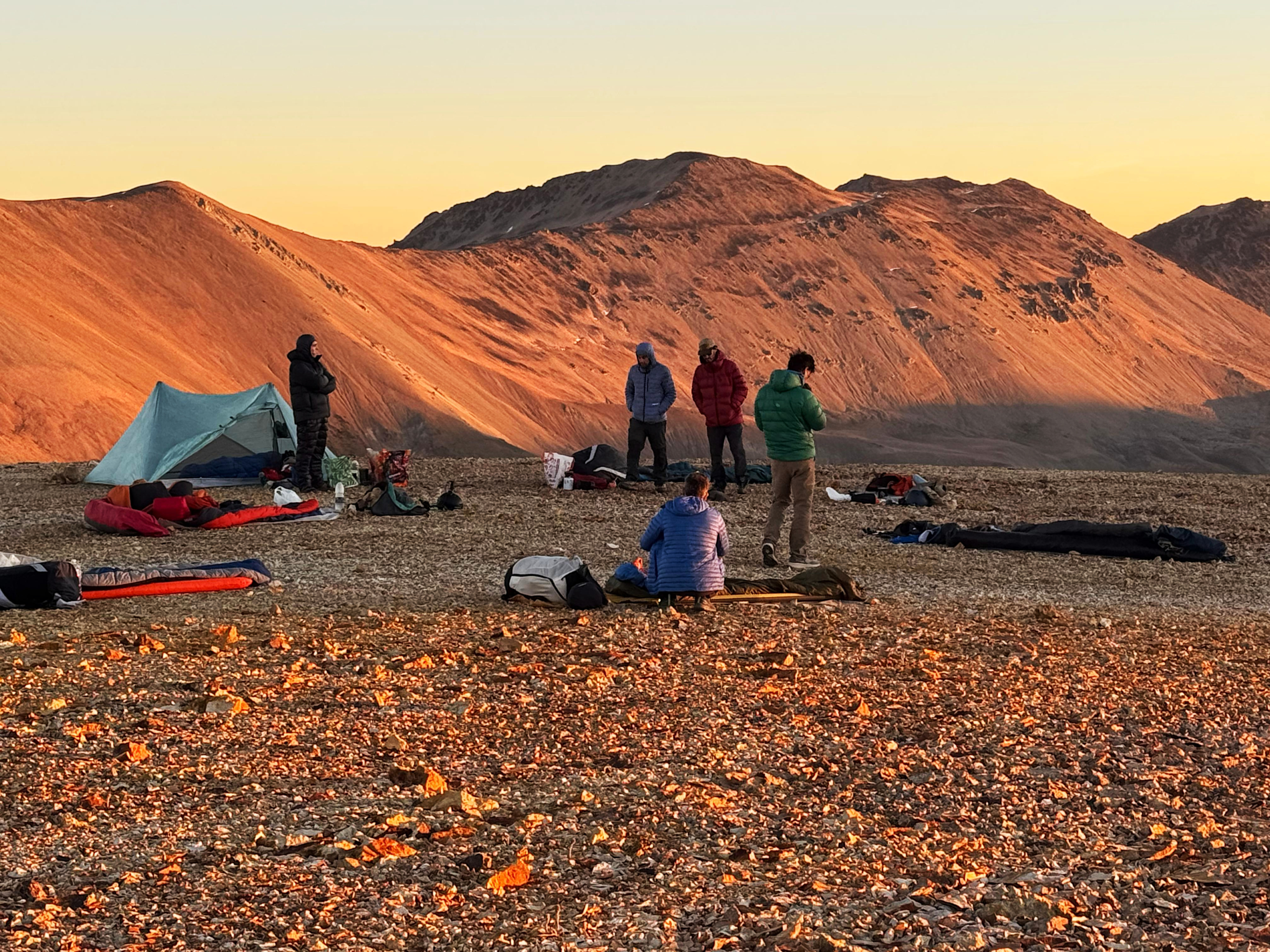
Yeah, though I did have some friends come down and we did a backpacking mission through the park. We started at the volcano and worked our way through the park and we wild camped I think three nights and we just did refuge on the last night, so we had backpacking gear and once we got away from the refugios it was kinda had the whole thing to ourself. We camped by a Alpine Lake and we were the only ones there. We had the whole place to ourselves. It was really, really pretty, really fun.
speaker-1 (22:21.07)
I'll just drop this in there now for the listeners. We need to put we'll put up all your well, not all, that's impossible, but we'll put up a bunch of videos and and pictures from this. And I just that made me think we should add a map and so people can take a break right here and go look at all the go look at the blog post and get familiarized with the area. I mean I've flown down there quite a bit. I've done Argentina nationals, that kind of thing, but I've never been in this area. Sounds awesome.
speaker-0 (22:46.912)
Yeah, no, it it's it's great. And as far as the flying goes, so on the days you can fly, it's Alps like terrain in the sense of quite a lot of vertical relief from valley to top. the terrain that rises up has quite a bit exposed above treeline as it's not as grassy as Alps, but it there is a lot of top landing opportunity. There are it's less
isolated for landing zones and like the cascades. Like there's places you can land if you had to, but it's a it can be a long walk out if you go there. And unlike the Alps, you get way above the terrain. I think the you know mountaintops are ten ish and you can get to fourteen, fifteen, sixteen even over that terrain. So you have a lot of clearance. So it's it's less of the ridge running style. Like you climb up a lot of days are blue, sometimes you have clouds,
quite strong can be quite strong, especially in his Steppa. It's kind of like Shallan but more.
speaker-1 (23:48.642)
On the days if you get that kind of, you know, best case scenario, maybe a three day window where the middle one is really good, is it it doesn't sound so suited though to Bivi unless those other days are can you kind of still piece together little stuff before the wind comes in? Or are what I mean I typically think of Bivi as you need a few days to kind of piece stuff together. Would it be would it work for that?
speaker-0 (24:11.7)
Yeah, I I think it could be done. you know, the forecast was surprisingly useful there. we used X D Skies and Sky Sight quite a bit and I was impressed that it called the weather pretty reliably. We were seldom surprised that the day basically worked the way expected. And what's nice is it almost never ODs there.
you know, it's like if if it's if it's windy, it's windy and you're shut down. But there's almost never I don't think on any of the days we were flying that we had to worry about thunderstorms and the clouds were pretty friendly. So there weren't a lot of surprises. There weren't random high clouds coming and shutting things down. So I think when you have the forecast that says that, you definitely could string together a Vol Biv. You just maybe you're not gonna have
multiple or many epic days in a row, but you can probably do a one night, two nighter.
speaker-1 (25:02.922)
Mm. Your s your footage just screamed for it.
speaker-0 (25:06.36)
Yeah, no, I and you know, I've actually that that flight I've never vol bived before. That was the first one I've ever done. I I came from a mountaineering climbing background before flying, so I'd you know, comfortable with camping, but I've never gone vol biv, mostly because it's hard in Colorado. It's hard to find place to top land, it's hard to find multiple good mountain days in a row. I know Pete and some other guys have done it, but it's it's difficult to pull off and the opportunities I've had have felt
kind of contrived. Like, yeah, you c you could do it and you could go land and camp and you're kinda doing it to do it. but I always wanted to do it as a mission, as as something that made sense. It it was for a specific goal and enabled something that couldn't be done. So at the end of the season, it was actually like the last big flight we had there. there was that four day window that was good. We flew the first couple of days just doing day missions and then some of Marcus's
Buddies came down, Hernan Pitoko, I don't know if you know him, but he came down 'cause they saw the the good window and so we were
speaker-1 (26:09.87)
Hernan's in Cordoba, right? Okay. So how long is that? How far are you from there?
speaker-0 (26:11.766)
I think that's right.
speaker-0 (26:15.49)
They they took a flight but I think the flight was like an hour.
speaker-1 (26:19.321)
so it's a ways. Okay.
speaker-0 (26:20.364)
Yeah, I I looked at the drive once and it was it was definitely a substantial drive.
speaker-0 (26:27.444)
Yeah. So, you know, they came down and we got together and we were trying to game plan what the what the mission, what the line's gonna be, and we were looking at different triangles and we were looking through the weather and I was like, hang on. In two days there's gonna be a convergence line that steps up. And it it turns out that there's a Yeah, and you ca you can see it really clearly. Skysight itself. Yeah, it's got that converse layer, so it shows up clear as day there, but also
speaker-1 (26:47.874)
You're you're getting that on Skysight.
Yeah.
speaker-0 (26:57.378)
the cloud depth or cloud base layer shows up really well, like right on the boundaries where the convergence is. And it's a pretty well known phenomenon. It's it's quite similar to the dry line convergence that they have in Texas, where have a maritime and a continental air mass that collide. So it's more reliable than the Texas one. It doesn't tend to OD as hard. So the kind of the the big systems you have, you have the prevailing westerlies coming off the Pacific, and then you have a northern air mass
Which I think is the more moist one coming off the northern plains of Argentina. So they collide and you get this like northwest to southeast convergence line. And it's very visible. It's very common in Barloche, especially on the windy days. You can see this cloud line just sitting there and it runs all the way to the Atlantic Ocean. Wow. And there's a paper that we found after that flight that documents it. They've they've studied it. They it's well known and it's actually quite
Common that it's there. not every day there's clouds, but that system sets up pretty frequently.
speaker-1 (28:02.087)
Like the Via convergence has just happened. But way bigger.
speaker-0 (28:04.406)
Way bigger scale. Way bigger scale. So it it migrates north and south by hundreds of kilometers. wow. you know, sometimes it's way north, sometimes it's south. but it's it's fairly common that it sets up and you know, depending on where it is and the specific conditions, it can be longer or shorter, but there are times where it could be three, four, five hundred kilometers long and it's just like Cloud Street, as far as the eye can see. There was one guy
who took off from the middle of the Estepa. There's a a site there they've been flying and they mostly just fly downwind along the highway. So he launched and did I think like two fifty or something like that. And he flew all the way to the Atlantic, ran out of landmass and had to land. Whoa And so Marcos had has this plan that he wants to fly five hundred all the way from the Baralocha area to the ocean. you know, Mar Marcos has got some
speaker-1 (28:49.982)
speaker-0 (29:02.434)
some ambitious ideas, you know, he's a creative guy. so I was like, yeah. Yeah, I was like, yeah, whatever, like maybe, you know, we'll try. so we we did a couple of the step emissions where we were chasing the convergence, but it wasn't always in the right spot. Like we we had our foot launches and we could see the line but we couldn't quite get there. Or, you know, sometimes the convergence is actually in the blue and the cloud is in the the leeward side of it.
speaker-1 (29:08.224)
Yeah.
speaker-1 (29:31.643)
speaker-0 (29:32.406)
just so turns out that on the day those guys showed up, we're like, in two days the convergence is going to set up right over the kind of remote mountains to about sixty seventy K south of our lochain. And you could hike up there, but it it's a big hike and you have to drive in and it'd be it'd be a pain. So we came up the idea of, hey, let's let's fly there on you know, instead of doing a big triangle where we might bomb out, let's do a more chill, just like sixty seventy K flight. We
pulled Google Maps, we found a spot where like it's gonna be here in the morning. So we took off, we did our like lazy late start, seventy K, take pictures, find a spot, top land, and camp there. And I didn't even bring a tent. It was just clear skies. So just sleeping pad and you know we top landed there was some snow and running water so we we filled up and you know the next morning
sunrise comes up and we go to the top and like, yeah, the the wind's good. It's actually lighter than expected. the the condor I guess condors they were out starting to soar and we know we're like we we want to get started early. You know, it said it was gonna start at maybe ten or eleven, but
If you bomb out, it's gonna be a real epic, because there's not much out there. Mm-hmm. So we're like, we want to be sure that it's on. So we're like we really waited until super conservative. We take off and it's like right off launch, it's a six and it takes us straight to fourteen. Yeah, we're like, shit, we we should have launched an hour earlier.
speaker-1 (30:58.2)
Super conservative.
speaker-1 (31:05.569)
yeah.
speaker-0 (31:10.996)
And it was it was clear based on the feeling of the air and the altitude. We're like, Yep, we launched directly into the convergence, like it's here, you can see wispies popping. So I think we had these seven guys and we so we gaggled out and made a plan to team fly as much as we could. So we had to do maybe maybe thirty, forty K's in the mountains, while we're waiting for the flats to turn on. And so we get to the the transition and we punt out into the flats and we
almost bomb out. We we had to to low save because the convergence wasn't working well enough to see the clouds yet. All we had is where it was forecasted and there's some disagreement on which line we should take and you know, we were kind of battling to figure out where to go. We we save it, get into it, and we ended up flying crosswind for a couple of hours. in hindsight we figured out that the real convergence line was further south. We should have gone downwind into it, but
you know, some of the group wanted to push into the clouds which were off in the distance and the the models were saying that the the true convergence was gonna be in the blue and we couldn't quite get everyone organized 'cause we were off
speaker-1 (32:21.038)
Are you running an UTI or something so you actually can see the convergence on the instrument? Have you ever tried that?
speaker-0 (32:26.632)
Marcos was doing that. I did not have that at the time, but I do have that now and that would have made all the difference because we took the track logs afterwards and we superimposed them like, yep, like as as soon as we got into the good lift, like it was right where it said it was supposed to be.
speaker-1 (32:37.216)
There was a
speaker-1 (32:41.462)
I've learned that from that the Gordon, you know, Bokers who's doing all those crazy sailplane flights out in the wave in the sears and I did that night flight with him, but he just he follows that stuff to a T. It just nails it. And I I didn't realize that was a layer you could have on your Outie and now I fly with that. When I when I f punch out in the Snake River plane it's usually it well, it's often blue and when I'm just getting low and I don't know what to do, I I look at that and almost always it works.
speaker-0 (32:53.481)
It works.
speaker-1 (33:11.637)
the conversions is yellow. I'm gonna go to yellow. Yeah.
speaker-0 (33:14.348)
I it's it's a it's a cheat code. It it it totally and so we we didn't really get into it for three or four hours, but then eventually the cloud started popping. We're like, okay, yeah, we're we're in, we're getting to I think almost five thousand meters. I think the the surface on some of the days where we knew we were getting really high, we brought O2, we didn't have it that day. I think actually we were maybe it was like forty seven hundred or something.
speaker-1 (33:31.702)
Are you fine with O two?
speaker-1 (33:42.026)
Okay.
speaker-0 (33:42.942)
It's okay, you get a you get a little loopy and get a little cold, but yeah, it works and the the climbs can get really strong there. it's there it's pretty good in the flats, but definitely it's it's on. So we we kind of ended up sort of losing people one by one, get separated and Hernan and Marcos were together. I got ended up alone at one point. I could I could see ten K off on a different line, but just like could never quite reach there. But we were all more or less moving in the same direction.
speaker-1 (34:09.422)
But everybody's still in the air.
speaker-0 (34:10.847)
Yeah, I think one guy landed pretty early. He didn't catch the low save. And then a couple other guys, it was like their first hundred K and they they made two hundred and they're like, I'm tapped out, I don't have a P system, like like I'm I'm good. So they they ended up calling it early just 'cause like they were already stuck. But so, you know, we kept going as as long as we could and you know, I've been trying to crack three hundred personally for years and one reason another just
speaker-1 (34:29.111)
They were already stoked, yeah.
speaker-0 (34:40.428)
always came up a little bit short. And so the you know, the convergence was still pumping, but as the the sun was getting lower in the sky, the the shadow was getting cast more and more. So it was it was working but it was shading everything out. Mm and I was getting low and I was like two eighty five and I'm like, please God, please God, like don't do this to me again. Like come on one more climb. Like I'll do anything. And it was just like this desperate like point five drifter and I'm like, I'll just I'm just gonna frisbe my way over goal and
300 and yes be awesome. And that point five just like kept going, turned like a one or two, and just kept going, kept going, kept going. And it took me all the way back up to base. And I rallied with Marcus. He happened to end up in the same spot, so we we met back up and we got to what like the cloud street was still there, and we got to watch the sun drop below the horizon, lighting up the clouds underneath, and we're still.
speaker-1 (35:26.958)
Wow, cool.
speaker-0 (35:38.006)
you know, six, seven thousand feet over the ground on final and smooth and we're just going and taking videos and pictures and like that, this is amazing. And then and we're like, shit, it's it's getting dark and we're we're high and like we're s it's still going up and I'm like, we gotta get on the ground. Yeah. And I'm like, man, we gotta like we need to get on the ground. So there was Yeah, I think yeah, and so we were like
speaker-1 (35:56.482)
Yeah.
speaker-1 (36:02.894)
Yeah.
speaker-0 (36:07.79)
Full bar trying to get down and in the last maybe twelve hundred feet or so we drop out of the convergence and now the the wind was quite strong on the surface, unbeknownst to us. And it turned like ninety degrees. So we were aiming at a road and like, yeah, we got this on glide easy, and then suddenly it's like, no, we're it's it's like twenty, twenty five miles an hour on the ground and it's dark.
And there's like rolling terrain and so I'm like, god, it's like combat flying all the way to the ground. You're landing in the desert, like a couple of miles away from the road. i you know, it it worked out. no, we d we didn't quite like land together in the field we were aiming for. We we missed that part. I had to walk out the desert for a couple of miles and there's these cactus that are like landmines. They're or like the caltrops, you know, there's like the the
speaker-1 (36:44.354)
You didn't get the storybook ending, but it was
speaker-0 (37:02.488)
four sided pokey thing and they sit on the ground, they're hard to see, and you step on it, it goes right through your shoe. stabs you in the foot and so it's it's a pretty inhospitable climate out there. but you know, we were stoked and we we met back up. We found each other by headlamps and here radios had died at that point. so we fla flag each other down in the darkness with the the headlamps and we were able to contact a retrieve driver by inreach and he's like, I'm still three hours away and it's
ten thirty at night this time, we're like, you know, we're gonna sleep here anyway, like for we got our stuff, like, just come get us in the morning. So we it was howling wind on the ground, so we found some shelter in a grassy field and camped a second night and woke up and then we spent the whole the whole group got back together around noon the next day and celebrated and then we spent the whole rest of the day
speaker-1 (37:56.928)
And what was the what was the final distance? bitchin. Yeah.
speaker-0 (37:59.48)
for me it was three forty five. And so, you know, with this convergence and the fact that we left time on the day in the morning and we weren't on the ideal line. This is on a Zeolite one. So I'm like, on the right setup, especially with a winch where you could position yourself right under, like I I am very, very optimistic that you could do five hundred, maybe more. Like if you if the converge was happened to be in the right spot.
speaker-1 (38:09.87)
Yeah.
Yeah.
speaker-0 (38:29.206)
I think you could do more than that. you know, you're high altitude, you got downwind, you got clouds.
speaker-1 (38:36.3)
I was gonna say what was your average speed, do you remember?
speaker-0 (38:40.674)
have to I'd have to look it up. I think it was like a nine hour flight. so it was it wasn't screaming fast. But also we were flying crosswind for the first several hours and then we made up a ton of time once we actually got in the proper convergence.
speaker-1 (38:44.983)
Okay.
Yeah.
speaker-1 (38:55.918)
On a on a let's call it a perfect day, is your is your limit just the ocean? You're gonna run in you're gonna get to the beach eventually?
speaker-0 (39:05.216)
Yeah, on a on an ideal day where you could fly fast and start early, yeah, you would eventually run into the ocean but
speaker-1 (39:13.932)
Or you're gonna run into the easterly sea breeze, I guess. You know, if you get low, I guess if you stay high you're fine. 'Cause that's what you guys hit eventually, right, when you drop down into it. Is that
speaker-0 (39:20.918)
Yeah, I I think so.
speaker-0 (39:25.39)
No, we we hit the northerly westerly. It wasn't the sea breeze, it was the the air mass that was feeding the convergence, but it was only showing up at the lower layers from where we were actually kinda wondering like if if it was westerly on the ground you get to the ocean, are you gonna like just get blown out to sea? But but if you look at the
speaker-1 (39:35.95)
Okay.
speaker-1 (39:45.724)
Oopsie.
speaker-0 (39:47.849)
but you know, if you look at the geography of South America, you know, Argentina bows out if you go far enough north. I think it's
I forget which city is down anyway. Like, you know, i if you are far enough north it you get quite a bit of extra east turn.
speaker-1 (40:04.952)
Sure, as it starts to get closer to Brazil, yeah.
speaker-0 (40:08.264)
Yeah, and you know, it's it's not so insanely windy. you know, the the train is definitely rolling, it's deserty, so it's probably a bit more vicious and strong wind than I imagine Caixada is. I haven't flown there, but you know, with this cloud street, I I think that there's a lot of potential there if you have the logistics and are able to just like fly into the middle of nowhere. And like part of pulling that off is you know, there's sections where there's
nothing for twenty or thirty K. Like you can't see a road that you're following. Like sometimes the roads are going perpendicular and there's no towns or anything. So we made a waypoint file going on just Google Earth and we're like, okay, there's an intersection here and here and here. And we had a couple hundred waypoints so we could look on the instrument and be like, all right, if I go this direction, like there's at least something where I'll be able to get out of here. and like there's crazy stuff out there where there's like we flew over a field of
speaker-1 (40:59.64)
Yeah.
speaker-0 (41:06.208)
volcanic glass, it was like fifteen K long. And you could see it's like sharp. It's like obsidian down there. It's just like like there's no there's no way you're driving through that. And God forbid you land or throw your reserve there. I'm like, yeah, don't don't bomb out here. so it's you know it's pretty pretty wild. so you know it's not for everybody, but for I think for the right adventurous pilots who want to go big, I think there's some huge potential.
speaker-1 (41:30.456)
How do you define adventure?
speaker-0 (41:33.014)
You know, when I originally got into par I actually wanted to get into speed flying. That was kind of like what hooked me originally. I wanted to go fly big mountains. I always like I got into climbing 'cause I wanted to get into cool places and go do new things. so, you know, for a while I've been you know, past several years kinda got
the X contest bug and you know, you chase the numbers and it's it's really fun when you're winning and it's motivating. but you know, I kept finding myself having these days where like, I wanted to get 200 points, I 190, and I'm all upset 'cause I blah, blah, blah, and I made this mistake. And or, you know, you're posted up and rolled over somewhere and you're just like, okay, I I just need the magic day, which is a little bit earlier, a little bit faster. You know, I fly a couple percent better here and there. And
It's it's cool to train that way and it's it's motivating, it's nice to have something that quantifies your progress. But you know, I I found myself when you're not winning, when it's not working, that you're kinda like you're missing the point. Like this is supposed to be fun, this is supposed to be cool. So to me, like the adventure part is like I want to go somewhere that's interesting and new and I'm learning something and discovering things and so to go somewhere that
there's not a lot of beta on and you're just kind of figuring it out, even if you haven't, you know, optimized and spec'd everything out to the most efficient it could possibly be, like it's it's really rewarding.
speaker-1 (43:05.602)
Hm. It it kinda sings I mean your story about Argentina, it kinda sings the unknown. It just there's a lot of unknowns there. You you don't know where you're gonna land, you don't know if it's gonna work, you don't know where you're gonna go, you don't know where you're gonna find the convergence necess I mean you know where you you hope you know where it's gonna all gonna be, but it's you're kinda testing a lot of theories, right?
speaker-0 (43:25.612)
Yeah. Yeah, and like a lot of these mountain flights, you know, it's not repeating lines. You have some idea and you know, people have been flying there for sure. We're not we're not the first ones to discover this. but you know, as soon as you start kind of getting off the main valley route or people, you know, they g they go to the volcano and stuff like that. So people do cool stuff down there, but it's pretty easy to get into places where there's not a lot known. There's not a lot of like
This is the optimal way to do it and it's it's nice that it's deep in the sense that you can greatly inconvenience yourself with a multi day walkout where like th you're not gonna have a trail and it's it's gonna be an epic getting out, but it's landable so it's not physically dangerous.
To have a bomb out there like in some places where, you know, you guys did the the Rockies and like there's no landings whatsoever and like it's actually a huge problem. Like now you're like only gonna suffer rather than get hurt. Mm-hmm.
speaker-1 (44:26.486)
Mm mm.
Chris, I don't with let's switch gears here. That I super inspired to go fly this place. Sounds amazing, and I think the listeners will be as well. I I just thinking when you were talking about that, I was thinking about adventure and it reminded me a few years ago you were up here at Shilland doing a bunch of acro over launch, and I was thinking when I was watching you do that, you were doing helys and stuff, and I was thinking, yeah, I think the last time I saw somebody at a comp do a bunch of really good acro was Felix Rod Rodriguez.
is in the super final in Roldo in 2012. We were all at goal and I looked up and he's looping his Ice Peak Six and he's doing heli's like, What? Whoa. You know, on his race wing. It was really cool. But but I I don't actually know a ton of your history. How'd you get into this? What was the catalyst? And and I mean I know your focus has been hasn't it been more accro?
speaker-0 (45:22.526)
Yeah, I I started off on that, just to tag on to the the comp thing. So th it was kind of funny. that year I was having a pretty bad comp and I was grumpy because I I wasn't getting the points and stuff and I think it was like the last day and I was a little bit rage quitting. I like, you know what, like I'm just gonna do something for fun. So I I set up my XC kit ahead of time and I got permission from Maddie to fly my acro glider and he's like, Yeah, but if you bomb out you're on your own. I'm like, That's fine, I d I don't care.
Right. So I I took off and it was working and I'm just sessioning and having a great time and I set a timer and I'm like, okay, I'm gonna top land thirty minutes before the task starts. just enough time to stuff my glider in the van, have the volunteer bring it down, jump into my kit and like climb back up and do what I can and it worked out great and it was actually probably the best task finish I've ever had. I think it was like top fifteen or something. Yeah, and you know, I I really don't like the hanging out and the the carousel and the start gaggle. So you know, something about
speaker-1 (46:13.656)
War mm.
speaker-0 (46:21.698)
that that session just like did it for me. but in terms of how I got into it, so I got exposed to Accro pretty early on, I think like one of the John Baptiste videos. So I discovered it while I think I was still getting my P two and I was like, this looks awesome. I definitely want to pursue P two. I did in Boulder. Okay. Yeah. And then at the end of my P two season I was going on a guided Alps tour
speaker-1 (46:24.12)
Freak your mind.
speaker-1 (46:40.14)
You dear people.
speaker-0 (46:49.934)
And everyone left and I was gonna stay an extra week but it was just getting destroyed by weather. And I had met a friend at the time who I kept in touch with and I was like, man, I have is there anywhere to fly? And he's yeah, there's this place in Turkey called Oladenas. there's really cheap flights in Vienna, you should just come and I'm like, All right, sweet. So I just booked a ticket, showed up there, you know, it's super new pilot, probably fifteen hours or something. It my first season and
I was walked into one of the shops and I like, I wanna do an S I V and it was kinda into the season. They're Sure, like no problem. So they they did, you know, six or nine flights or something over a couple of days and we just did basically spirals and collapses. I kind of just got like a taste of it. It's like this is awesome. Like I I I loved every second of it. I was like, This is definitely my jam. And then the second season I met up with Santa
And I I actually had listened to your episode with him and I remember him specifically saying whenever st pilots wanna learn stalls, I have to specifically ask him. So I'm like, okay, I'm gonna make sure I say the right thing. So I like, Hey, Sam, I wanna learn stalls and I've watched all these videos and I think I know what to do. And he's like, All right. So I d just went out with him for one day, I think it was two toes, and he taught me some like stalls and
spins and a sat and I was like, this is great, love it. You know, it's super scary the first time, but it you know, it worked out just like kind of the way I'd studied it and it was like, okay, great. And then at the end of that season, I had some friends that were going to Mirin in the Laderbrunen Valley for this was twenty seventeen. Okay. Yeah. And so they they were doing a base jump in, speed flying trip and I was like, you can do an acro here.
speaker-1 (48:27.138)
Me a year here. Okay. About ten years ago.
speaker-0 (48:38.806)
That's awesome. So, you know, I was like, I just learned some stalls. So I you know, I I don't necessarily recommend that everyone do it the way I did, but I went to Mirin. I got my two reserves and I like, I can do stalls over the ground, like why not? And and n it went great for me. I ripped out, you know, a couple hundred and, you know, figured out wingovers and and you know, nothing happened. I think I was a bit bold and yeah, probably not the ideal way, but at least I you know had a low V glider and
you know, did a lot of studying and research and watching people mess things up and kinda trying to figure out what was going on. So that's where I got my basic taste. And then the next season in twenty eighteen, I was working in as a robotics engineer at the time and I was getting pretty burned out on that job. Not because it was bad, but it like, man, I just all I want to do is fly. I wasn't even climbing anymore.
And I was just like, is it the weekend yet? Can I can I go fly? And I was like, I I really wanna do acro, so I just told him, Hey, I'm I'm gonna quit. I'm just gonna like, you guys are great, but I I need to go do something else. So I left that job and booked a one way ticket to Turkey and the plan was I was gonna spend a month there and then originally I was gonna go to Organia and as I
was making friends there, someone suggested that I go to Gerlitz instead, which the l all the locals they call it Gerlitzen. Mm-hmm. they they put that on my radar, like, this is a great place for your level, like you should go there. so I was like, sweet, sounds great. I so I used up my full ninety Shangan days, just flying every day in Gerlitzen. huh. just mostly self taught. I did hire a coach, local guy, Colin Papa, who I
had him teach me rhythmic sat through infinite. So and it actually turns out the first time I got infinite was exactly one year after I did the the first full stalls with Santa. Whoa. It was like kind of a h happensance cool thing. So I just like went super hard for like four months just flying pretty much every day. Came back and I was like, I I gotta get another job now. So I did that.
speaker-1 (50:57.26)
In that whole period, were you flying much XC or is this just you're just focusing on acrobatic?
speaker-0 (51:03.13)
I was flying some, so like after I did all those stalls in Switzerland, I went to Vye and I was competing on my Ion three, my like little snail slow bee and you know, the air wasn't a problem for me. I was like super slow and had no idea what I was doing with XC strategy, but I was like, Well I can turn tight and I kinda know how to thermal and I just sort of can bumble along and I did a few small XCs in Boulder
I bouldered golden and I I was interested in XC. Like I wanted to do it, but I hadn't really cracked the code yet. Mm-hmm. So I was just kind of focusing on the the acro side 'cause I heard that that helps a lot. And I I didn't, you know, a handful. I don't even think I cracked a hundred K until after.
speaker-1 (51:49.196)
Okay. Okay. what is the acro? Well, keep going with the acro. So you're you're in girdless and you do all this training, you get you you you nail the infant in a year after you do your first stalls. how long did it keep your I mean, are you still really into acro? Is it s how long did it keep your attention?
speaker-0 (52:09.236)
Yeah, so, you know, I got back in September after doing all the acro and I I did actually one week in Slovenia, did a X E clinic comp thing. I came back and it just so happened that there were three really good days in a row in Boulder and I flew and at the at the time, Cedar and I, you know, we're super good friends now. We were like kind of rivals at the time and
He was on this whole mission to fly to Wyoming from Boulder. I think it had been done like maybe by one guy from Golden, but it hadn't been done from Boulder. And it just so happens that I took off and it was like the perfect day and flew into Wyoming and yeah, he he I think he's still a little sour about that one. So I in that and like a day later, I think I came up like five miles short of the border and then a couple days after that, like flew out another hundred K. It was just like
cracked off the first hundred Ks just like three in six days or something like that and with barely any training other than just the the Acro stuff. So, you know, after that I I wasn't able to do a ton of acro because I you know limited amount vacation time and it's really hard to be an acro pilot in the US. So I was more X C focused, but I tried to do, you know, some little trip. I went to Garda with Cedar in twenty nineteen and went to Oahu
speaker-1 (53:15.608)
Hmm.
speaker-0 (53:36.294)
in twenty twenty and did some stuff at Kahana and Makapoo. It it wasn't really enough to progress. It was sort of just enough to keep it Yeah, I mean p I I don't even think I got back to the same level. I was basically just sort of like slowing the bleeding of the atrophying. Right. and then so I I had that other job and at the end of twenty twenty one, kind of when COVID was like really going hard, I was like, man, I'm feeling super burned out again.
Like I I just wanna go do something else. Like engineering is just not nourishing my soul. So I'm like, I'm gonna c I'm gonna quit again, but this time I really don't wanna come back. Hm. I just it's it's not that like the the jobs are bad and you know, engineering was like I had interesting work, I didn't have a lot to complain about, but not being able to do what I wanna do for five sevenths of the of my working life, I'm like this is not the way I I don't like being in a fluorescent room.
when someone tells me I have to do so I'm like I'm gonna I'm gonna figure something out. So I I left that and went down to spend the winter in Brazil and I went to Florianopolis, which is a coastal site, and I met up with the this guy, Max Martini, who he has a lot of YouTube channels and made friends with him. He showed me his local spot and it's just it's like a two hundred meter coastal hill and it's jungle and surf.
And he does all this acro there. I'm like, this is gnarly. It's it's super low. you know, the box is terrible. but it was really useful because it was a different style of training where you're not gonna yellow yourself. You're like, if it's not right, you're bailing. So you you set up the trick and you're like, I don't think I quite have this one instead of forcing it. You're like, I'm just gonna exit and I'm gonna ridge sword back up and but it blows in hours and hours, so you can just
It was not right, you just go again and go again and go again. And so I was able to really, really train Helli's and get really comfortable with them. And that that helped a lot with getting back in the groove, progressing. So the the following fall, I was kind of drawing down my savings. I'm like, what am I you know, what am I gonna do? I really, really don't wanna go back into the office. And I had taught
speaker-0 (55:54.646)
a handful of people, some, you know, mentorship style acro, various different spots. And I was like, you know, I think a lot of people, you know, want this stuff and I think Turkey's a great spot, so I'm just gonna throw it out there and see if it bites. And fortunately we have all these really active telegram groups that we share like mentorship advice and weather and incident chat debrief and stuff and I I just really enjoy participating in those 'cause it's a
cool way to connect the community and I like I like writing, so I've been pretty active. It was never planned as a marketing thing. It was just something I liked to do, but it just so happened that I was somewhat well known at the time and people were willing to sign up for it. So it's coming up on I think four years now that I've been doing that. It's been great because I've been able to train a lot of ACPR there where can go there in the spring and fall for, you know, six
eight weeks sometimes at a time and usually flying with the students when they're doing their run so we go up in the cable car together and brief them and I take off so like I'm flying all day with them and then I usually come a little early and stay a little late to do my own training. Mm and where it really accelerated was in twenty twenty four I decided okay, I'm gonna dedicate this entire summer to doing nothing but acro. Like I'm gonna forget X C I'm gonna go all in and get on the the comp circuit.
So I you know, start in Turkey and then I originally was going to Organia, but the I just didn't really enjoy the the lifestyle there. I mean it works great, but it's kind of a you know, sleep in, late morning, you know, pretty no, Organia is like kind of the middle of nowhere. No no no no no, yeah, old Dennis is Tursey, but Organia, you it's like, you know, people go there and they get tons of airtime and it's awesome. you know, there's nothing like it. But
speaker-1 (57:30.754)
Very touristy tourism. Argonia. I thought I thought you were talking about a little.
speaker-0 (57:46.424)
Personally, the the lifestyle of starting your day at two o'clock and then getting bounced around and trying to train and and bumpy air and you know, not every day is working. You know, you have several days in a row where it's not working great and then you have you know, a magic day where it's super on and you fly until your arms fall off. And for me personally, I I think I do better with regular lower volume training than just like
Repping it over and over and over. So I ended up going back to Grothetin and posting up there for the summer. So I did the the Acro Comp circuit, which the so the structure of that is you have the Acro World Tour, which is the high level, that's where Teo and all those guys are, and it's usually about ten or twelve guys. And then there's a parallel division called the Acro World Qualifier. And the way it usually works is the top
two or three guys depending on how many people are retiring from a tour. They get promoted from the qualifier into the tour. They're invited for the the next season to get in to go to the tour. And the qualifier is open. Like anyone can do it. you know, you need to be able to stall and maybe do some sort of heli and, you know, have some kind of idea, but you don't have to be Yeah, the bar the bar's low and there's a there's a huge skill range. You know, the the guys at the top are almost pro level.
speaker-1 (59:04.706)
Very good.
speaker-0 (59:12.15)
guys the bottom are, you know, having fun. so I, you know, threw my ring in the hat and going into it I was like, I'm just, you know, this is just a vehicle for me to push myself and, you know, have have have, yeah, some focus and some reason to push hard and so I actually hired a coach, Mile Yemenez. He used to be on the tour, I don't know if you know him. Mm great guy. He he actually started his own school called Copilot. he was kind of like the inaugural year so he was
speaker-1 (59:14.456)
Yeah.
speaker-0 (59:41.592)
doing kind of video stuff with me, help me structure the comp run, kind of send him send him stuff like, Hey, I'm I'm w working on this, like what tweak do I need to make? So he was giving me a lot of advice. and I was just all in on training that. and at the the first comp I went to, I did way better than I expected. You know, I was thinking there's all these really, really talented French kids who train all the time and they're super good. And, you know, I I do pretty well but
You know, it's hard to be a US acropilot. And I was kind of expecting the middle of the pack and I ended up third in that competition. Like, man, like I could actually like so I was like, I need to go I need to double down. I need to like train harder and push harder. And that started kind of the same ex contest black hole thing. suddenly, instead of like this is just something I'm super passionate, I'm stoked about and I'm gonna do it, it's like, that run wasn't good enough.
speaker-1 (01:00:18.86)
I work at the
speaker-0 (01:00:38.115)
that trick you know, that trick needs to be better. Like I need to be more consistent and like really
speaker-1 (01:00:43.342)
constant FOMO. Somebody else is doing more, better. Is it that kind of thing too? You're just you're you're never doing enough
speaker-0 (01:00:50.178)
I think I was pretty good at not comparing myself to others. I think you know, I was looking at more of what I thought my potential was and I'm like, I know I can do that better, I know I can be more consistent, I you know, so you know, it it creeped in of the and there was also a bit of kind of I think like a defending your own honor thing of like, you know, before if you're like you're just a guy in the middle of the pack, no one's no one's watching, and if you're floundering, like nobody cares, but
suddenly like you start doing well and you're like, I can't I can't people like seeing me fail. Like you don't you don't wanna you don't wanna like lose your reputation and you know, you so like that ego stuff like really started creeping in in a way that I didn't recognize at first and it like found myself in an increasingly like negative headspace. and I got really good that year. I I learned a lot, but by the end of the season I was pretty burnt out of like, man, I've just been
running the same run over and over and beating myself up and, you know, getting frustrated when it doesn't go well. so it was it was kind of a mixed bag of I I learned a lot and I got really good, but also I kinda have to I need to come back to like why am I doing this in the first place? And what I really like about Acro is it's fun to push yourself into doing new and scary things and learning new stuff and figuring out how it works and
you know, seeing that progression. But like as soon as the numbers and the comparison comes out and you know that evaluation, I think that's where it has the same kind of thing as X Contest. So I haven't got back into competing though. I'm planning to to throw my hat in the Ola Dennis comp this fall, mostly just just to hang out, like no expectations and stuff. That's kinda an interesting
lesson I learned out of that. Mm-hmm.
speaker-1 (01:02:47.256)
Do you I I would imagine with I mean I read all of Theo's stuff and and he and I got to hang out of course when he did the X Alps that year, but the I would imagine the repetition is hard to deal with. It's it's a lot of the same thing, right?
speaker-0 (01:03:03.446)
Yeah, I think I think that's a big contributing part to the burnout is you know, th there's diminishing returns to how much time you put into it and you're like, Man, you have to
speaker-1 (01:03:15.15)
Learning parts of fantastic new move, new thing, new trick, new and then
speaker-0 (01:03:20.15)
Yeah, and you get and you get it it's pretty close and it's pretty good, but you know, with the the acro comp structure, there's no F T V, there's no drops. Every every trick of every run of every comp is cumulative on the season, so it all matters. So the the way the scoring works is it's very heavily incentivized to play clean and consistent and that's intentional on the parts of the the committee. You know, they they don't want people, you know, taking undue risk and you know
having an incident. they also want to reward people who can do it and not just get lucky. Yeah. So it's it's an intentional decision, but the side effect of that is if you want to do well, you have to train a ton and you have to be able to do it every time with perfect form. And it's fun to a point. Like it's cool to see that happening, but when you start pushing to the point of you want win, now you have to put a ton of time in. You see that with a lot of the guys that
they like especially some of are younger. Like some of those guys who are up on the podium, they're like seventeen, eighteen and yeah, they get really emotionally invested and you can see that they take it really hard when they have a bad run. Mm-hmm. so it's it's tough to like keep that in balance and kind of figure out like where is it fun and when does it start becoming a job.
speaker-1 (01:04:44.28)
So talk about job. I I've always been quite reticent to for example, do the tandem thing as a as a job because I just I don't want my passion to get filtered away into work. I mean I did I guess this would be work doing the podcast, but I just that's just talking to people it's just super fun. But when I talk to a lot of tandem pilots, they they love it.
Or the guy, you know, people doing tours, they love it. Just to share the passion and the stoke and the learning and so I the jury's not out on this, but you're this is your job now. Wha how is that mesh?
speaker-0 (01:05:25.902)
I mean, I I love it. I have also been really reticent of becoming a tandem pilot because of that worry, and I know a lot of tandem pilots who don't fly solo because they kinda get their fill and the last thing you want to do is show up to the hill again. But for me, teaching is so different than flying. It's like be even though flying is the medium, it's it's a different activity because you're
you're figuring out how to explain stuff, you're figuring out how to work with someone person to person and put your knowledge into their head. So it hasn't been a an issue for me. And I think the other thing that's really helpful is because it's kind of a seasonal, boom and bust type thing where I go out there and, you know, it's working almost every day for a month where it's just this like blitz of teaching while the season's good and then it's off season and I'm flying acro and then it's off season and I'm
Flying XC, I think that that periodicity of not doing it day in and day out. And that was actually kind of I think the the hardest part of office life is you have the same routine day in and day out, and like next thing you it's like, where'd the last five years go? But when you have this like, this is what I'm doing for the next six weeks, and then this is what I'm doing for the next three months, and this is what I'm doing for the next six weeks, like I whenever I get there, I'm like, I'm just excited. I'm like, Yeah, sweet, I'm
I'm looking forward to teaching, it's great. And usually by the I'm like, Well, that was a lot, like we got through it and I have enough time off and I'm excited to do it again when it happens. So it's been really great.
speaker-1 (01:07:00.866)
That was my my first I had a I got a corporate job right out of college and I mean I was I was working nights in a restaurant. I d I a lot of jobs. I was out of college, I was broke. But that was the real telltale for me about life. I was re it was very lucky, but I was about six months in
And I had been really into paddling back then and I was living in Boise and I was living in the basement and life was kinda rough. And I I I went paddling this one weekend by myself and I got back to work on Monday and I was just sitting at my desk and I thought, Holy shit, those are the only that's the only day I can remember of the last six months of my life. I it was it it com six months had completely evaporated. I had no
had no memory of what I had done for six months and it was, whoa, this could be easily ten years.
speaker-0 (01:07:54.86)
Yeah. Yeah. There's so you ever hear o like how biologically are we keep track of time? Also you have the circadian rhythm for, you know, twenty four hour cycle thing you know hormonocycles and stuff, but longer term it's actually a psychological thing. So, you know, one of the arguments people make is like when you're a kid, you know how it feels like childhood is forever. And you know, one argument is you know, you're you're six years old and one year is a sixth of your life. So but if you're sixty years old it's a sixtieth of your life.
speaker-1 (01:08:02.018)
With the circadian rhythm.
speaker-0 (01:08:24.578)
But actually psychologically, we keep track of long term time based on novel events. So, you know, you're a kid and you're like, it's summer break, and I have like my first birthday party and I've like learned to ride a bike and I ski for the first time. You know, you have all these new experiences and your brain is is using that to keep track of time so it takes forever. And then when you get in a routine like an office job, you know, you have the same commute.
the same office, the same schedule. Same thing. Yeah, you yeah, you have your two or three week vacation and yeah, yeah, you you go see your family and Christmas Thanksgiving. So it's like you have any events, but it's really easy to have this routine which just goes and you're like, man, where'd the time go? And Yeah, and so like, you know, part of the reason to go down to Patagonia like do this other stuff is like l life feels a lot slower. I'm like there's a lot more happening
speaker-1 (01:09:11.994)
That time's gone.
speaker-0 (01:09:23.758)
And knocking stuck in that routine. So, you know, just from a sort of life wisdom part, it that's been a unexpected side effect.
speaker-1 (01:09:32.927)
I like that. let's finish on the training and the you know, the learning and the teaching. A lot of listeners, of course, are, you know, in that sub hundred hour or sub two hundred hour pilot thing. You know, we we always hear how important ground handling is, but also acro and and SIV. What's your take on that? And what what are a lot of pilots potentially missing by not doing that? what are you you know, when you have a
brand new student come to Turkey, what are you hoping they leave with ten days later?
speaker-0 (01:10:07.786)
Yeah. I mean, ground handling is awesome and, you know, that's its own discussion we'd come back to if we have time. But you know, I've worked with a number of really, really new pilots. I had one guy in particular that was you know, he was on flight thirty nine. You know, he got in his P two and he went back to Japan and did a couple of flights over the winter and came to Turkey. And you know, all this stuff I think if you ask different coaches you'll get different opinions. so I'll try to lay lay out my rationale, but
What I try to look at maneuvers is and this goes all the way up through whether it's you know super basic intro stuff like pitch pendulum or if it's you know high-level twisted acro, whatever, it's a continuous spectrum of movement. So you have you know pitch, yaw, roll, and energy management. So I try to take the perspective of all the maneuvers are a intentional and controlled deviation return to straight and level flight for the purpose of doing that.
Mm-hmm. And the only thing that changes is the intensity and the demandingness of the maneuver. And it's somewhat arbitrary how far you take it. And I think where any individual pilot needs to go depends on what their current level is and what their ambitions are. So you know, kind of one of my my axes to grind is a lot of the old school, you know, traditional SIV style, which I think it's it's changing a lot now, but especially
What was you know known for SIV was essentially a replication of the certification maneuvers. So you go out, you pull a frontal, and you pull some ASIM and you do it on bar and you stall the glider and you spiral it and you kind of go through and be like, see, like w it's it's an EMB glider, it does EMB glider things. And I think kind of the the rationale behind that is let's give pilots a taste of a little bit of everything that can happen.
speaker-1 (01:11:55.838)
Mm-hmm.
speaker-0 (01:12:04.758)
you know, okay, so at least, you know, if they get a collapse, this isn't their first rodeo, they kinda know what a spiral feels like. They've been through a stall, hopefully they kinda know what's going on, you know, send them out into the wild, you know, hope hope they've gotten something out of it. And I think it's good, but the the problem with that model is I think it often funnels pilots into one of two camps. You have one camp that's like, I I did the stall and it
worked and I did the spiral and it worked. And I gr check. Like, all right, let's all right, see you next year. And then you have the other camp of pilots who, you know, they're like, okay, like flight one is supposed to be collapses. All right, we've done that. And all right, like, yeah, maybe it didn't go great, but you we're on to flight two and we're doing spirals now. And all right, flight six, easy stall.
And not ever not every coach is doing this, but it definitely does and has happened that way. And sometimes these pilots get really scared or something happens and they get a fear injury. And I think, you know, it's well intentioned that the coaches want them to get a wide range of exposure and they want to show them these things. But I think it's more important for them to understand what's going on and get exposure to, you know, through this continuous progression and
have some understanding of what's going on. So for me where I like to start people off on is on the spiral progression. And the rationale behind that is, you know, what's the worst thing that happens if you take a big ASIN is you get thrown into a spiral. And that happens sometimes, you know, especially if you pull the the collapse a little differently, you know, then the test pilots do it.
They pull it in a particular angle and a particular intensity so they get the seventy percent collapse with the the right angle and then you get E and B behavior. But do you do something weird like you just rip on it as hard as you possibly can or you pull the outside so it collapses the middle more than the tip? Like weird things can happen and you don't necessarily get E and B behavior. So you can get crazy s crazy stuff happening and you scare the students. So I'm like, well, the two biggest thing that I think gets the
speaker-0 (01:14:19.422)
average pie of it, and I kind of get this just from looking on YouTube instant videos, are uncontrolled spirals and audio rotations and inadvertent spinning of the glider. Mm-hmm. So I'm like, let's start there of let's work on spirals, not because of the descent technique aspect. You know, a lot of people they go to SIV they want spirals they can get down. And I I don't know about you, but I don't know that I've ever needed a twenty meter a second spiral down. Like sure sometimes you get a little close to base and you
Do a couple of turns and you fly away, but most of the time, you know, five, ten down is fine. So some pilots will learn spirals and they're like, okay, I got my eight meters technique, I can get down if it's lifty, I'm good. I'm like, no, you need to, you know, maybe not now at your level, but at some point, you should be able to do a nose-down spiral because what happens if you get thrown into one and you have no idea how to manage the energy?
speaker-1 (01:15:17.006)
Mm-hmm.
speaker-0 (01:15:18.314)
you know, the flip side is there's a lot of fear stuff around spirals. You know, specifically like the two big ones are like lockout, g lock, or exiting too fast. Mm-hmm. And the the lock spiral is is like kind of one of my pet peeves in particular because it's not a real thing. or at least the the nomenclature is misleading. It makes it sound like
it the glider's stuck and it's unrecoverable, like you know, some top gun flat spin thing where like you can't get out of it, and that's not true. You can always exit a spiral, but it might take input. And when they're tested on the Ian system, you know, they're tested to minus fourteen, which doesn't necessarily mean nose down, and it also means they're doing it in a sit harness, not necessarily a low drag pod or sub. So you you wanna make sure that you can handle the full intensity
And work up to it gradually. So some pilots get thrown like straight into a hardcore spiral and they they freak out and they're like, Well, that was way too much. I have no idea what's going on. and then you know the other one is being afraid of exiting too hard. So some some pilots are afraid to pull the brake to exit because they're like, I'm not supposed exit hard. And especially when it's highly loaded, it's going fast, the the brake pressure is higher than they're used to. And if they haven't been briefed on that, they're afraid to pull the brake and it's not happening. So
I think introducing that one in particular is super, super important and showing them how the maneuver works, what the what inputs matter and I
speaker-1 (01:16:54.85)
As an instructor, how do you how do you know how do you build into that? And we can get into specifics on on the SIV for forever. I realize I don't want to dive too deep here, but I I mean I remember the first tow I ever did with Santa, he was coming through in Hood River and he I did a tow and then my girlfriend did a tow and she got
locked out and I'm doing that in air quotes right now. But and he was you know very clear and she was able to get out of it and she she you know, big movement outside and big break input and and done. But she she was telling me that she was doing the whole, you know, vision coming in and getting close to the blackout. Is that I imagine that's a fear for people but how do is from the ground, how do you know, okay that pushing too far i can you always get them out over the radio, I guess is what I'm saying.
speaker-0 (01:17:46.35)
Yeah, so I I guess let me hit it from a different angle. So zooming out, not worrying too much about one specific maneuver over another, kind of the the two really important concepts I like to distill are every maneuver has kind of a Goldilocks zone of not too early, not too late, not too hard, not too much. And you generally have one side of that balance which is more forgiving than the other. So imagine like riding a bike.
speaker-1 (01:18:05.934)
Mm-hmm.
speaker-0 (01:18:14.726)
And you're l teaching someone and they're like, How hard do I lean and how hard do I pull the handlebar? And you're like, Well, if you do it too hard, you're gonna end over the bike. If you don't do it hard enough, you're gonna like go off the s the road. So going end over is is bad. So like try not to overdo it, but if you're about to go off the road, like you need to turn a little bit. So with most of these maneuvers, I like to be like, here are the buttons, here's what's going on, this is what happens with this knob, this is what happens with that lever.
speaker-1 (01:18:34.126)
Mm-hmm.
speaker-0 (01:18:44.798)
If you're unsure, err on this side because this is the less consequential path. And you'll know, okay, that wasn't enough. Let's go more. And go progressively. And you're like, that wasn't enough. Let's go more. Okay, that was a little too much. Let's let's back up. We didn't go way over the edge, but that's a little too far. Like, let's retreat. And the other concept is the idea that everything can be done with a chosen intensity.
So you don't need to take someone straight to a nose-down spiral. It's like, hey, let's take it wingtip on the horizon. Come out. Show me you can control the energy. Awesome. That was great. Let's take it to a 75 degree angle. Come out. Cool. Here's a 45 30. And so long is Yeah, yeah. And and I try as much as possible to break those steps down and at least show them that they can control how fast they go through it, which is nice because
speaker-1 (01:19:24.078)
Okay. You can dip your toe here a little bit.
speaker-0 (01:19:39.874)
They don't get overwhelmed and also they have an idea of what's actually going on, how the maneuver works, and that they get to choose how hardcore it gets. And, you know, most pilots I think tend to need encouragement of like, yeah, you can go harder, like you're doing great, you got this. Sometimes there are some heavy handed pilots who are like, Hey, like let's let's relax and s you know, it's just like they're they don't still have a coordination yet, they don't know how hard to pull the brakes, but you know, going piecewise, be like, this is the
objective we're trying to achieve. Like let's if you can do this, then like we'll give you the next step. So going back to the original question of the two most important ones, the spiral progression is super important, especially for anyone that's gonna fly in a air where you could take a collapse because you could get thrown into a deep spiral. The other one that I really like is the search for spin or spin appreciation or quick spin, depending on what you want to call it, where it's gradually encroaching on
speaker-1 (01:20:14.254)
Mm-hmm.
speaker-0 (01:20:39.202)
feeling the glider start to slip into a spin and be like, that's the feeling, hands up. And that one sounds scary, but actually most people I find enjoy that one and find it way less scary than the spiral because you can just sort of teed around the edge and then they chicken out and they go hands up. And it's like, okay, nothing happens. Like, okay, let's go a little bit more. A little bit more. And then you're like, okay, that was like maybe you we went a little too far in that one. It's okay. Like there's there's a window of how far you can take it before
it gets out of hand. Mm-hmm. so like those two are the ones where I think most pilots should have that. You know, if you're if you're gonna be ridge soaring pilot, you know, you're probably not gonna be able to spiral and stuff. But those are those are good ones to have, especially especially for ridge soaring, 'cause so often you see pilots are really deep in the brakes and then they try to do a flat turn and then they just go right over the edge and they don't recognize that it's a spin. Especially because, you know, one of the the signs of the onset of spin is a loss of brake pressure. And if they don't
know that that can also be a spin, they might think, the brake pressure's light, it's a collapse, I need to go deeper. Mm-hmm. So those are the two that I really like to expose them to. And then after those two, like to take them down the wing over path, before the stalls generally
speaker-1 (01:21:54.934)
Mm. Which is much more complicated. Yeah, it's and and a harder maneuver, but they're learning so much more.
speaker-0 (01:22:02.104)
More. Yeah, and I've I've got a whole whole stall hot take that I can go to. But wingovers are great because yeah, they're they're they're complicated, but also they apply to your day to day flying. Not necessarily that you're gonna rip like full power wingovers, but there are times where you get thrown into a wing over like a movement.
Mm-hmm. So getting exposure to those attitudes and those visuals and kind of being familiar with it and actively using the brakes is great. the wingover is actually probably one of the better active piloting drills other than ground handling because there are times where you have to pull way more brake than you expect to find pressure. And so expose people, I can actually use the full brake range if I need it. And then also understanding these are the moments where you need the brakes, these are the moments where you
need to get off the brakes. So it's it's super helpful for their day-to-day flying of actually controlling the glider and steering it the way they want and it's something that they can play with at varying intensities when they come back home, which is another big one. I try not to go too hard and think of you you did this at SIV, don't touch it again. Ideally it's hey let's get this to a level that you understand
speaker-1 (01:22:54.52)
Timing.
speaker-0 (01:23:23.069)
what's going on, where the sharp edges are, how to control the intensity and keep it within your limits.
speaker-1 (01:23:29.038)
So is there a general you've said a lot of good things about, you know, that it it really depends on the pilot and maybe this isn't we're not just shooting for the on the sixth flight we're doing the stalls. We probably should go back to your your stall thing, but the how for the general pilot, how much should they be training?
S I V, how how many times a year, how much, how much time should be dedicated? You know, it's we hear all the time it's not like we're riding a bike. You can't do it, you know, the I always used to hear I remember Pal Tackett used to always say, You gotta do three hundred stalls. You know, you haven't learned stall until you've done three hundred stalls.
speaker-0 (01:24:08.224)
Yeah, it's it's a tough one to know how often they can do it, or should do it. You know, obviously the more you do, the more you learn, which is great. I will say that there becomes a point of diminishing returns of you know, at some point you start blending from SIV into acro and you know it's a continuous spectrum. It's not like it's on off.
Yeah. And I think it's it's helpful for most pilots to get some exposure to Acro, like a specifically trying to do Heli's, 'cause you learn a lot about the finesse of controlling the glider and you get a lot of exposure to stalls and a lot of weird things often happen. Do that. But as you start going further and further down the acro route, it kind of becomes it's in the pursuit of its own thing of doing this stuff clean and nice because you can and you know, events happen and you get exposure to wild stuff.
but at some point, you know, it's like every dollar an hour you spent, like if your only goal is X C and don't care about acro, maybe you could get more progression doing something else. But, you know, I think if you if your goal is XC in big air conditions, I think a a good minimum is you should be able to do stalls over the ground when you want. you know, it's one thing to, you know
do it once a year and you like survive it, it's another be like, I can actually like pull this out of the hat on demand. probably getting at least dabbling in Heli's just to kind of see what it's like. Plus, you know, if you're serious about flying, like a heli's such a cool experience. It's such a cool feeling. I feel like you know you're missing out if you don't try it. so it's hard to give a number on how often they should do one. I kind of look at it more of what skill level you're
At and what are you comfortable doing? So if you can come out an SAV and you're like, okay, I understand spirals well enough that I can go home and you know, if I'm high, I can do a nose down, I can come out and it's all good and like got it, then ideally that's a skill that you you own. You're not just renting it from SAV once a year. Like you you have the skill, and then you know, you come back and add to that. And I ideally like to bring people, hey, let's get you to the point where
speaker-0 (01:26:26.546)
You can do this stuff whenever you want and you know, s not everybody has the opportunity to keep training or the desire to keep training on their own, but if you have those skills, you don't necessarily need more of them. and it's just sort of how far do you want to go and do you do you want to go down the acro route or do you want to just have skills for what your goals are? You know, are you flying a B, a C, a D? Do you want to race? It's it's kind of it's
speaker-1 (01:26:39.95)
Mm.
speaker-0 (01:26:54.158)
tough to give those it depends answers, but I try not to have too much of a dogmatic opinion. On the the number of stalls questions, so that also comes down to the progression one. So in the same way that like an hour is not an hour. If you go ridge soar for an hour, like that's great and you learn something, but at some point you've saturated what you can get out of bridge soaring hours. And if you do 10,000 of them it will never prepare you for big air.
Mm-hmm. And like at some point you have to keep increasing the difficulty to get something out of it. So like with stalls, if your version of stall, what you've learned is ram your hands down, sit on your hands, and then, you know, bring up and fly away. Mm-hmm. Like how many times do you have to do that before, Okay, like yeah, I'm just surviving this chaos. You're not really controlling the glider. You're you know, nothing bad's happening, which is good, but ideally you are working through the progression of, hey, let's
get this increasingly more and more controlled. So you start from a full stall to a two stage stall to a tail slide to a deep stall and you're you're working through that increasing intensity and in the process
speaker-1 (01:28:05.642)
And finesses.
speaker-0 (01:28:09.678)
those. Yeah, and I will say that in the process of working through all that progression getting there, like the three hundred stall mark may not be that inaccurate. But I think what's what sounds daunting about that is, you know, most people idea the stall is the the stall ball like sit on your hands, ran the brakes down, explode out the sky and you lose, you know, four hundred meters doing it and they're like, How am I gonna do three hundred stalls? But
when you do a really nice like tail slider snap stall you lose thirty feet easily. So like suddenly getting the three hundred isn't that hard if you're doing that. And also I would count like if you're doing heli attempts every time you enter like that's a stall. Like you get it so sure. So I think the three hundred figure isn't inaccurate but it kind of needs a little need more description.
speaker-1 (01:28:41.1)
Yeah, you can do twenty in a run. Yeah.
speaker-1 (01:28:57.678)
Yeah, gotcha. Okay, let's hear the thing on the on the stalls and then that's probably where we'll have to cut off. But I want to hear that.
speaker-0 (01:29:05.614)
Alright, this is my my affectionate stall rant. So there's this lore around stalls. Like they're the the control alt delete button, the get out of jail free card, the I'm gonna just reset my glider and it's gonna solve all my problems thing. And you know, there is a nugget of truth to that. you know, stalls can clear cravats, they can get you out of a pickle, they are a strategy for getting out of some cascade and putting the glider into configuration that you recognize and know what to do with. So
It's not untrue, but the way it's spoken about, people have this idea that they need to go to S I V to get stall. Like that that's gonna be their that's their, you know, when
speaker-1 (01:29:45.422)
All week when everybody's scared, nobody's talking about
speaker-0 (01:29:49.662)
Yeah, and it's the like when the only tool you have is a hammer, every problem looks like a nail thing. So it's like you know, it's it's pretty common for students, they they learn some stalls like, like if this happens, like should I stall it? And I'm like, Well, do you need to? you know, so many times cravats can be fixed by you weight shift and you fly straight and you're like, Let's get some airspeed back and pump the brake. Maybe you need to pump it couple of times and it comes back or like the stabilo works awesome.
It works super well even with giant cravats. So it's like, do you do you need to go for the nuclear option right away? you know, for some things it doesn't help you at all. If you're twisted, stalling like is not necessarily gonna fix the twist. You can spin the twists out, but it requires a lot of situational awareness to know which way to spin and confidence to so the rant is not that stalls are bad or that they don't work, but I think people have this idea that
the stall is the holy grail, the thing they have to go to S I V for and if they don't get it they're missing out. Mm. And especially if you are like flying a B glider or maybe in like a lower C, like your odds of needing a stall are just not that super high. You know, I've flown several thousand hours and I've needed a stall three times the next scene. Actually one of was the other day at Shillan where had a a big exciting blow up on that rowdy day. Mm-hmm. But, you know, it's uncommon.
So it's not that the stall's bad to learn, but I see some pilots they want to fast forward to that. They to be like, yeah, yeah, I can I can do like a 45 degree spiral and yeah, I can do and like I like I I can do like kind of wingovers where my body's getting to the horizon. Like I really need the stall. And I'm like, hey man, like you know, it's one thing to get through some stalls when you're super high over the water in smooth air with a glider that's
open and working the way it's want, and you've been thinking about it and you've been briefed on it and you got the guy on the radio and the water and the boat and you slept well and you're like ready for it. And it's another thing entirely Yeah, you're in rowdy air, half the glider's not working, like you're in a terrible place, your heart's going two hundred beats a minute, you were having a good time until a couple of seconds ago to expect that you're gonna pull that out of your pocket.
speaker-1 (01:31:55.766)
In combat and ten up.
speaker-0 (01:32:12.478)
is a very different thing than doing it in ideal conditions. So you need to have a strong amount of experience. So if you aren't able to go out and stall your glider over the ground, like on purpose when you want, and it not raise your blood pressure, it's not that you can't stall it or it won't work, but I think you're asking for a lot and there's a good chance that you're gonna overpilot it, but
The bigger thing from it not working is you're missing out on some really valuable learning of you you feel like you have this limited amount of SIV time and you're like, I can like kind of do a spiral, it sort of works. Like I just need to install my hey, you're missing out on some stuff that will really, really help you. You know, you can use wingovers all the time and like you might never need a stall in your career if you're a recreational pilot that flies twenty or fifty hours a week.
speaker-1 (01:33:06.818)
I remember I asked Farmer one time about, you know, how do you how do you thermal so well? Learn really good wing overs. It was the first time I'd ever heard that. I thought, Wow, yeah, you're right. It's just it's got every aspect of what we need to do. It's a great one.
speaker-0 (01:33:23.766)
Also the the search for spin is a really good one so that you're like I am comfortable using a lot of break and detecting when you're getting near the limit and coming off. But I think one of the interesting side effects of acro actually is it it helps your thermaling not because of the maneuvers itself, but you get really used to doing very precise corrections and feedback with the hand, and especially not just I have my break here and I'm gonna
jam it down a few inches and that was too much or too little, you're making these precise corrections and it makes it makes you better at putting the glider right where you want it and flying efficiently.
speaker-1 (01:34:01.922)
Mm, mm. When when you're the ultimate outcome of SIV, you know, you're talking about the the importance of of having a really understand a really good understanding of spiral, spin awareness, stalls at some point, but i is it just situational awareness? Is it is there something kind of
underlying that maybe people aren't coming to the course that you know what's really important is when you need to throw.
speaker-0 (01:34:36.022)
Yeah, I'd say, well, there's a couple different aspects of situational awareness. So one thing I tell them is whenever you do something for the first time, it's like you're looking through a soda straw. Like your peripheral vision collapses to nothing, time's fast, like everything's a blur, you have no idea what's going on, that's normal. And with exposure, things will start to open up. You'll start to get your peripheral vision back, things start to slow down, you'll start to be like, there's the horizon, or I can see how high I am, or there's another glider.
So part of that situation wells helps of not being overwhelmed by the sensory input, which is really helpful for cross country, where if you're gripped of worrying about the turbulence of the glider and you're not paying attention to hey, like your LZ is not in range anymore, or hey, those clouds are getting big. Like you're so tunnel visioned on whatever the problem is that you're not seeing the bigger picture. And I think Acro does help with that because you're just less overwhelmed by
the intensity of what the glider's doing. And I've I've seen more than this. in terms of the situational awareness of, you know, the maneuvers and reserves itself, I guess is your question about like how to throw the reserve or
speaker-1 (01:35:48.746)
No, no, no, not that at all. Just more it it seems to me that, you know, a really good byproduct of doing this training is to expand the straw. Yeah. Looking through. It's just don't hit the fucking ground.
speaker-0 (01:36:01.42)
Yeah.
speaker-0 (01:36:05.718)
Yes. Yeah, I yeah, I think having having the ability to see what's going on is massive. And I think that's a a surprising one that people don't expect to get out of it. So in the the first parts of what I try to do and you know, coaches are doing is they're positioning the student in the box so they're they're managing the drift. Like, okay, you need to turn out and fly away from shore, come back a little bit, don't be too far and you know, in the the beginning
Tells you like don't even worry about that stuff. Like you have enough going on, like we'll we'll we'll reset you between maneuvers so you're in the right spot. But as they start to get better at the maneuvers, it's like, hey, I want you now to start paying attention to your placement and drift and make sure that you're repositioning yourself. So you're kind of giving them an extra ball to juggle. I want you to maintain awareness of how high you are and where you are. I know you can do the maneuver, but can we like give you this extra
complicating factor and what you do it. And that one's super valuable because yeah, so many times people get in an incident and they get so locked in on it something that's happening they forget that the ground is under them.
speaker-1 (01:37:12.15)
Yeah. Chris, you're awesome, man. I I've been really looking forward to doing this and I'm I'm glad we made it happen. And even though the it is howling outside, but I think that's gonna be fine for for sound and keep it up. I'm you're a real treasure for the community and the teaching you've done and your background. It's just I know it's helping out a ton of people. So thanks for making us safe.
speaker-0 (01:37:34.358)
Yeah. Yeah. I mean thanks for having us out here and you know, doing all this and all the things you set up for. It's great to have this treasure trove of wisdom and it's super fun to talk shop with you. So yeah, thanks for having me out.
speaker-1 (01:37:48.334)
Appreciate it, man. Thank you, bud. Yeah. Let's get one more day, hopefully. Thanks, Chris.
speaker-0 (01:37:51.906)
Yeah, I hope so.
speaker-1 (01:38:00.686)
If you find them cloud-based mayhem valuable, you can support it in a lot of different ways, all of them incredibly important to keep this show going. You can give us a rating on whatever platform you listen to. You can blog about it on your website or share it on social media. You can talk about it on the wave to launch with your friends. I know a lot of good conversations have happened that way, and of course you can support the show financially. The show does take a lot of time, a lot of editing, storage, music, behind-the-scenes cost.
And all we've ever asked for is a buck a show. We put out a show every two weeks, so if you gave us a buck a show, that's 25 bucks a year. Quite a bit less than a magazine subscription, and way less than a latte a month. You'll notice we don't have 10 minutes of advertising at the top of the show, which we get asked to do all the time, believe me. I believe advertising is a pretty toxic business model, and I want you, the listener, to know that these conversations are just authentic people giving their opinions and we aren't being swayed by brands.
But that means we rely on you, our listener. If and only if you can support the show and it doesn't hurt your pocketbook, we'd really appreciate it. Go to the website to find various ways to support the show through Patreon or other platforms where we've gone through great lengths to minimize fees so your money gets directly to us. Becoming a subscriber gives you access to all kinds of bonus information, little nuggets that don't make it into the podcast.
Extra content, our ask me anything shows, and a lot more. We don't put anything behind a paywall and never will. If you can't afford to support the show, just send me an email and I'll set you up with an account and no questions asked. Hopefully someday you'll be in a position where you can. Thank you so much for listening. Thank you for your support. We'll see you at Cloudbase.